New Israeli parliament sworn in as Eisenkot seeks government
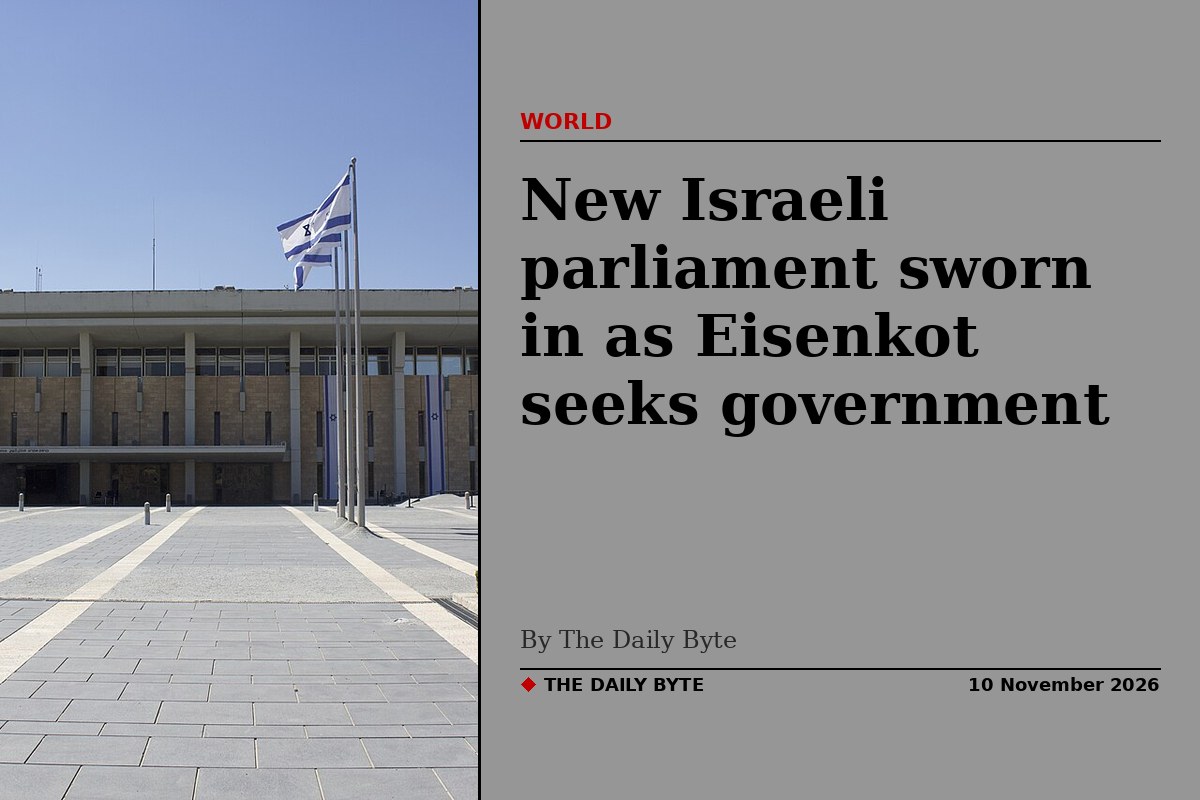
Israel's new parliament will be sworn in on Tuesday, with Prime Minister Benjamin Netanyahu set to lose his majority even as his rival Gadi Eisenkot continues working to form a new government.
President Isaac Herzog will deliver a speech at 4pm (1400 GMT) for the swearing-in of the 120-seat Knesset, in which neither Netanyahu's right-wing bloc nor Eisenkot's opposition holds a majority.
The election on 27 October left Netanyahu's bloc with 53 seats and Eisenkot's opposition with 48, both short of the 61 seats needed to govern. Herzog gave Eisenkot the first mandate to form a government on Sunday, after 67 members of the Knesset recommended him, compared with 46 for Netanyahu. Seven members from United Torah Judaism declined to recommend either candidate.
Eisenkot, a former army chief who leads the Yashar party, now has 28 days to assemble a coalition, with a possible 14-day extension if Herzog judges that progress is being made. The first deadline falls on 6 December.
Speaker vote is the first test
Ahead of the parliament's opening, Eisenkot's party announced progress in naming candidates for key positions. The opposition will put forward Matan Kahana, a former senior military figure like Eisenkot, as speaker of the parliament.
Avigdor Lieberman, a right-wing opposition leader who has played a central role in deciding who can enter the government, will be nominated as chair of the foreign affairs and defence committee.
The opposition's choice for speaker would need to secure more votes than any candidate backed by Netanyahu's bloc, which has been trying to push back a vote on the post. The speaker controls the parliamentary timetable, making the contest an early test of strength between the two camps.
Three routes to a majority
Eisenkot's core opposition bloc is 13 seats short of a majority, leaving him with three difficult routes to 61 votes. Arab-Israeli lawmakers hold a record 19 seats and could support a minority government from outside, but Lieberman has said he will not allow Eisenkot to rely on Arab-Israeli parties to take power.
The two ultra-Orthodox parties, with 13 seats between them, could also deliver a majority if they abandon their long alliance with Netanyahu, who backed their exemption from mandatory military service without fully enshrining it in law. A third option is a broad unity arrangement with Netanyahu, who has urged the opposition to join a unity government.
The opposition hopes to use its newfound legislative power to move quickly on its priorities, including a commission to investigate the security failures under Netanyahu that allowed the 7 October 2023 attack by Hamas. Eisenkot has largely supported the government's war decisions, but he has promised a crackdown on extremist settlers in the West Bank who have attacked Palestinians.
Netanyahu remains in office as caretaker prime minister until a new government wins the confidence of the Knesset. If Eisenkot cannot form a government, the president may hand the mandate to another lawmaker, and failure there could eventually lead to fresh elections.


