Medinilla bulutiorum: new plant found in Apayao
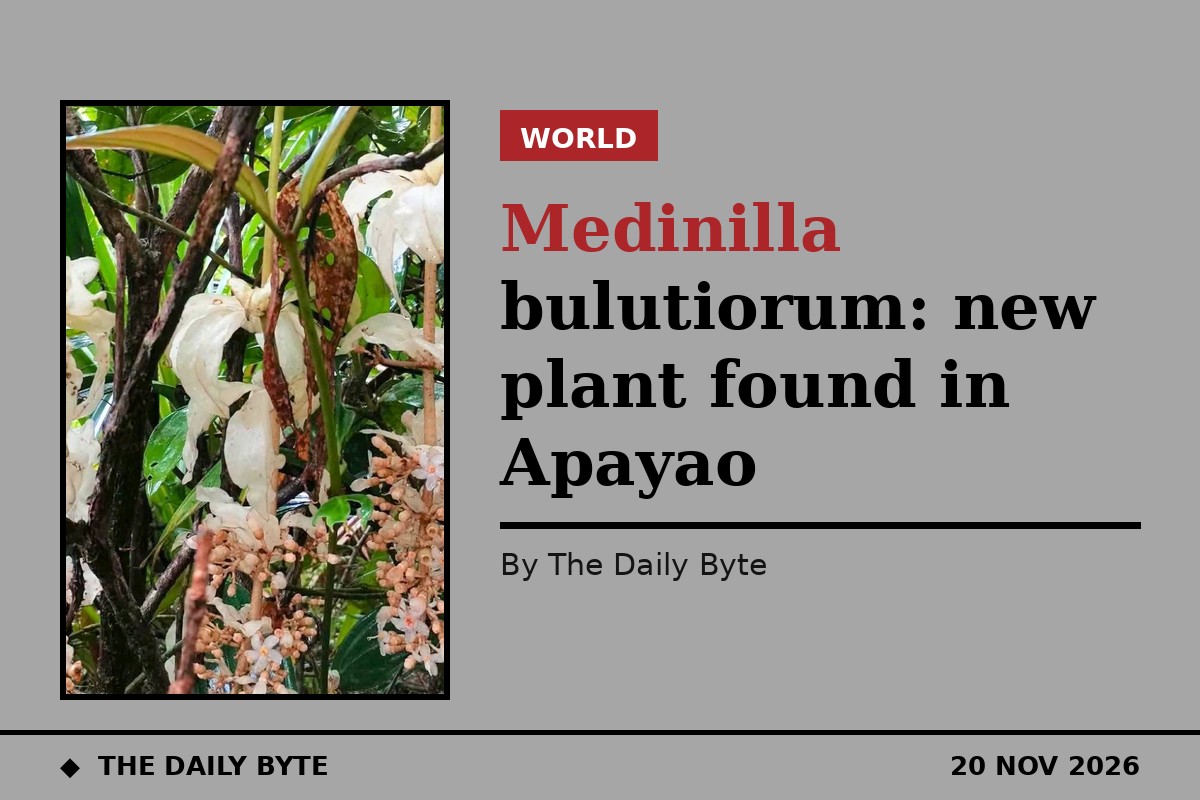
Scientists have formally described a new flowering plant from the forests of Apayao in northern Luzon, naming it Medinilla bulutiorum after the family of the province's founding father.
The plant was documented in Barangay Eva Puzon in the municipality of Calanasan and formally described in the international scientific journal Phytotaxa on 18 November 2026. The research team was led by Jiro T. Adorador and Zhereeleen D. Meneses-Adorador, curators of the Botanical Herbarium at the University of the Philippines Los Banos Museum of Natural History.
A close relative of kapa-kapa
Medinilla bulutiorum closely resembles kapa-kapa (Medinilla magnifica), a familiar ornamental plant known for its hanging flower clusters. Researchers distinguished the new species by its rounded branchlets, smaller stalked leaves with five to seven prominent veins, densely arranged flowering branches, and a brown, scaly covering on its whitish floral structures.
The species was named in honour of the Bulut family, in particular the late Elias K. Bulut Sr., widely recognised as the founding father of Apayao Province, in recognition of the family's leadership and stewardship of ancestral lands.
Third new species from Calanasan since 2025
Medinilla bulutiorum is at least the third plant species newly described from Calanasan since 2025, following Vaccinium kilangensis and Medinilla calanasan. The discovery underlines the ecological importance of the Apayaos Biosphere Reserve, a UNESCO-recognised site described as one of the Cordilleras' last remaining forest frontiers.
Researchers have preliminarily assessed the species as Data Deficient under International Union for Conservation of Nature criteria, meaning there is not yet enough information to determine how threatened it may be.
Sources
Radar Philippines: Scientists discover a flowering plant hidden in plain sight for over a century
Province of Apayao: Calanasan yields another plant species new to science


