NZ Defence Force Database Breach: Websites Offline
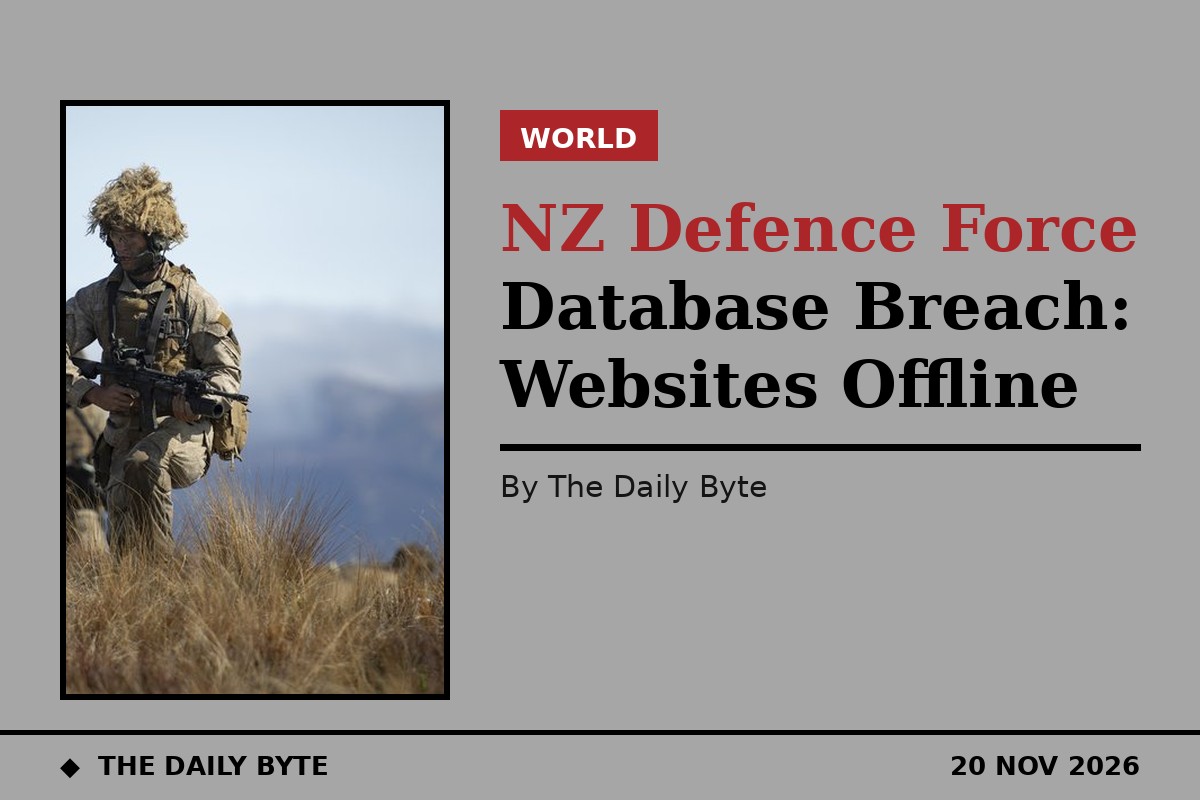
New Zealand's Defence Force has confirmed that a database was compromised and has taken several of its public websites offline while an investigation gets under way. The incident was first reported by Stuff and the New Zealand Herald on Friday, 20 November.
According to an incident record graded as attested, the Defence Force lost the names and email addresses of registered users of its Force4Families Defence Discounts scheme through its website provider's systems. The Defence Force learned of the intrusion only when the provider called to tell it. The entry point, the actor behind the intrusion, and the number of affected users have not been stated.
The Force4Families scheme offers discounts to Defence Force personnel and their families. The compromised data sat on a contractor's website stack rather than on the Defence Force's own core systems, according to the incident record, which describes the attack as a third-party or supply-chain intrusion with data theft confirmed.
What is still not known
Reporting of the incident so far leaves several key questions unanswered. An account based on Stuff's reporting said attackers gained unauthorised access to Defence Force website systems and that personal information may have been exposed, with several public websites taken offline during the investigation. But it did not say which sites were affected, what personal information may have been accessible, how many people could be involved, or whether any data was actually copied.
No direct statement from the Defence Force, investigators or affected individuals was included in that account, and no later update on restoration or confirmed impact had been published at the time of reporting. The number of people whose details were held in the discounts database has not been disclosed.
A second breach in the same week
The Defence Force incident came in the same week as a separate breach at Forest and Bird, New Zealand's environmental advocacy group, where people's names, phone numbers and email addresses were accessed. A cybersecurity expert said the two attacks were likely a coincidence rather than a coordinated campaign.
The timing has nevertheless drawn attention to the exposure of New Zealand organisations through their suppliers. In the Defence Force case, the perimeter around the affected users was a contractor's website stack, watched by someone other than the Force itself, which only learned of the intrusion when the provider made contact.
Websites taken offline as a precaution
Taking the affected websites offline is the standard first step after a suspected intrusion, cutting off any further access while investigators establish what happened. The Defence Force has not said when the sites will return, and no public guidance for affected users had been reported at the time of writing.
Anyone who used the Force4Families discounts scheme should watch for official advice from the Defence Force about what to do next, including whether to change passwords or watch for suspicious messages using their name or email address. The investigation will need to establish how the provider's systems were reached, what was taken, and whether the exposed details have been used or shared anywhere else.


