New Zealand hung parliament: Luxon one seat short
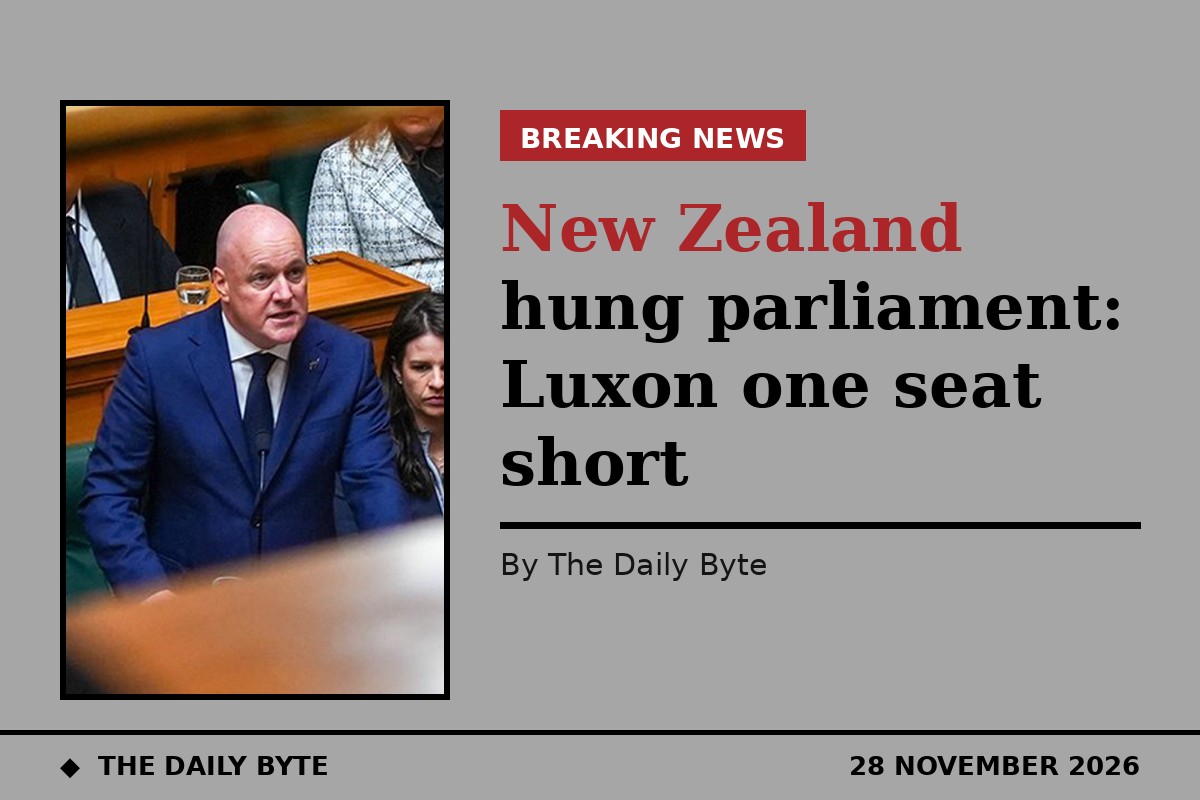
New Zealand's governing coalition has lost its parliamentary majority in the final count of the 7 November general election, leaving Prime Minister Christopher Luxon one seat short and dependent on a centrist party that entered parliament for the first time. The Electoral Commission published the official results on Friday, 27 November, after counting 484,865 special votes.
The three governing parties — National, ACT and New Zealand First — hold 65 seats between them in the 130-seat parliament. A majority requires 66. On election night the same bloc had appeared to hold a slim majority, but the special votes, which include ballots cast overseas or outside a voter's home electorate, cost National two seats and gave the Greens one.
The final seat totals
National finished with 40 seats, down two from election night, on 28.35 per cent of the party vote. Its partners ACT won 13 seats and New Zealand First 12. Labour, the largest opposition party, won 36 seats on 29.88 per cent of the party vote, ahead of National in vote share but behind it in seats. The Greens won 17 seats, Te Pati Maori five, and the Opportunity Party seven.
The centre-left bloc of Labour, the Greens and Te Pati Maori holds 58 seats. Even with the Opportunity Party's seven seats it would reach only 65, so it cannot form a government. That leaves Luxon as the only leader with a workable path to power — but only if he can win over Opportunity as well as keeping his existing partners on board.
The Electoral Commission said 2,931,604 votes were cast in total, of which the special votes made up about 16.5 per cent. Three electorate seats changed hands on the final count: Wairarapa, Hamilton East and Wellington Bays. Parliament will have 130 seats, including 10 overhang seats, after the result.
Opportunity holds the balance of power
The Opportunity Party, a centrist group contesting its first election, won 6.06 per cent of the party vote and seven seats. Its leader is Qiulae Wong, a 38-year-old business consultant and political newcomer. She has said she will negotiate first with the party that won the most seats, and that all options remain on the table, including working for a stable government with either side.
Luxon said on Friday that he was confident he could form a government with Opportunity and his existing partners, and formal talks with the party are set to begin. That is a shift from the campaign, when Luxon had ruled out working with Opportunity. The party's platform cuts against parts of the conservative coalition's agenda, including stronger climate commitments, a ban on bottom-trawling fishing, tighter competition rules and a more interventionist approach to public investment.
Labour leader Chris Hipkins has said he will await the outcome of the coalition's negotiations before deciding on his own future, in what amounts to an admission that the centre-left cannot form a government.
What happens next
Luxon remains prime minister in a caretaker capacity while the parties negotiate, but no new coalition agreement has yet been completed. It is unclear how long the talks could take. If no agreement can be reached, another election could be called.
Candidates have until Wednesday, 2 December, to apply for judicial recounts. The final count also underlined how far voters have moved away from the two biggest parties: the election produced the second-lowest turnout on record and the lowest combined vote share ever for National and Labour, after a campaign dominated by the cost of living and a strained health system.