Rain delays New Zealand v India third ODI toss
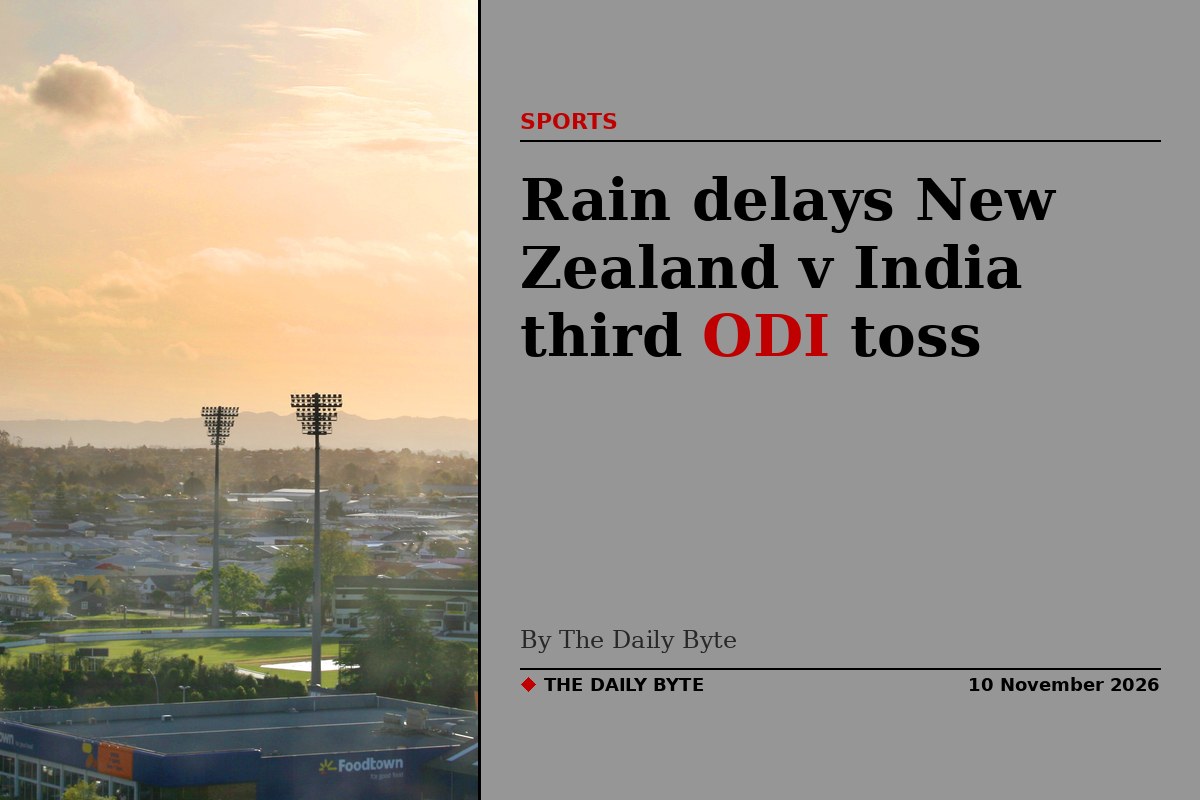
Rain delayed the start of the third one-day international between New Zealand and India at Seddon Park, Hamilton, on Tuesday, 10 November, but officials confirmed that no overs would be lost.
The toss, originally scheduled for 2.30pm local time, was pushed back after showers returned just as ground staff were preparing the playing area. The toss was rescheduled for 3.02pm local time, with play due to begin at 3.30pm local time, half an hour later than planned.
Both teams kept their full allocation of 50 overs each, despite the delayed start.
Heavy rain in Hamilton
The match was already under a weather cloud before the first ball. Heavy rain had fallen in Hamilton over the previous 12 hours, leaving the outfield damp and giving ground staff only limited time to work on the surface.
AccuWeather issued a heavy rain watch for Hamilton from 3am local time on Tuesday until 1am on Wednesday, with a near-certain chance of rain during the day. Further interruptions remained possible once play got under way, with the forecast offering little comfort to either side.
On the eve of the match, rain had already forced India to train indoors, and ground staff had only half a day to prepare the pitch before the weather arrived.
India lead the series 2-0
India arrived in Hamilton leading the five-match series 2-0, and a win in the third match would settle the series with two games still to play.
India won the opening match in Auckland on 4 November by five wickets, then won the second match in Wellington on 7 November by four runs. Rain interrupted both games, with the Duckworth-Lewis-Stern method deciding each result.
New Zealand, meanwhile, have a strong record at the ground. They have won their last 12 completed one-day internationals at Seddon Park, a run they will want to protect in front of a home crowd.
Seam-friendly conditions expected
The damp conditions were expected to favour seam bowling, which has already shaped the series. The first two matches were low-scoring by modern one-day standards, with bowlers finding movement and batters forced to work hard for runs.
That makes the toss more important than usual in these conditions, because the side chasing knows its target and can plan its innings accordingly, while the side batting first must judge a score without knowing what the weather will do later in the day.
If persistent rain prevents a result in Hamilton, India would keep their 2-0 series lead, with two matches still to play. The series is being played about a year before the 2027 Cricket World Cup, which will be hosted in South Africa, Zimbabwe and Namibia, giving both teams useful preparation in difficult conditions.