New Zealand Trade Deficit Widens to NZ$2.77bn in October
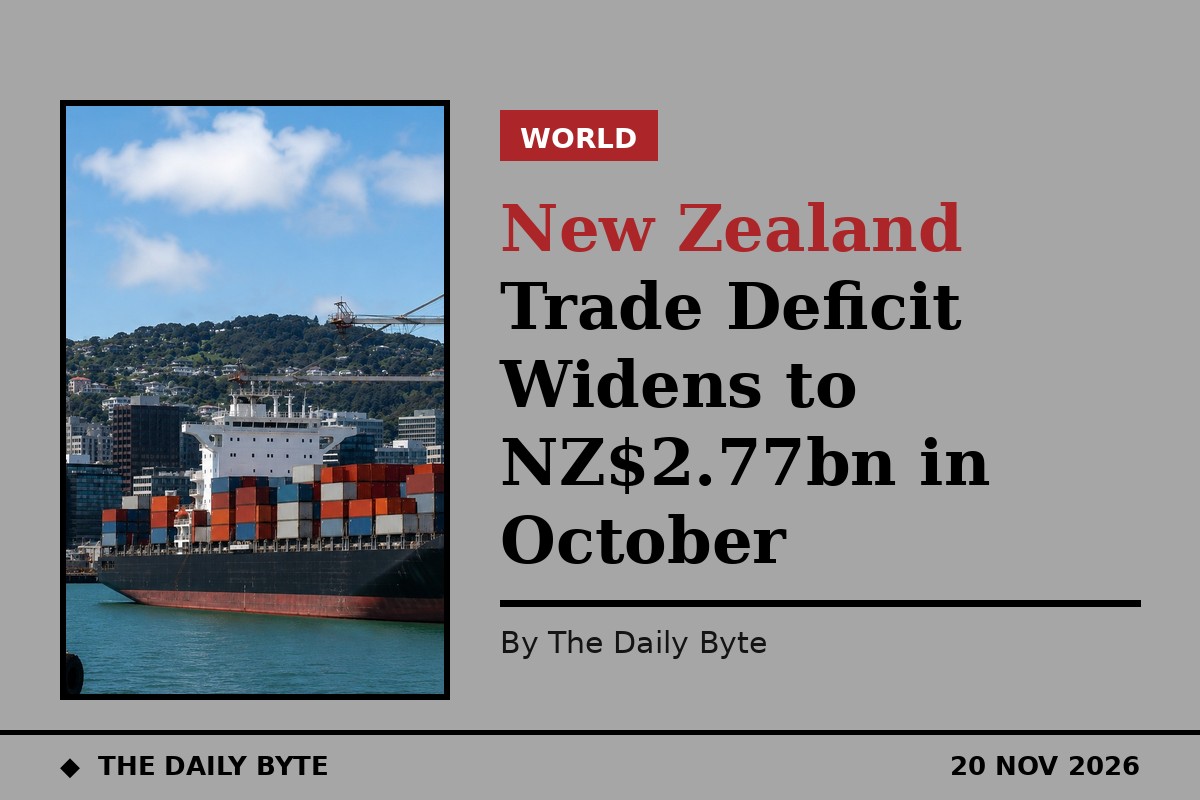
New Zealand's trade deficit widened sharply in October, reaching NZ$2.77 billion as a surge in imports far outpaced growth in exports, official figures released on Thursday show.
Stats NZ reported that goods exports rose 7.9 percent from a year earlier to NZ$7.0 billion, an increase of NZ$509 million. Goods imports, however, jumped 21 percent to NZ$9.7 billion, up NZ$1.7 billion on October 2025. The monthly trade balance was a deficit of NZ$2.8 billion.
The result was considerably worse than economists had expected. The market had forecast a deficit of about NZ$1.65 billion, and the October shortfall was also larger than September's revised deficit of NZ$2.12 billion, which Stats NZ had first reported at NZ$1.97 billion.
Aircraft and fuel drove the import surge
The import jump was heavily concentrated in a small number of items rather than broad-based demand. Aircraft deliveries accounted for much of the increase, rising by NZ$711 million, or more than 1,200 percent, from a year earlier, while petroleum imports rose by NZ$445 million. Together, the two categories made up about two-thirds of the rise in imports.
That concentration matters for how the figures are read. One-off aircraft deliveries do not signal a lasting shift in import demand, and economists expect the monthly deficit to narrow once the deliveries pass. Even so, the annual picture has deteriorated markedly: the trade deficit for the year ended October widened to NZ$7.5 billion, from NZ$2.3 billion in the previous twelve months.
Exports grew across major markets
Exporters had a better month. Sales to Australia rose 23 percent from a year earlier, exports to the United States were up 7.4 percent, and exports to China, New Zealand's largest trading partner, grew 4.6 percent.
The monthly figures are not seasonally adjusted, so they can swing sharply from month to month. The October deficit, at about US$1.54 billion, nevertheless underlines how exposed New Zealand's external balance has become to lumpy import items, even while its exporters are finding demand in their biggest markets. Dairy, meat and forestry products remain the backbone of export earnings, and their performance in the coming months will matter as much as the timing of the next aircraft deliveries.
Trade data will be watched closely in the coming months for signs of whether the import surge was a one-off. If aircraft deliveries normalise and export growth holds, the deficit should ease. If imports stay strong while exports cool, pressure on the New Zealand dollar and on the country's external funding position is likely to grow.


