NHS England Chief Pay Row Delays Successor Search
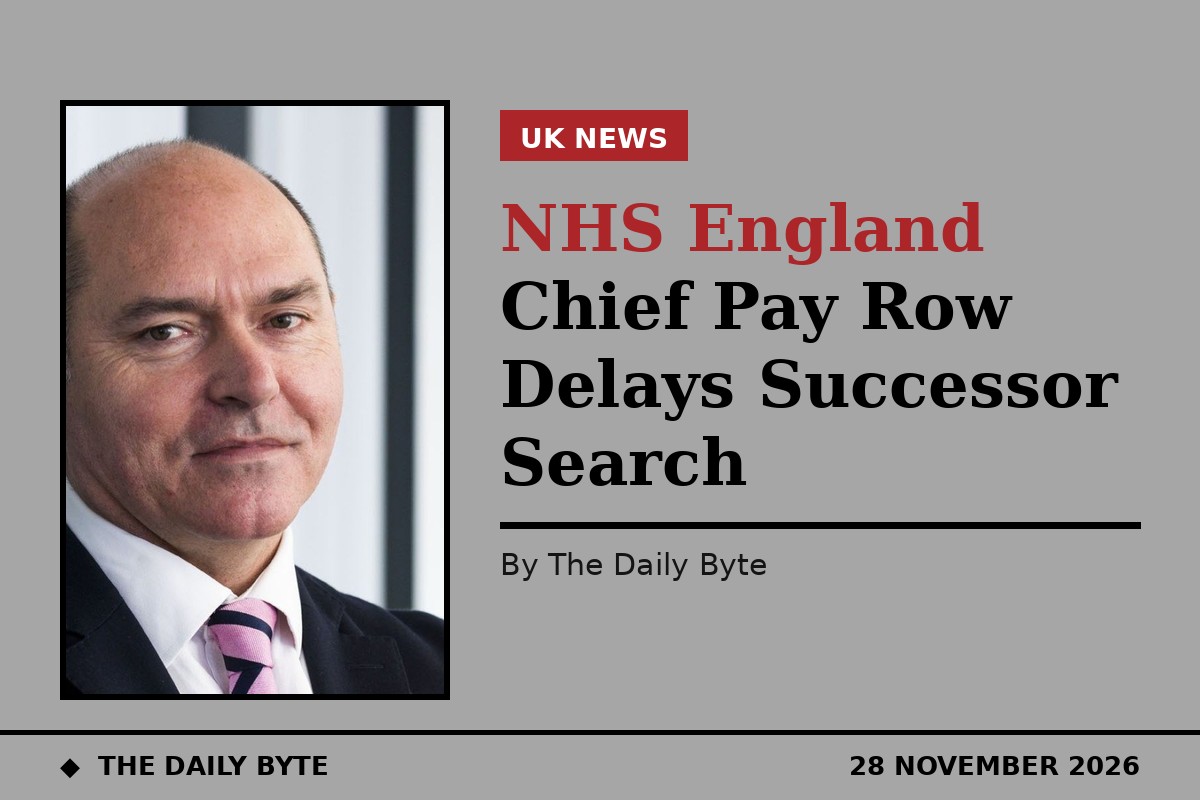
A dispute inside Whitehall over pay has stalled the search for the next chief executive of NHS England, leaving the vacancy unadvertised four months before the current chief is due to leave.
The Financial Times reported on Saturday that NHS England has not yet been allowed to advertise the post because officials are still arguing over the pay package and the design of the role. The delay risks disrupting the handover as Sir Jim Mackey prepares to step down at the end of March, five months later than he first planned.
Pay row holds up the advert
The role is expected to carry a salary above £320,000. Under the reorganisation, the post is set to become a permanent secretary-level civil service role as NHS England is folded more closely into the Department of Health and Social Care.
That creates a problem. Mackey's current pay is listed at £325,000 to £330,000, rising to £360,000 to £365,000 including salary sacrifice arrangements, well above most comparable civil service positions. Any civil service role paying more than £174,000 also requires Treasury approval, and the request is understood to have only recently reached the finance department, which says it is not responsible for holding up the process.
Health department leaders want to advertise the role at roughly the same level, arguing that the package is consistent with pay for hospital chief executives. Officials elsewhere in government say Dame Antonia Romeo, the cabinet secretary, is using the extra time to refine the job description and add performance-related pay as the NHS leadership role moves into the civil service.
Very tight timetable
Penny Dash, chair of NHS England, told a board meeting this week that the timetable for appointing Mackey's successor is now very tight because the advert has not gone out. She said she is pressing the government constantly to secure approval and wants a successor in place in time for Mackey to support the transition into what she described as one of the country's biggest roles.
Mackey was appointed chief executive in April 2025, taking over from Amanda Pritchard. He had originally planned to leave at the end of October, but agreed to stay on until the end of March 2027. The government says it is determined to recruit an exceptional candidate with a package that attracts strong talent, rewards performance and offers value for taxpayers, and says the process is continuing and the role is expected to be advertised shortly.
Why the pay gap matters
The episode highlights a wider strain in public sector pay. Alex Thomas of the Institute for Government said civil service pay scales have drifted away from NHS and other public sector salaries, with Treasury restraint on Whitehall pay colliding with market pressures in other state-backed bodies.
The comparisons are stark. The highest-paid permanent secretary, Samantha Jones at the Department of Health, earns £310,000 to £315,000. Great British Energy chief executive Daniel McGrail is paid £350,000 to £355,000, while HS2 chief executive Mark Wild earns £660,000 to £665,000 and Crown Estate chief executive Dan Labbad receives an £832,636 base salary plus bonus and long-term incentive arrangements.
Abolition timetable adds pressure
The leadership question sits inside a much bigger reorganisation. In March 2025 the government announced plans to abolish NHS England, with the organisation expected to cease operating as a separate body by April 2027. A new special health authority is to oversee regional NHS functions, employing thousands of staff currently in NHS England's regional teams, while other responsibilities transfer directly to the Department of Health.
Before taking the top job, Mackey was chief executive of Newcastle upon Tyne Hospitals NHS Foundation Trust and previously led Northumbria Healthcare NHS Foundation Trust for two decades. He also served as chief executive of NHS Improvement between 2015 and 2017 and was NHS England's national director of elective recovery.
Speaking to the Public Accounts Committee on 16 November, Mackey acknowledged delays, staff uncertainty and disruption caused by the restructuring, saying: "We could have absolutely done it better." With the advert still unpublished and the March deadline approaching, the search for his successor is now running against the clock.


