NHS and Fire Service Warn Zero-Hours Ban Puts Public at Risk
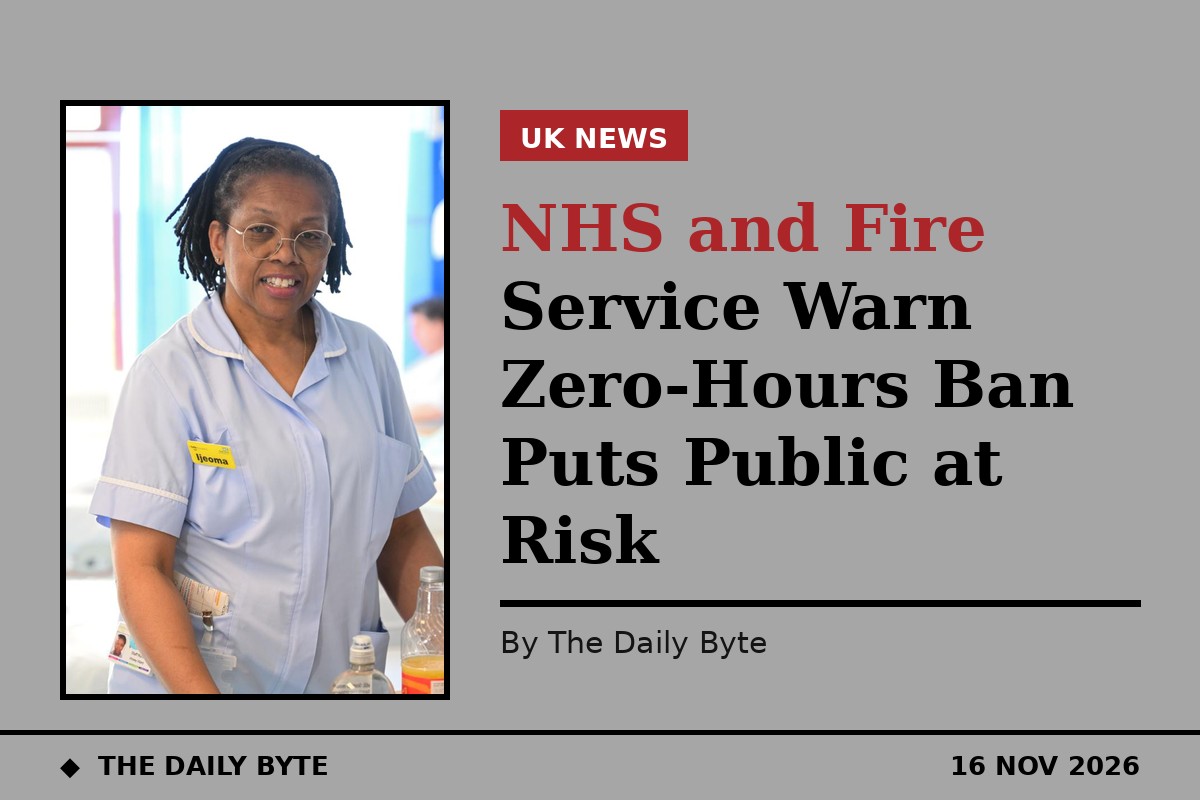
Health and fire service leaders have warned the government that its planned ban on zero-hours contracts could put the public at risk and cost the NHS around £900 million a year.
In responses to a government consultation, NHS Employers and the Local Government Association (LGA) said the reforms would have “significant unintended consequences” for hospitals, social care and fire cover. Both bodies have urged ministers to rethink the plans before regulations come into force, which is expected later in 2027.
£900m cost and hundreds of extra managers
Analysis by NHS Employers, part of the NHS Alliance, found that NHS organisations in England could need more than 800 additional administrative staff and around 610 managers to handle the monitoring, workforce planning, payroll and compliance work the new rules would require.
The organisation estimated the total extra cost at about £900 million a year, money it said would be diverted from frontline patient care at a time when waiting lists are at their highest level since October 2025.
Ben Morrin, chief executive of NHS Employers, said the proposals “risk creating significant unintended consequences for the NHS” and could reduce the flexibility many bank workers value, increase bureaucracy and generate substantial unbudgeted costs.
“The government’s current proposals do not adequately reflect the operational realities of delivering healthcare services 24 hours a day, seven days a week,” he said. “Before introducing regulations that could impose substantial additional costs without clear benefits for NHS staff or patients, it is clear the government should pause implementation and undertake further engagement with health and social care employers.”
Why NHS bank working matters
The NHS relies on staff banks — pools of doctors, nurses, midwives and other health professionals who pick up extra shifts to cover sickness, seasonal pressure and major incidents. Around 85% of bank workers already hold a substantive NHS contract and choose to work additional shifts through the bank.
Among those without a substantive contract, most want to keep working through the bank: NHS staff survey findings show 74% say they are able to work the shifts and hours they want. Health leaders argue the bank offers genuine two-way flexibility and helps services maintain safe care while reducing reliance on more expensive agency staff.
Under the reforms, employers would have to offer workers guaranteed hours reflecting the hours they worked over a reference period of 12 weeks — the option preferred by ministers — give reasonable notice of shifts and changes, and pay workers if shifts are cancelled, curtailed or moved at short notice.
Fire cover “unworkable”, say councils
Fire service bosses raised a separate warning. The LGA, responding on behalf of councils and fire and rescue authorities, said applying the three measures to on-call, or retained, firefighters would be “unworkable” and could put public safety at risk.
More than 90% of the country is covered to some extent by retained firefighters, who are particularly important in rural areas. The Times reported that about one in three firefighters are on zero-hours contracts.
Daniel Cowen, chair of the LGA’s local government resources committee, said fire and rescue employers “cannot predict when or where emergencies will occur and thereby plan when retained firefighters should be contracted to work”.
“Emergencies are not predictable and their numbers are not consistent across the year,” the fire service said, warning it would either have to pay firefighters when they were not needed or risk having no cover in an emergency.
Care sector and government response
Councils also warned the rules could push up the cost of social care, which relies on agency and flexible workers to meet fluctuating demand. The Recruitment and Employment Confederation has separately warned the guaranteed-hours plans could make it harder for health and social care providers to fill gaps at short notice.
The Chartered Institute of Personnel and Development warned in August that, without significant changes, the reforms would undermine the government’s aim of boosting growth and would have unintended consequences for businesses and workers, particularly young people.
A government spokesperson said ministers were “committed to tackling the one-sided flexibility that can result from zero-hours and similar contracts, when workers bear all the financial risk of uncertain hours, shifts and earnings”.
“We’re grateful for the many responses we received to our consultation,” the spokesperson said. “We are taking them fully into account and working to get the detail right so that the new rights work in the real world, including for the NHS and other public services.”