NHS Steriwave Light Therapy Cuts Surgery Infections by 71%
An NHS team in West Yorkshire has won a global award for a light-based treatment that cut surgical site infections by 71 per cent in patients having hip and knee replacements. The work, led by Dr Stuart Bond at Mid Yorkshire Teaching NHS Trust, is the first deployment of its kind anywhere in the NHS.
Dr Bond, the trust's Director of Innovation and a consultant antimicrobial pharmacist, received the President's Award from the International Photodynamic Association (IPA) for introducing the treatment, known as Steriwave, into routine surgical care. The award was presented at the IPA World Congress in Shanghai.
How Steriwave works
Steriwave is a light-activated nasal therapy that destroys harmful bacteria in the nose before a patient goes into surgery. A photosensitive agent is applied inside each nostril with a swab, and then illuminated with a specific wavelength of red light for about five minutes.
The treatment kills the bacteria that can cause infections after an operation, and it does so without using antibiotics. That matters because the nose is a common place for bacteria to live, and those bacteria can travel to a surgical wound during or after an operation. By clearing them beforehand, the team reduces the chance of an infection taking hold.
The approach is non-invasive and painless, and it does not rely on the patient remembering to take anything or following a course of treatment at home. It is given in hospital as part of the preparation for surgery.
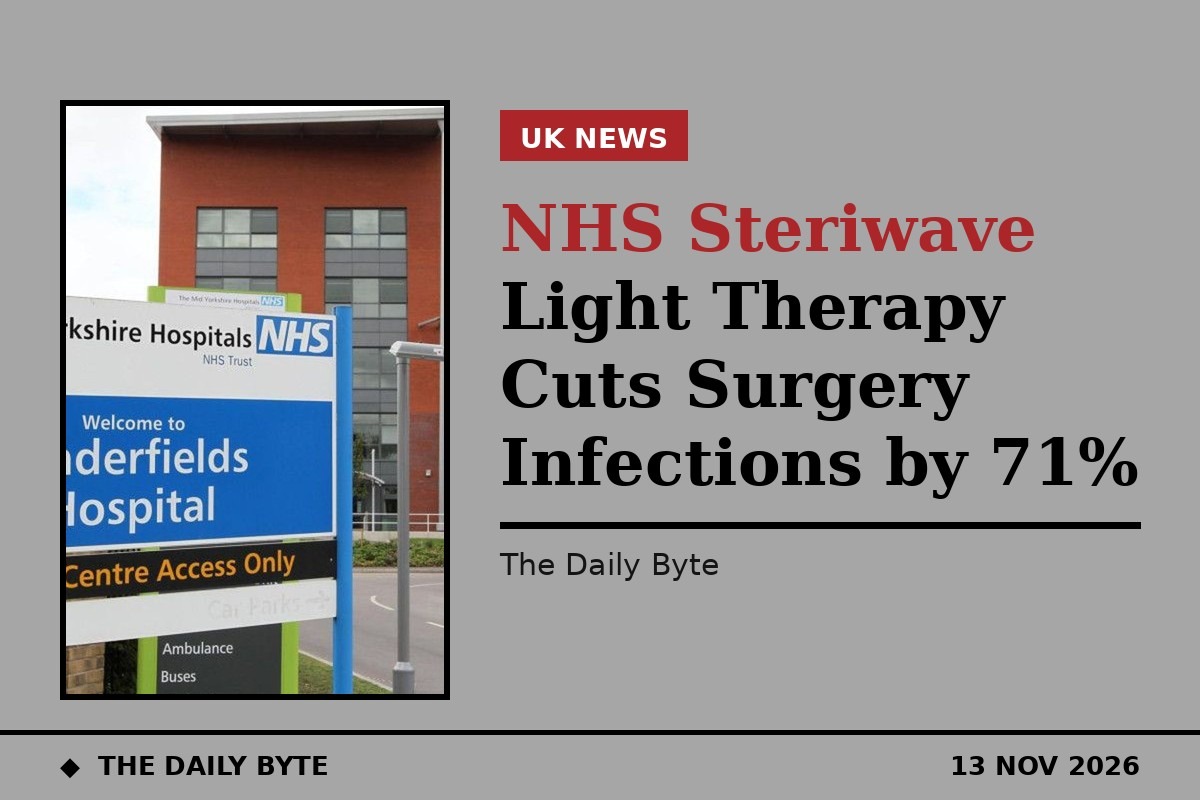
The pilot at Pinderfields and Pontefract
The pilot ran at Pinderfields Hospital in Wakefield and Pontefract Hospital, and focused on patients undergoing hip and knee replacement surgery. Over a six-month period, surgical site infections fell by 71 per cent compared with previous care, and the trust has since rolled the treatment out more widely across its orthopaedic services.
The trust is now looking at using the technology in other types of surgery and in other settings. A health economic analysis by the York Health Economics Consortium found the approach was cost-saving for hip and knee replacement surgery. Figures reported by the treatment's maker, Ondine Biomedical, suggest that in a standardised group of 1,000 patients, Steriwave prevents almost 10 additional infections compared with standard care alone and cuts total hospital bed days by 139.
A global award, and what the judges said
The IPA President's Award is reserved for people whose work is changing healthcare through photodynamic therapy. Dr Colin Hopper, President of the IPA, said Dr Bond and his team were the first to put photo disinfection into everyday use within the NHS, and he praised the work for showing what the technique can achieve in a real hospital setting.
Dr Bond said it was an honour to receive the award, and he credited the team at the Pontefract Elective Orthopaedic Suite, who carried out the patient-facing work and gave the treatments. The project has also been shortlisted for the HSJ Patient Safety Award in the early-stage patient safety innovation of the year category.
Why it matters for patients and the NHS
Surgical site infections are one of the most common complications after an operation. They can mean longer stays in hospital, further treatment, and in serious cases a second operation. For joint replacement patients, an infection can affect the new joint itself and lead to months of additional care.
Reducing infections without antibiotics also helps the wider fight against antimicrobial resistance, one of the NHS's long-term priorities. Because the treatment uses light rather than drugs, it does not add to the pressure that drives bacteria to become resistant.
The Mid Yorkshire project shows how a change made by clinicians on the ground can spread. What began as a pilot in two hospitals in West Yorkshire is now drawing interest from other NHS trusts and from health services overseas, and it has already been recognised with one of the highest honours in its field.
Sources: Mid Yorkshire Teaching NHS Trust and Ondine Biomedical (London Stock Exchange).