NHS blood test trial to spot cancers earlier
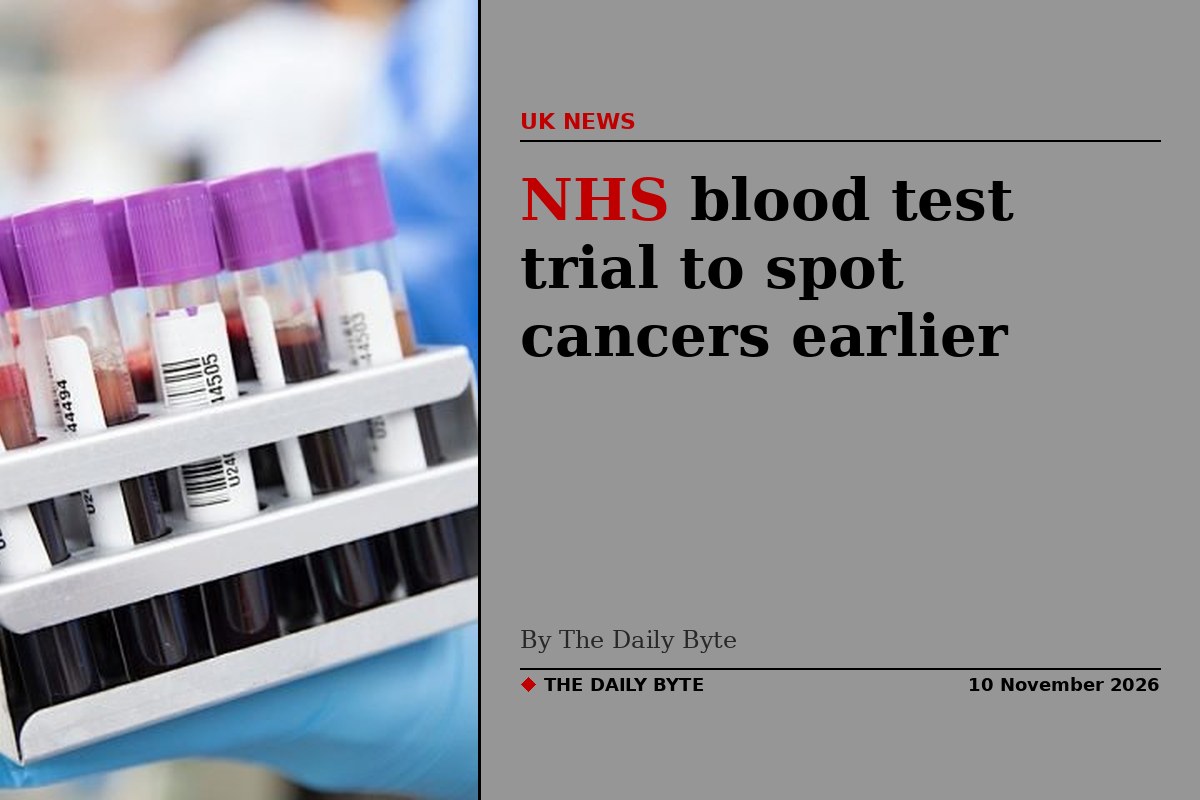
More than 20,000 NHS patients will take part in a world-first trial testing whether simple blood tests can help GPs spot a range of cancers earlier, the government announced on 4 November 2026.
The trial, called STRIDE-RCT, will run across at least 200 GP practices in England. It will assess whether blood tests can detect prostate, ovarian, bowel, pancreatic, stomach, liver and other abdominal cancers before severe symptoms develop.
Patients aged 45 and over who visit their GP with abdominal symptoms, such as persistent bloating or discomfort, will be offered the chance to take part. Most of the tests will ask patients to have one or two tubes of blood taken at their GP practice, alongside routine blood tests.
What the blood tests look for
The blood tests being tested look for signs of several cancers in a single sample and suggest where in the body they come from. They use a range of the latest technology, including artificial intelligence and measuring proteins in the blood.
The trial will cover 13 types of cancer: bowel, small bowel, stomach, oesophageal, pancreatic, liver, bile duct and gallbladder, ovarian, endometrial, kidney, bladder and prostate.
The trial is led by researchers at the University of Birmingham and is funded by the Office for Life Sciences through the National Institute for Health and Care Research (NIHR), with up to £8.49 million of government funding. It will cover a broad range of inner-city, rural, seaside and deprived communities.
A test, not a diagnosis
A positive result from one of the trial tests is not a diagnosis of cancer. Instead, it is designed to guide GPs on whether an urgent referral is needed, alongside the GP's own judgement.
The trial will assess how well the tests work alongside GPs' judgement before any decision is made on rolling them out across the NHS. Until STRIDE-RCT produces its own evidence, whether these tests change outcomes for patients remains unproven.
Health and Social Care Secretary Yvette Cooper and Business Secretary Jonathan Reynolds launched the trial, which the government described as world-leading and the first of its kind in primary care.
The trial will initially evaluate three different tests from three companies, with more tests potentially added later. Because abdominal symptoms such as bloating and discomfort can have many causes, GPs often face difficult decisions about which patients need urgent investigation, and the trial aims to give them an extra tool to make those calls.