NHS Winter Warning as Leaders Fear Worst Winter Yet
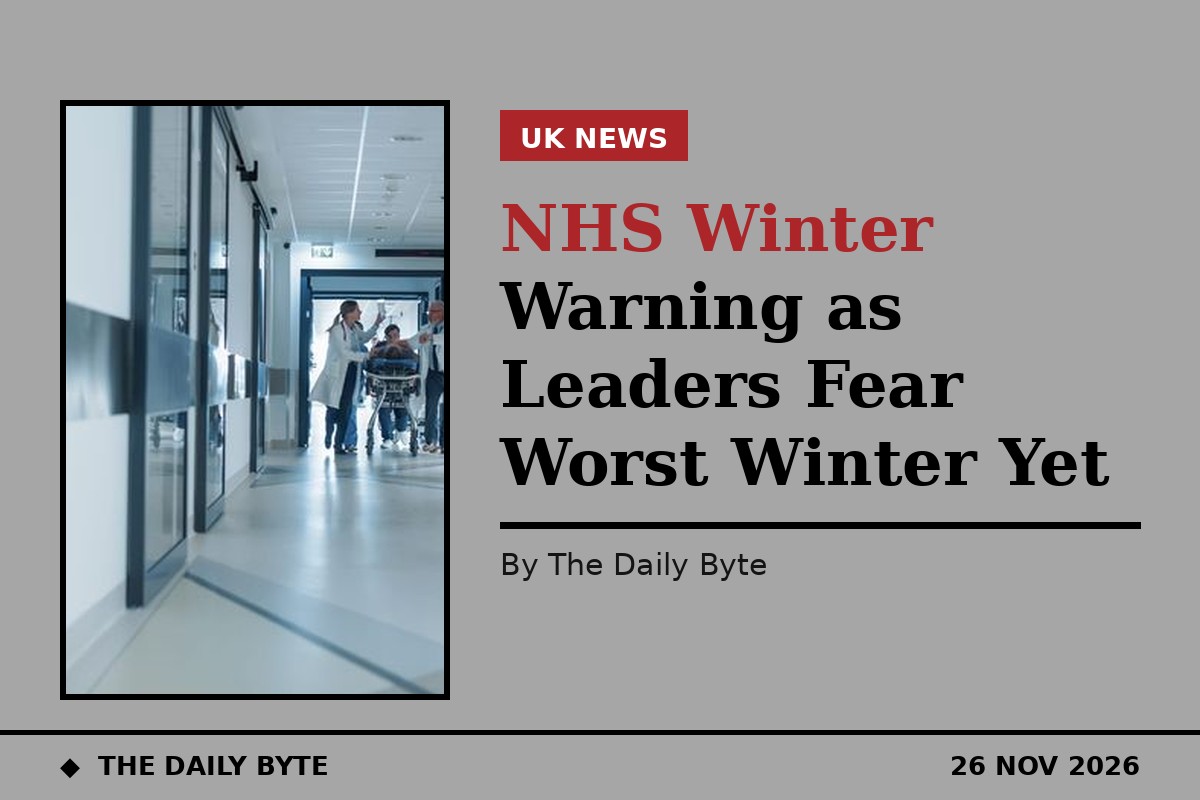
NHS leaders have warned that this winter could be the busiest on record for the health service in England, with hospitals at risk of becoming overwhelmed before alternatives to hospital care are in place.
The warning comes from a survey of 184 NHS leaders across England by NHS Alliance, published on Thursday 26 November 2026. It found that 58 per cent feared demand could outstrip capacity this winter, while 79 per cent did not believe the NHS could both recover waiting-time targets and deliver the Government's planned reforms with current funding.
Health chiefs said plans to move more treatment out of hospitals and into community and primary care had come dangerously late. They also warned that staffing shortages and financial pressures were leaving services stretched to their limits, with some facing difficult decisions about whether to cut provision.
Waiting times and reform at risk
Labour's health plan promised to move the NHS from analogue to digital, shift its focus from treatment to prevention, and deliver more care in the community rather than in hospitals. But health leaders said investment in community and primary care, along with the workforce needed to deliver the changes, had not kept pace with growing demand.
The NHS Alliance poll also found that half of trust leaders did not believe the health service would be able to meet its constitutional standards over the next five years. Those standards set out the levels of care and treatment patients should be able to expect from the NHS.
In 2024, Labour pledged that 92 per cent of patients needing planned treatment, such as a hip or knee replacement, would be treated within 18 weeks by July 2029. One trust leader told the survey that target appeared unlikely to be met under current conditions.
Unbudgeted costs pile up
NHS Alliance said health leaders had raised concerns about additional costs that had not been included in budgets. These include pay settlements, the cost of industrial action, higher-than-expected inflation, rising energy and medicine bills, and continued growth in patient demand.
Reforms to zero-hours contracts are expected to cost the NHS around an extra £880 million, according to the survey findings reported by Personnel Today.
Sir Ciarán Devane, chief executive of NHS Alliance, said: "Local NHS leaders are warning that the hard-fought gains of recent years are in peril due to a series of extra costs that are not covered in the budget. This is opening up a widening gap between what the NHS is being asked to deliver and the resources it has available."
He added: "Without realistic expectations, sufficient workforce capacity and sustained investment in reform, there is a growing risk that progress on both performance recovery and long-term transformation will be slower than patients, politicians and policymakers want to see."
Acute care leaders share the concern
The warnings come as the Society of Acute Medicine published a separate survey highlighting concerns about winter pressures across the health service. Its poll of 59 acute medicine clinical leads and directors across Britain found that 76 per cent felt their services were no better prepared or worse prepared than last winter.
Dr Vicky Price, president of the Society, said: "It is deeply concerning that so many senior clinicians lack confidence in the ability of their services to deliver safe and timely care this winter and that more than three quarters feel their services are no better prepared or are worse prepared than last year."
NHS figures released earlier this month showed that more than 3,500 patients a day received care in hospital corridors or makeshift treatment areas in England in October. Health leaders have urged people to use NHS 111 online or call 111 if their situation is not life-threatening, to help keep emergency departments for the most urgent cases.


