NI police spent 18,500 days in court without testifying
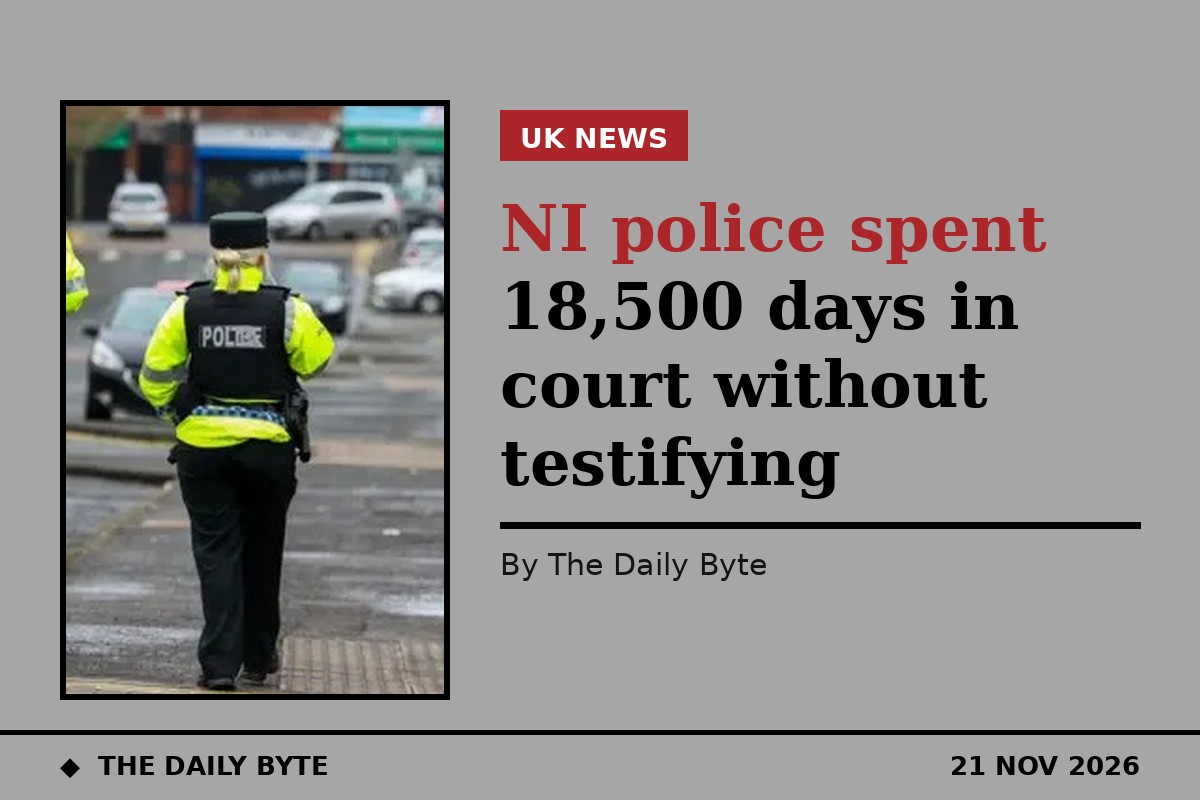
Police officers in Northern Ireland spent almost 18,500 working days attending court hearings in a single year at a cost of 4 million pounds, with many never called to give evidence, a watchdog report has found.
Criminal Justice Inspection Northern Ireland (CJI) said large numbers of witnesses required to attend court are not called to give evidence, including police officers pulled from front-line duty. It said evidence "pointed to substantial levels of wasted time and costs to the public purse".
In 2024-25, the hours attributed to police attendance at court equated to almost 18,500 average working days, or 4 million pounds. But the inspectorate discovered that in many cases officers were not required to testify.
Only a third of hearings went ahead
CJI reviewed 30 prosecution cases and discovered only 34 percent of hearings went ahead as scheduled, with plea changes and the availability of lawyers among the contributory factors. The reasons for witnesses not being called included last-minute guilty pleas by defendants and evidence being agreed close to a hearing beginning.
The inspectorate also surveyed witnesses. Sixty percent of police officers and forensic scientists said they testified "rarely", and 55 percent of members of the public said they did not have to take the witness stand.
Its acting chief inspector, James Corrigan, said it was "concerning" that officers were "routinely" taken away from other work in order to attend court. He told the BBC's Good Morning Ulster programme: "The criminal justice system in Northern Ireland - it's a very slow system. In fact, it's one of the slowest systems in the neighbouring jurisdictions."
Corrigan said delays started at the investigation stage, continued when the Public Prosecution Service needed to make a decision, and were then repeated in the courts, particularly through adjournments. He said the true scale of the "inefficiency" was difficult to estimate because data collection was limited.
True cost likely higher than 4 million pounds
The report said the estimate of 4 million pounds to cover the annual cost of 18,500 police court attendances did not reflect the full costs to the public purse. Corrigan explained that it did not take account of police shifts having to be "back-filled" to cover officers attending court, nor of Public Prosecution Service staff sitting in court for a case that does not go ahead, nor of defence and expert witnesses.
The report recommended that the Police Service of Northern Ireland (PSNI) gets a "strategic grip" on officer attendance and establishes the impact on resources. It also said the PSNI and the Public Prosecution Service should implement a system to notify officers when they are no longer required in court, within the next six months.
Corrigan added that criminal justice organisations should consider electronic and digital methods of serving summonses on witnesses, as used elsewhere in the United Kingdom, and make greater use of remote evidence centres so some witnesses can testify from locations outside court. He said that was particularly important for vulnerable witnesses who may be intimidated by the court atmosphere, and that more police could give evidence remotely from police stations and then return to normal duties.
PSNI considering the findings
The PSNI said it was considering the report's findings. Assistant Chief Constable Anthony McNally said: "Police officers have an essential role in bringing offenders to justice and giving evidence is a core part of that responsibility. However, unnecessary or late-cancelled court attendances can affect our ability to deploy officers to front-line and other operational duties. We are committed to ensuring that officers are available to give evidence when required, while reducing avoidable attendance and disruption for all witnesses."
Janice Bunting, chief executive of Victim Support NI, said being called to court can be a "really anxious time for witnesses", and that the anxiety can be "exacerbated if there is short notice cancellation to their case". She said witnesses who had prepared themselves and their families for a Crown Court case, only to be told at the last moment it was cancelled or adjourned, felt "so anxious, so disempowered, so disappointed and then they know they have to do that all over again". Corrigan warned that when cases do not go ahead as scheduled, witnesses may feel frustrated and anxious, and that "this can cause a loss of trust in the criminal justice system".