Nigeria Approves $2bn Super Grid to Lift Power to 19,000MW
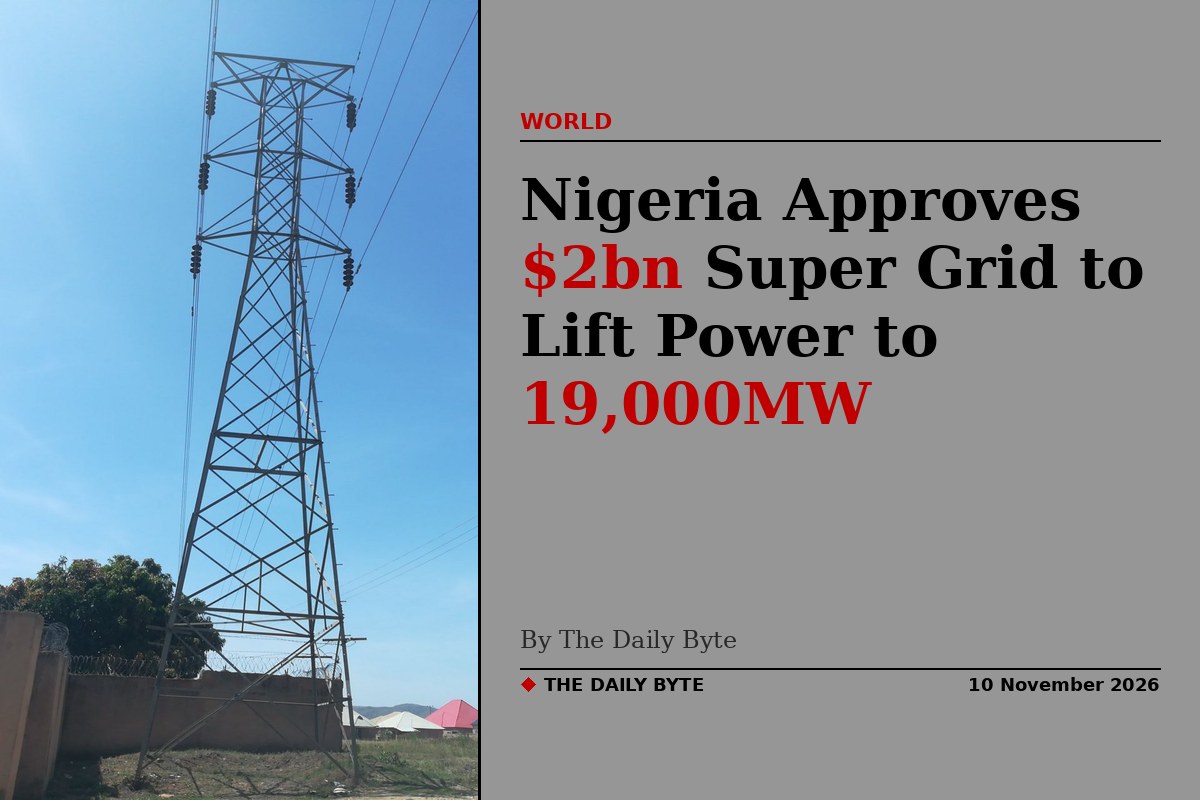
Nigeria has approved a $2 billion East-West Super Grid designed to expand the country's electricity transmission network, with procurement already under way and completion targeted within 18 to 24 months.
The Minister of Power, Joseph Tegbe, disclosed the plan on Monday, 9 November 2026, saying President Bola Tinubu had approved the project. The proposed network is expected to add at least 19,000 megawatts of transmission capacity, a sharp increase on the roughly 4,000 to 5,000 megawatts the existing system has historically been able to move.
What the Super Grid will do
The new corridor will connect six locations across the country: Funtua, Gwagwalada, Ikot-Ekpene, Benin, Epe and Ilorin. According to the minister, it will complement the existing national grid rather than replace it, giving electricity generated at power stations an additional route to homes and businesses.
The 19,000-megawatt figure refers to transmission capacity, not to electricity that will be generated or delivered immediately. Nigeria has more than 13,000 megawatts of available generation capacity, but weak transmission has long stopped much of that power reaching consumers.
Why transmission is the bottleneck
The announcement comes after a difficult week for the power sector. Planned maintenance at the Egbin Power Station, gas supply constraints and damage to transmission lines disrupted supply in Lagos, Ogun, Oyo and Kwara states and the Federal Capital Territory.
Mr Tegbe said the vandalised Benin-Egbin 330kV transmission line had been repaired and returned to service, lifting supply to the Lagos complex above 1,000 megawatts. Work is also under way to restore the Osogbo-Ikeja West line, which has been out of service for about 18 months and could deliver a further 400 megawatts to Lagos by the end of November.
A technical audit launched after Mr Tegbe took office in June 2026 identified faults in towers, insulators, conductors and relays across several transmission corridors. The government says a programme to replace faulty equipment will begin in the coming months, following presidential approval of funding.
Debts owed to generators
The minister also gave an update on money owed to electricity generation companies. About 1.23 trillion naira has been paid towards an estimated 3.3 trillion naira owed, leaving roughly 2 trillion naira outstanding, with the government targeting settlement of the balance in 2027.
Mr Tegbe said the super grid formed part of a wider effort to fix transmission, improve the finances of generation companies and attract private investment into the sector. He added that the government expected greater private-sector participation in electricity transmission within the next two to three years.
He told consumers to expect more stable electricity within three to five years, while cautioning that the super grid on its own would not solve Nigeria's power problems overnight. No confirmed construction start date or detailed financing breakdown has yet been published.


