Nigeria approves $2bn East-West super grid for power
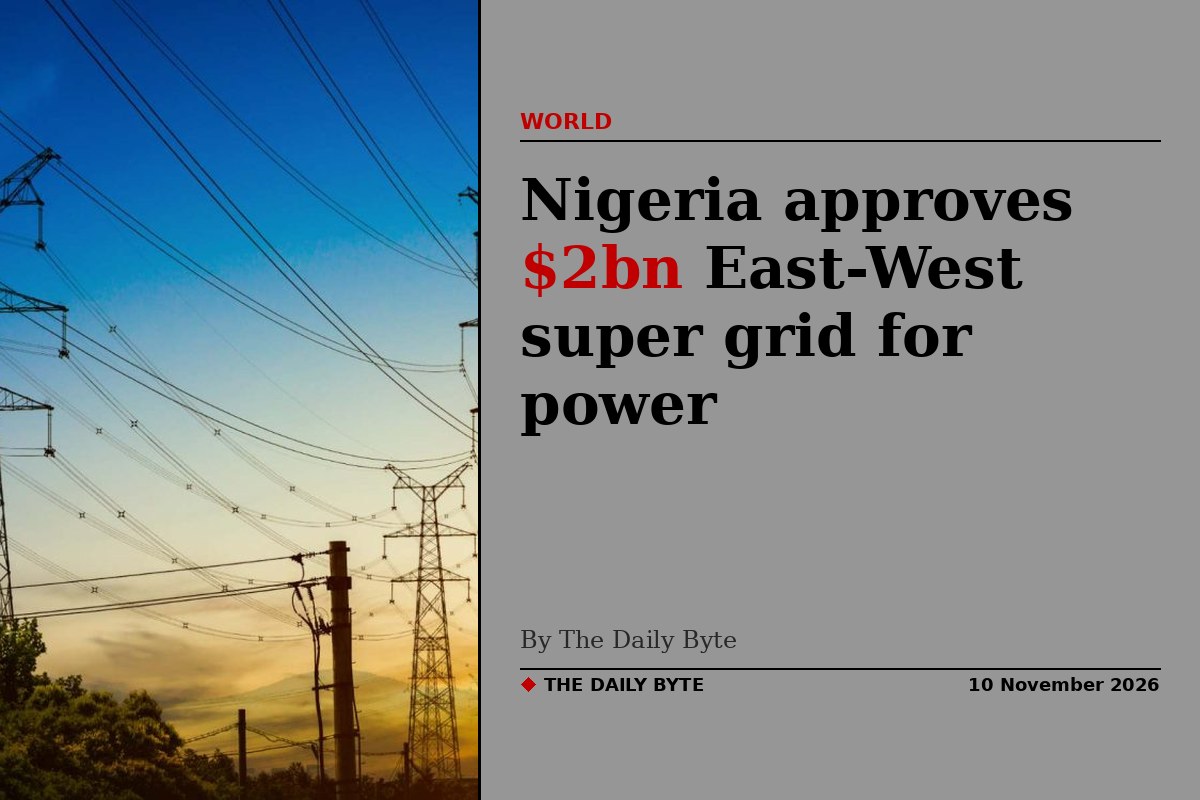
Nigeria's federal government has approved a $2 billion East-West super grid to strengthen the country's electricity transmission network, with procurement already under way following approval from President Bola Tinubu.
Minister of Power Joseph Tegbe disclosed the project on Monday, 9 November, saying it was a major part of the Tinubu administration's strategy to tackle long-standing transmission constraints and improve electricity reliability for homes and businesses.
The proposed super grid will run through Funtua, Gwagwalada, Ikot-Ekpene, Benin, Epe and Ilorin, providing additional transmission capacity of at least 19,000 megawatts. Tegbe said the new infrastructure would complement, rather than replace, the existing national grid.
Delivery targeted within two years
The project is expected to be delivered within one and a half to two years once funding and execution advance, according to the minister. The government has not yet provided a confirmed commencement date or a detailed breakdown of the financing arrangements.
The investment is aimed at one of the most significant weaknesses in Nigeria's electricity industry: the inability of the existing transmission network to carry available electricity reliably to consumers. Nigeria has more than 13,000 megawatts of available generation capacity, but transmission bottlenecks have long limited how much power reaches homes and businesses.
Tegbe, who assumed office as power minister in June 2026, said a technical audit launched shortly after he took office had identified deficiencies in critical transmission infrastructure, including towers, insulators, conductors and relays across several corridors. The findings will guide the replacement of faulty and inadequate equipment.
Debts to generators and recent outages
The minister also disclosed that the government had paid 1.23 trillion naira out of approximately 3.3 trillion naira owed to electricity generation companies, leaving an outstanding balance of about 2 trillion naira. The government is targeting settlement of the outstanding balance in 2027.
Tegbe said recent electricity supply disruptions in parts of the country, including Lagos and the Federal Capital Territory, had been resolved. He said the outages stemmed from planned maintenance at the Egbin Power Station and projected that Nigerians could begin to experience more stable electricity supply within three to five years.
Greater private sector participation in the transmission segment is also planned within the next two to three years, as the government looks to attract investment into the electricity market under the Electricity Act 2023.
The super grid announcement comes as Nigeria continues to grapple with unreliable power supply despite repeated reform efforts. If delivered on schedule, the new corridor would give the country a second major route for moving power between generating plants and consumption centres. Further detail is in Realnews Magazine's report on the approval and Investors King's report on the 19,000MW target.


