Nigeria to Sign Digital Trade Deal with Ghana, Kenya, Rwanda, South Africa and Egypt
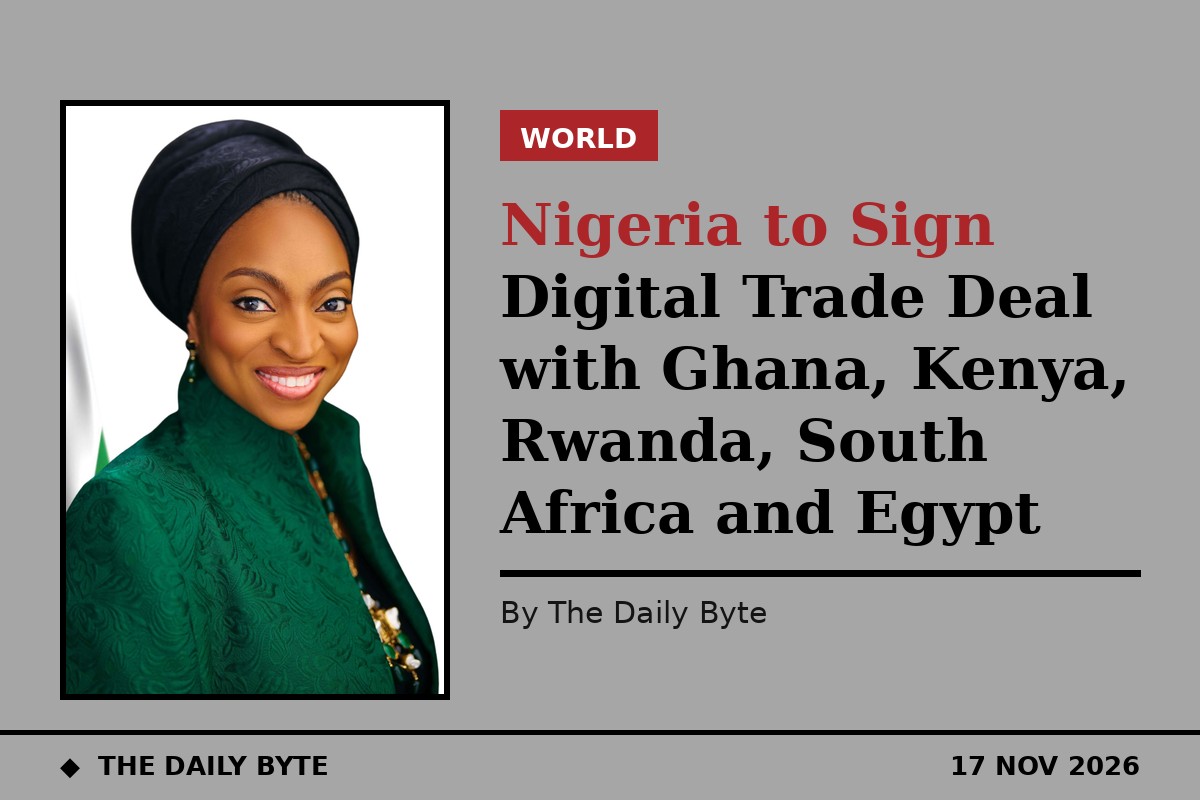
Nigeria expects to sign a digital trade agreement with five African countries before the end of November, in a move aimed at making it easier for technology companies to expand across the continent and reach new markets.
Minister of Industry, Trade and Investment Jumoke Oduwole said the agreement would involve Ghana, Rwanda, Kenya, South Africa and Egypt alongside Nigeria. She disclosed the plan in an interview with Reuters on Monday, 16 November, and said the signing was expected to take place during a meeting of the African Continental Free Trade Area (AfCFTA) Council of Ministers in Zimbabwe.
What the agreement is meant to do
The proposed deal is designed to reduce the barriers that Nigerian technology businesses face when they try to operate in other African markets. It is aimed in particular at financial technology firms, digital payment providers, e-commerce platforms and other digitally enabled service providers seeking customers beyond Nigeria's borders.
Oduwole said Nigeria selected the five partner countries after identifying the African markets that digitally enabled Nigerian businesses were most interested in entering. The government then brought together regulators from the six countries, including central banks and trade ministries, to explore ways of improving cooperation and reducing barriers to cross-border business expansion.
"We held a regulatory roundtable sandbox with those regulators, from their central banks to their ministries of trade to all the enablers," Oduwole said.
Details still to be confirmed
The minister did not disclose the specific provisions of the agreement or the regulatory changes it would introduce. It therefore remains unclear whether the deal will immediately change licensing, taxation, capital requirements or other rules that companies must meet before operating in the participating countries.
Businesses should not assume the agreement will automatically grant them authorisation to operate in the five partner countries until the text is published and the participating governments set out how it will be implemented.
Support for businesses expanding abroad
Beyond regulatory cooperation, Oduwole said the government was encouraging Nigerian development finance institutions to provide more funding for businesses seeking to expand across African markets. She added that the ministry was helping local companies navigate product standards, rules of origin and other requirements that often complicate access to foreign markets.
"We've been pushing to support our businesses to do more on the continent. That's the way we're going to grow our economies," she said.
Part of the wider AfCFTA push
The initiative sits within the wider African Continental Free Trade Area, which aims to create a single continental market for goods and services and improve the movement of businesses across national borders. The African Union has adopted an AfCFTA Protocol on Digital Trade, providing a continental policy framework for cooperation in digital commerce.
For Nigeria, expanding digital services into other African economies could give technology companies a much larger customer base, although the agreement's impact will depend on how far the participating countries align their regulatory frameworks and put the proposed arrangements into practice.
According to a second report by Investors King, also published on 17 November, the deal is expected to be signed before the end of the month, with the five partner countries chosen because Nigerian digital businesses see them as priority markets.
Frequently asked questions
Which countries are in the Nigeria digital trade deal?
Nigeria, Ghana, Rwanda, Kenya, South Africa and Egypt.
When will the agreement be signed?
Nigeria expects to sign it before the end of November 2026, during an AfCFTA Council of Ministers meeting in Zimbabwe.
Will Nigerian firms be able to operate freely in the five countries?
Not automatically. The detailed provisions have not been disclosed, and any changes to licensing or other rules will depend on how the agreement is implemented.
Sources: BusinessDay reporting of a Reuters interview with Minister Jumoke Oduwole; Investors King, 17 November 2026.


