Nigeria Expects Six-Country African Digital Trade Accord This Month
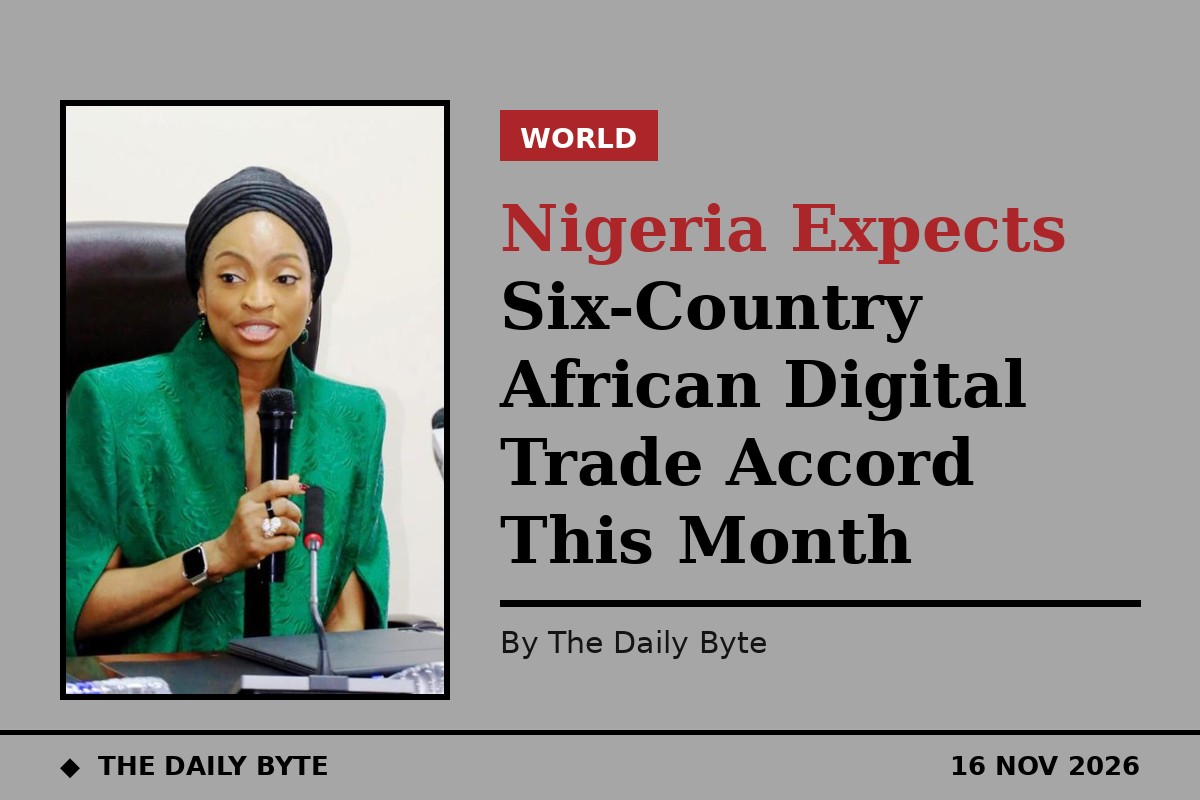
Nigeria expects to sign an agreement with five other African countries this month to make it easier for digital-service companies to expand across their markets, Trade and Investment Minister Jumoke Oduwole has said.
The agreement would involve Nigeria, Ghana, Rwanda, Kenya, South Africa and Egypt, and is expected to be signed at a meeting of the African Continental Free Trade Area (AfCFTA) Council of Ministers in Zimbabwe, Oduwole said in an interview with Reuters.
Nigeria selected the five other markets after mapping the countries into which its digitally enabled businesses most wanted to expand, she said. The government then brought together regulators from the six countries, including their central banks and trade ministries, to discuss cooperation that could help Nigerian technology companies grow into other African markets.
“We held a regulatory roundtable sandbox with those regulators, from their central banks to their ministries of trade to all the enablers,” Oduwole said.
An expected signing, not a signed deal
The agreement has not yet been signed, and its terms have not been published. Oduwole did not provide details of the planned accord or say whether it would immediately change licensing, taxation, capital or other regulatory requirements facing companies entering the participating markets.
That distinction matters for businesses watching the announcement. An expected signing this month is not confirmation that new market-access rules are already in force, and companies will need to wait for the final text to understand exactly what will change.
Even so, the choice of partners is significant. The six countries include some of Africa’s largest and most active digital economies, and the plan is aimed squarely at the firms that already sell software, financial technology and other digital services across borders, but face a different set of rules in each market.
Fintech at the centre of the plan
The initiative forms part of Nigeria’s efforts to use the AfCFTA to broaden markets for domestic companies, particularly in financial technology and other digitally enabled services. Nigeria is home to some of the continent’s best-known fintech firms, and the government has been pressing for easier routes for them to operate beyond its borders.
Oduwole said the government had also been urging Nigerian development institutions to deploy more capital across Africa and was helping domestic businesses navigate product standards, rules of origin and other requirements in export markets.
“We’ve been pushing to support our businesses to do more on the continent,” she said. “That’s the way we’re going to grow our economies.”
What happens next
The next step is the AfCFTA Council of Ministers meeting in Zimbabwe, where the signing is expected to take place. The Council of Ministers is the body that takes decisions on the implementation of the continental trade agreement, which aims to create a single market for goods and services across Africa.
If the accord is signed as expected, attention will turn quickly to its detail: which licences will be recognised across borders, how data and payments will be treated, and whether the agreement removes barriers in practice or simply sets out a framework for further talks.
For now, the announcement signals Nigeria’s intent to lead a smaller group of willing countries within the wider AfCFTA, rather than waiting for all of the trade area’s members to move at the same pace. Whether that approach delivers faster market access for digital firms will only become clear once the text is published and the first companies try to use it.
Sources: Reuters and Africa Business Insight, reporting the Reuters interview.


