Nigeria inflation falls to 14.06% in October, lowest in six years
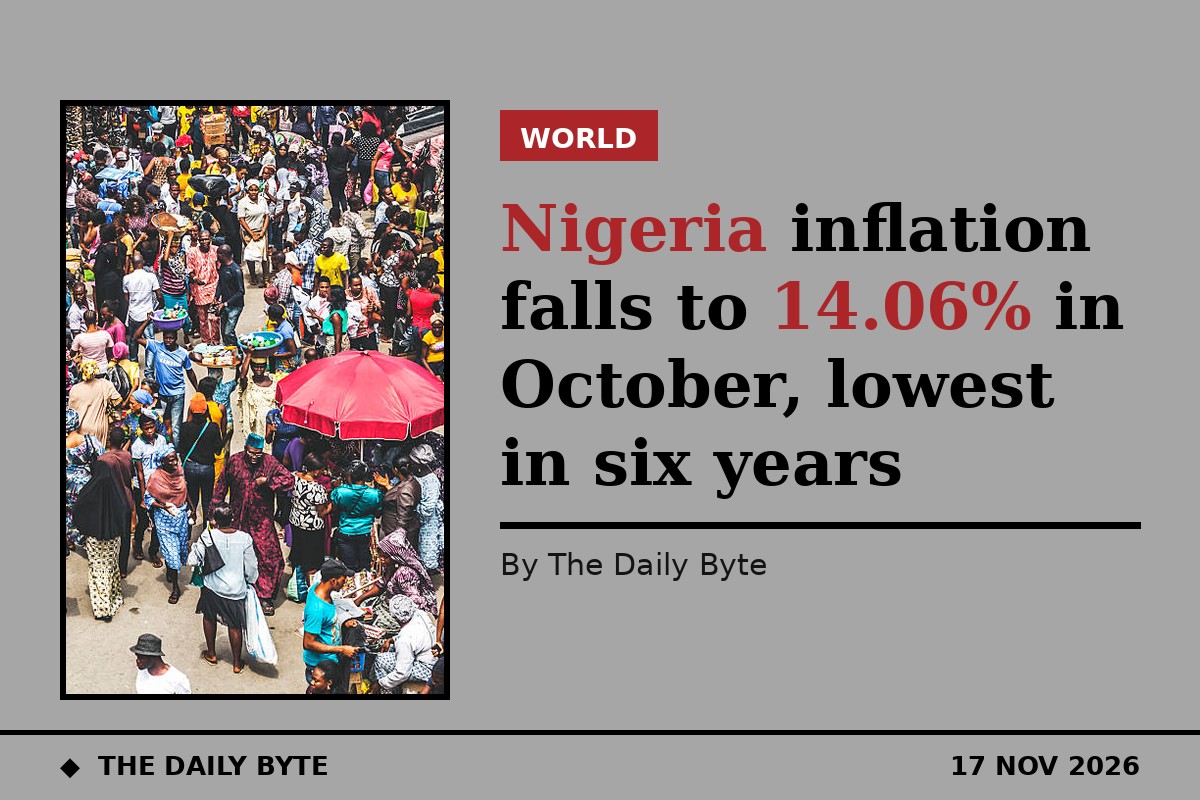
Nigeria's headline inflation rate fell to 14.06% in October 2026, down from 14.63% in September, reaching its lowest level in six years, according to the National Bureau of Statistics (NBS). The figures were published in the bureau's October Consumer Price Index report on Monday 16 November.
The annual rate has now fallen from 18.97% a year earlier, in October 2025, a decline of almost five percentage points over twelve months. The slowdown strengthens the case for a further cut in interest rates when the Central Bank of Nigeria's Monetary Policy Committee holds its final meeting of 2026 next week, BusinessDay reported.
Food inflation still close to 20%
The headline improvement has not yet translated into relief at the market stall. Food inflation eased only slightly, to 19.13% year on year in October from 19.59% in September, and remains well above the headline rate. The NBS said food and non-alcoholic drinks were the largest single contributor to headline inflation, accounting for 5.63 percentage points, followed by restaurants and accommodation services at 1.82 points and transport at 1.50 points.
Price movements in food were driven by items including vegetable oil, Titus sardines, green peas, frozen mackerel, locally produced rice, fresh catfish, beef tripe, palm oil and millet flour, the bureau said.
Monthly prices still rose
The annual figures also mask a faster monthly rise. Month-on-month headline inflation increased to 0.43% in October from 0.06% in September, meaning average prices rose more quickly during the month even as the annual rate fell. The Consumer Price Index stood at 147.0 points in October, up 0.6 points on the previous month.
Core inflation, which excludes volatile farm produce and energy, stood at 10.78% year on year in October, down sharply from 21.25% a year earlier. Urban inflation was 14.84% year on year, against 12.17% in rural areas.
Wide gaps between states
The national average hides large differences across Nigeria. Imo recorded the highest year-on-year inflation of any state, at 28.66%, followed by Enugu at 22.81% and Kaduna at 21.55%. Taraba recorded the lowest, at 6.12%, followed by Sokoto at 6.68% and Ekiti at 7.64%.
For food inflation, Ondo recorded the highest rate at 31.74%, followed by Lagos at 31.43% and Imo at 29.75%. Nasarawa recorded the lowest food inflation, at 3.70%.
What happens next
The central bank cut its benchmark rate by 350 basis points to 23% in September, its first easing after a long period of restrictive policy. With headline inflation now at a six-year low, economists expect the committee to consider another cut, although the faster monthly price rise and stubbornly high food inflation may argue for caution. The figures were disclosed by the Statistician-General of the Federation and NBS chief executive, Prince Adeyemi Adeniran, in the October CPI report.
Source: Voice of Nigeria, reporting the National Bureau of Statistics October 2026 Consumer Price Index; also BusinessDay.
Frequently asked questions
What is Nigeria's inflation rate now?
Headline inflation was 14.06% in October 2026, down from 14.63% in September and 18.97% in October 2025, according to the National Bureau of Statistics.
Are food prices falling in Nigeria?
No. Food inflation eased to 19.13% year on year, but that is the rate at which food prices are still rising, not a fall in prices.


