Nigeria Joins UN High Seas Treaty as 108th Party
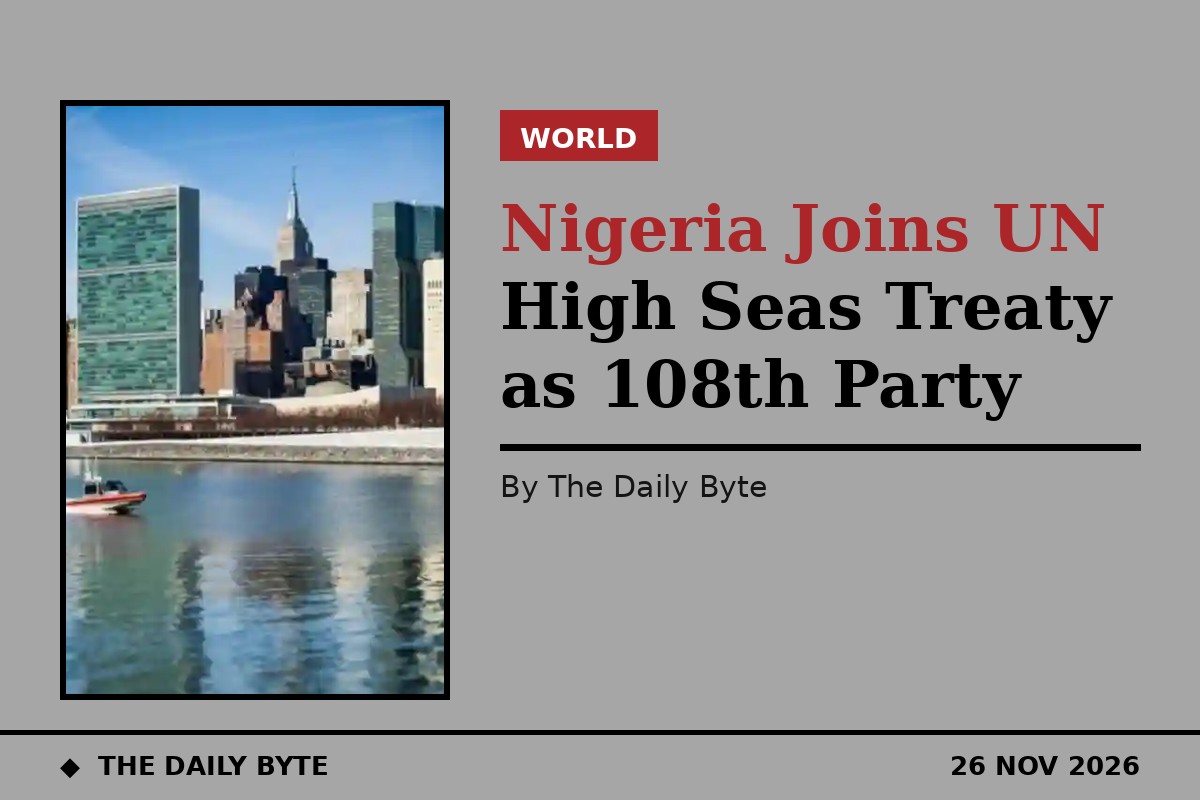
Nigeria has formally joined the United Nations treaty on marine biodiversity in the high seas, depositing its instrument of ratification at the UN headquarters in New York and becoming the 108th party to the agreement.
Nigeria's Permanent Representative to the UN, Ambassador Jimoh Ibrahim, handed over the document on Tuesday, 24 November 2026. The instrument, signed by President Bola Tinubu and dated 20 October, was received by Evelyn Sanchez, Officer-in-Charge of the UN Treaty Section, who told the Nigerian delegation that the country was now "party number 108".
The move was publicly announced in a statement from the UN Mission House in New York on Wednesday, 25 November.
What the treaty covers
The agreement, formally the Agreement on the Conservation and Sustainable Use of Marine Biological Diversity of Areas Beyond National Jurisdiction, is widely known as the High Seas Treaty. It sets global rules for protecting ocean life in waters outside any country's control and for sharing the benefits from marine genetic resources.
It also covers area-based management tools such as protected zones, reviews of the environmental effects of planned activities, training support, and the sharing of ocean technology with poorer nations.
The treaty entered into force on 17 January 2026 after reaching the required 60 ratifications. Nigeria signed it on 3 May 2024. The agreement will enter into force for Nigeria on 24 December 2026, allowing the country to take part as a full party in the first Conference of the Parties, scheduled for 11 to 22 January 2027 in the United States.
A stronger voice on ocean rules
Ibrahim said ratification would give Nigeria a stronger voice in decisions on ocean resources and benefit sharing, noting the country's reliance on fisheries and shipping. He said Nigeria would use its participation to champion fair access to benefits from marine genetic resources and digital sequence information.
He pointed to the steps the Tinubu administration has taken in the maritime sector, including the creation of the Federal Ministry of Marine and Blue Economy, the adoption of a National Blue Economy Policy and a draft roadmap for implementing the agreement.
Ibrahim also said Nigeria was working with other West African states on a proposal for a highly protected marine area on the high seas, and called for capacity building, technology transfer and a dedicated fund to help developing countries implement the treaty.
What it does not change
Ibrahim stressed that the agreement does not automatically expand Nigeria's territorial waters or alter its geographical boundaries. It provides a framework for countries to work together to conserve and sustainably use marine resources in areas beyond their national jurisdiction.
Nigeria, a coastal nation along the Gulf of Guinea, has an extended continental shelf of about 16,300 square kilometres beyond 200 nautical miles, as recommended by the UN Commission on the Limits of the Continental Shelf, an area the Presidency has compared to roughly five times the size of Lagos State.
The government says the blue economy is a growing part of its economic plans. According to government figures cited in reports, the marine and blue economy ministry generated 1.83 trillion naira in revenue in 2025, up from 700.79 billion naira in 2023, and is projected to reach 2 trillion naira in annual revenue by 2027.
Ibrahim urged African states that have not yet ratified the treaty to do so, pledging Nigeria's commitment to working with the African Group to ensure a successful first Conference of the Parties.
Sources: Ships & Ports; Sahelian Times.


