Nigeria proposes $10bn African Union Peace Fund
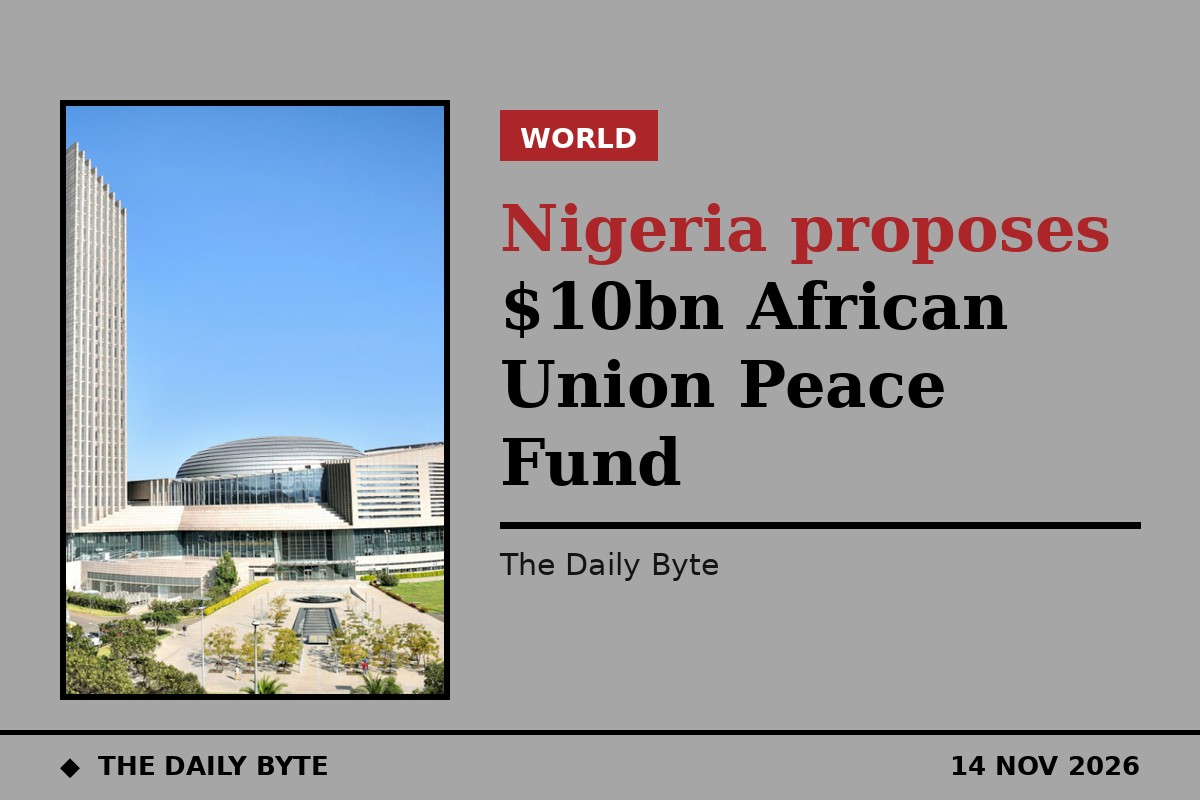
Nigeria has proposed building the African Union Peace Fund to $10 billion over the next decade, alongside reforms to reduce waste and strengthen the continental organisation's financial independence. The proposal was presented at the African Union's extraordinary session on financing the Union in Accra, Ghana, on Friday, 13 November 2026.
Nigeria's Minister of Finance and Coordinating Minister of the Economy, Taiwo Oyedele, presented the proposals at the 27th Extraordinary Session of the AU Executive Council on Financing the Union, according to a statement from his office. The $10 billion figure is Nigeria's proposed target for the fund, not an announced Nigerian contribution and not a decision the African Union has adopted.
Sovereign wealth fund principles
Under the proposal, financing for the Peace Fund would come from member-state levies, philanthropy and African capital. Oyedele advocated managing the fund along sovereign wealth fund principles, using investment returns to support peace initiatives while protecting its capital. He called for the interest-only rule to remain in place until a reliable replenishment mechanism had been established, warning against depleting the fund's principal.
Oyedele said Nigeria remained open to a proposed $1 billion target, but argued for a larger fund capable of providing sustainable financing over the longer term. He also urged countries with outstanding contributions to fulfil their commitments within an agreed period.
Members fund 25 per cent of the AU budget
According to the statement, Oyedele said member states currently financed 25 per cent of the AU budget and provided 4 per cent of programme funding, compared with a 75 per cent programme-funding target. He argued that declining development assistance made stronger domestic financing more urgent, and that higher contributions must be accompanied by discipline, efficiency and the ability to attract additional resources.
He called for fewer, high-impact priorities, a credible medium-term fiscal framework and spending ceilings linked to performance. On costs, he sought the removal of 29 identified areas of institutional duplication, estimated to cost the AU up to $36 million, and advocated implementing audit recommendations and generating revenue from AU-owned properties. He also urged technical experts of the Forum of Finance Ministers, known as the F15, to test projections that could raise member-state contributions to $779 million by 2031, taking account of fiscal pressures across African economies.
Accra session focused on self-reliance
Ministers of foreign affairs and finance from across the continent gathered in Accra for the session, held at the Labadi Beach Hotel under the theme of a financially sustainable and self-reliant African Union. Delegates were asked to consider the report of the High Representative on Financing the Union and the Peace Fund, along with a proposal on a strategic partnership between the African Union and African multilateral financial institutions. Predictable funding for peace support operations sat at the centre of the talks, together with the drive to enforce payment of member state contributions.
South Africa's delegation was led by Ronald Lamola, the minister of international relations and cooperation, who said the financing debate was as urgent as it was timely given the shrinking pool of external funding. Kenya was represented by Prime Cabinet Secretary Musalia Mudavadi, who arrived in Accra on Thursday ahead of the session. Kenya's President William Ruto serves as the AU champion for institutional reform. Ghana hosted the session in collaboration with the African Union Commission.
The wider debate includes how much of the Peace Fund's capital should be available for immediate crises. The AU said Commission Chairperson Mahmoud Ali Youssouf proposed controlled annual use of capital, accompanied by a replenishment mechanism. Oyedele called for the Accra meeting to produce an implementation plan, including progress on institutional efficiencies by the 2027 mid-year session. Read the full account in Okay News' report on Nigeria's proposal and QNC News' report on the Accra session.


