Nigeria Raises Medical School Admissions to 12,000
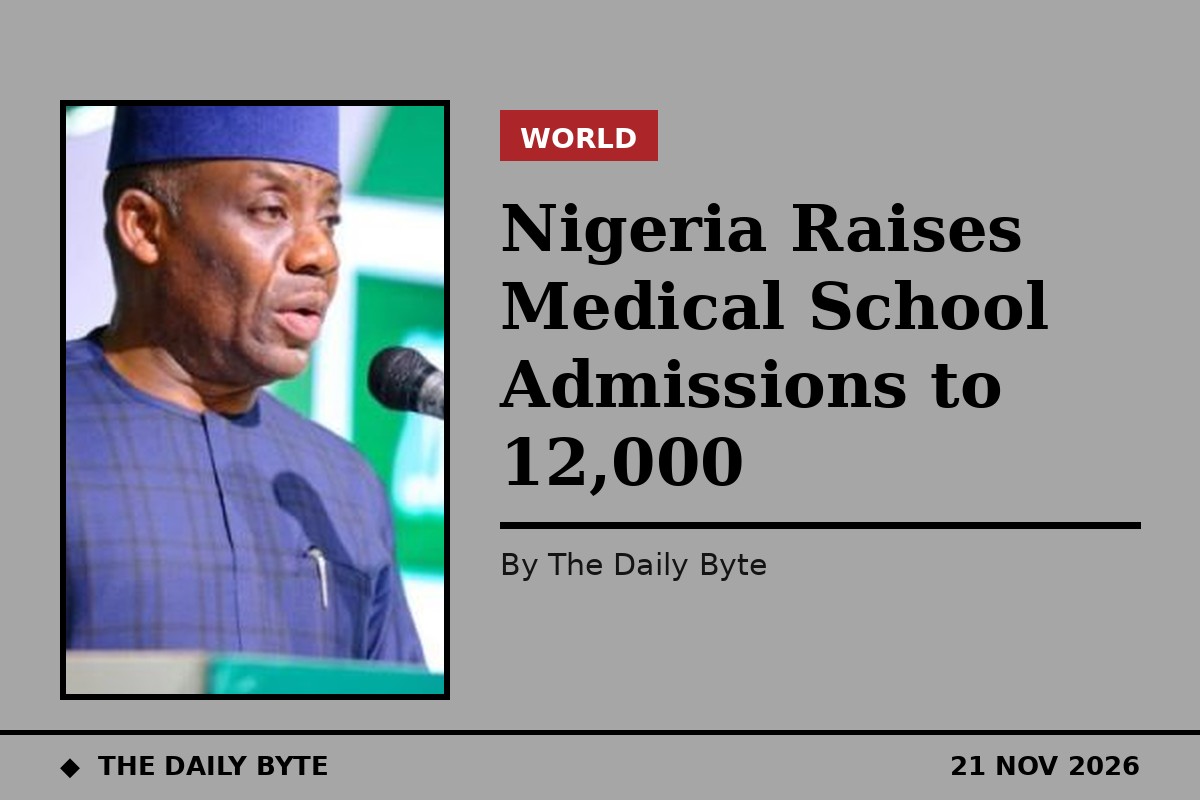
Nigeria has more than doubled the number of students admitted into its medical schools each year, raising annual admissions from about 5,000 to about 12,000, as the Federal Government moves to tackle a deepening shortage of doctors and other health workers.
The Minister of Education, Dr Tunji Alausa, announced the increase on Saturday at the inauguration of a 192-bed hostel at the College of Medicine, University of Ibadan, where he represented President Bola Tinubu. He said the government aims to raise annual medical school enrolment to more than 20,000 students by the end of 2028.
"We decided that in four years, we will increase the number to 20,000 annually," Alausa said. "Three years into it, we are enrolling about 12,000 medical students now across all our medical schools in the country, and by the end of 2028, we will meet our target of enrolling over 20,000 medical students."
The rise represents an increase of about 140 per cent on the annual intake recorded before the administration took office in May 2023, when medical schools admitted roughly 5,000 students a year between them.
Why Nigeria needs more doctors
The minister said the expansion was part of efforts to address manpower shortages in the health sector, as large numbers of Nigerian medical professionals continue to relocate abroad in search of better working conditions, pay and career opportunities.
Nigeria has struggled for years with the emigration of doctors, nurses and other health workers, a trend that has left hospitals short-staffed and lengthened waiting times for patients. The government argues that training far more health professionals at home is the only sustainable way to close the gap.
Alausa said the government was also expanding enrolment in other health disciplines, including nursing, dentistry, pharmacy and physiotherapy. He said nursing enrolment had risen sharply, from about 28,000 students a year to more than 130,000, as part of the broader strategy to improve the availability of healthcare professionals.
He urged journalists to verify the enrolment figures through the relevant regulatory bodies, including the Nursing and Midwifery Council of Nigeria, underlining that the numbers should be checked against official records rather than taken on trust.
Hostels, labs and loans to support the growth
The minister said the administration was investing in infrastructure to expand the capacity of medical schools and other tertiary institutions so they can accommodate more students. The new hostel at the University of Ibadan's College of Medicine, inaugurated on Saturday, is part of that programme.
He said the expansion was being complemented by investments in hostels, laboratories, lecture halls and other facilities needed to support medical training, as well as by the Nigeria Education Sector Renewal Initiative, which covers the construction and rehabilitation of schools, the expansion of medical schools and the re-equipping of engineering workshops.
Alausa said the administration had invested nearly 500 billion naira in educational infrastructure, and that the Nigerian Education Loan Fund had expanded access to tertiary education for students regardless of their economic background.
For thousands of candidates seeking admission into medicine and surgery, the announcement signals a wider door into the country's medical schools in the coming years. Admission will still depend on institutional capacity, accreditation requirements, candidates' performance in entrance examinations and other admission criteria, and universities are not expected to lower their standards simply because places have increased.
Training more doctors is only part of the answer
Health experts have long argued that increasing admissions alone will not reverse the migration of doctors unless working conditions, pay, funding and employment opportunities improve at home. Many newly qualified doctors leave within a few years of graduating, drawn by higher salaries and better-equipped hospitals overseas.
The government says the combination of expanded training, better infrastructure and student loans will gradually change that calculation, producing more locally trained professionals and giving them stronger reasons to stay. Whether the 20,000-a-year target is reached by the end of 2028, and whether those graduates remain in Nigeria's health system, will be the real test of the policy.


