Over 90 Nigerian rice mills shut as paddy runs short
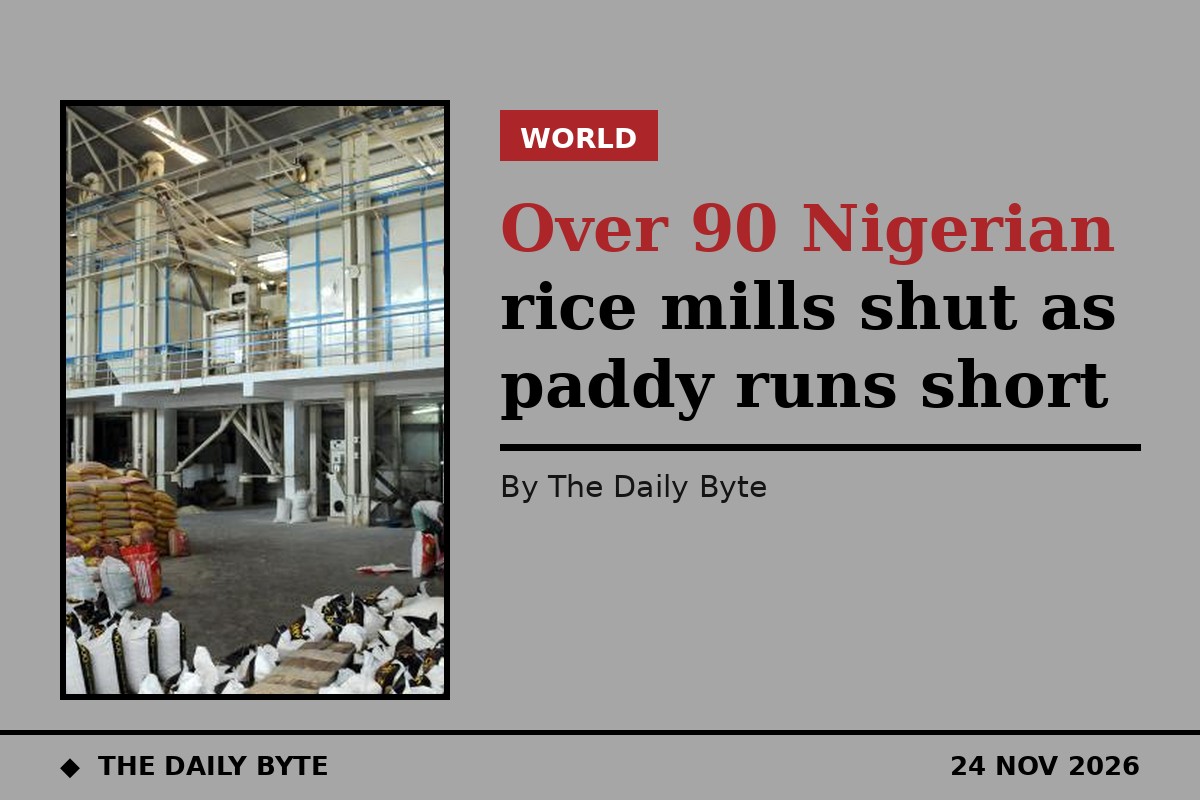
More than 90 of Nigeria's 260 integrated rice mills have shut down completely, according to a report published by Vanguard on Monday, 23 November, in a major reversal for the country's decade-long push towards rice self-sufficiency.
The closures follow a sharp fall in local paddy production, rising operating costs and growing competition from cheaper imported rice. Paddy output, which reached about 8.5 million tonnes in 2021, had fallen to roughly 4.8 million tonnes by 2025, while milling capacity utilisation has dropped below 30 per cent, the report said.
Leading mills running below half capacity
Industry operators told Financial Vanguard that leading integrated mills, including Umza in Kano State and Stallion in Lagos, are operating below 50 per cent of their installed capacity. A tonne of paddy that sold for about 180,000 naira in 2021 now costs between 600,000 and 650,000 naira, squeezing margins across the industry.
Peter Dama, national chairman of the Rice Millers Association of Nigeria, blamed policy inconsistency, above all the suspension of the Anchor Borrowers' Programme, which had driven the production surge between 2015 and 2023. Operators also listed inadequate agricultural financing, insecurity in farming areas, escalating input costs and weak supply chains as factors behind the decline over the past three years.
A strategy running out of time
The crisis comes as the National Rice Development Strategy II, launched in 2021 to accelerate investment and self-sufficiency, expires next month. Nigeria had announced 75 per cent self-sufficiency in rice production in February 2023 and projected it would become a net exporter of the commodity by 2026.
Instead, operators say 2026 has seen a deliberate opening of the country's borders, allowing massive importation of cheaper foreign rice, especially through the Seme border with Benin Republic. More than 2.5 million tonnes were reported to have entered Nigeria through Cotonou in 2026, according to industry figures cited in the coverage.
A senior Federal Ministry of Agriculture official, speaking anonymously, told Vanguard that policy inconsistency was the main challenge facing the rice value chain. The report's authors note the crisis reaches beyond mill owners to farmers, transporters, distributors, workers and the millions of households that depend on rice as a staple food.
AgriInsite, carrying the same Vanguard report, notes that Nigeria's annual rice import bill, estimated at about $1 billion in 2015, had fallen to approximately $18.5 million by 2021 — a gain now at risk of being reversed as local milling capacity idles.


