Nigeria Scraps 269 Obsolete Laws After 932 Review
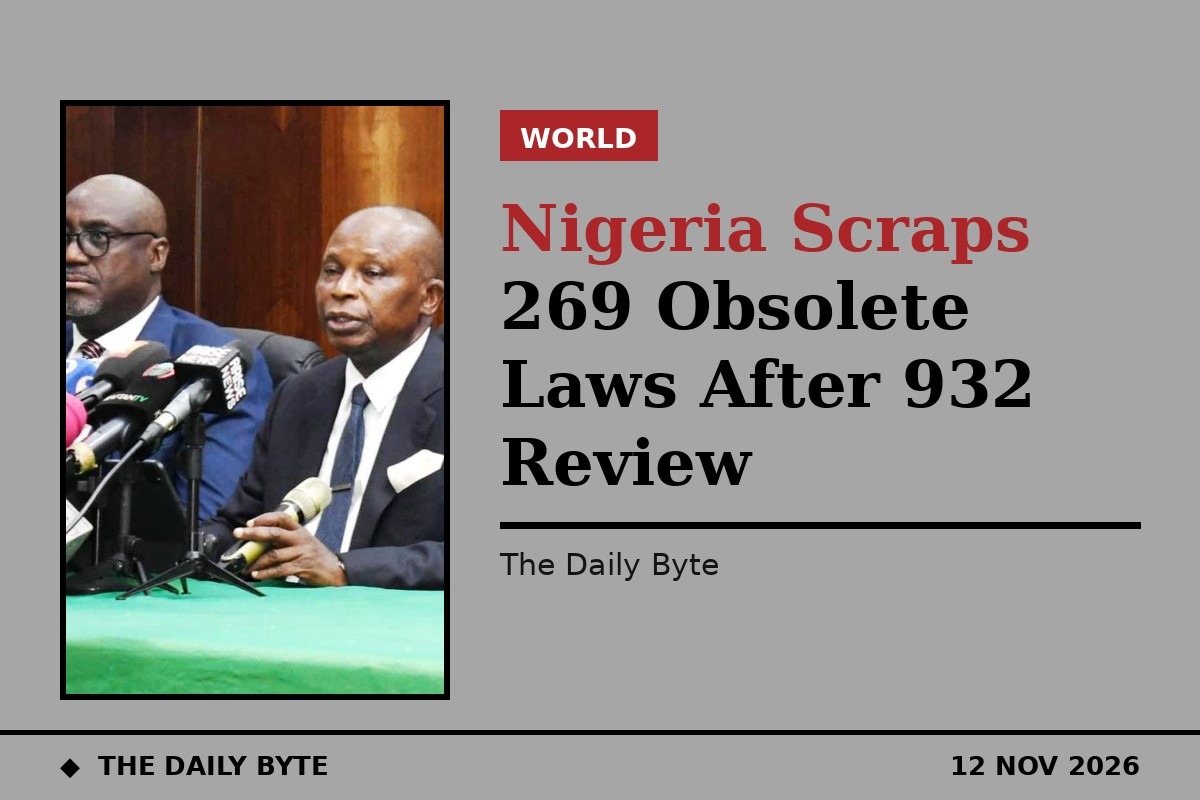
Nigeria is to drop 269 obsolete laws from its statute book after a comprehensive review of the country's federal legislation, the first full update of the Laws of the Federation in more than two decades.
The Attorney-General of the Federation and Minister of Justice, Prince Lateef Fagbemi, announced the move on Thursday in Abuja while receiving the final report of the Committee on the Review, Update and Consolidation of the Laws of the Federation of Nigeria.
The committee examined 932 federal enactments and 731 subsidiary legislations. Of those, 663 enactments, together with their relevant subsidiary legislation, were identified for inclusion in the proposed 2025 edition of the Laws of the Federation, while 269 were found to be obsolete, spent or repealed.
Two decades without an update
Fagbemi said the exercise was necessary because the last official consolidation of the Laws of the Federation was undertaken in 2004, leaving more than 20 years of new laws, amendments and institutional change without a comprehensive consolidation.
He constituted the committee on 24 October 2024, with a mandate to review federal enactments and subsidiary legislation, identify obsolete laws, address inconsistencies and overlaps, and produce an authoritative and accessible edition of the country's laws.
The committee was chaired by Olawale Fapohunda, a Senior Advocate of Nigeria and former Attorney-General of Ekiti State, and co-chaired by Professor Dakas Dakas.
What the review found
Presenting the report, Fapohunda said the review had exposed outdated language and conflicting provisions in the statute book, including fines as low as 10 and 50 naira that no longer reflect present-day realities.
Fagbemi said the updated edition was expected to improve the administration of justice, strengthen legal certainty and make the laws that apply in Nigeria more accessible to judges, lawyers, government institutions and the general public.
He stressed that the review covered the period from 2004 to 2025, during which Nigeria witnessed significant legislative, constitutional, institutional and technological developments.
What happens next
The Attorney-General said the report would be presented to President Bola Ahmed Tinubu for onward transmission to the National Assembly for legislative consideration and necessary action.
The proposed Laws of the Federation of Nigeria 2025 will only take effect as the authoritative consolidated edition once that legislative process is complete, and the government has not set a date for its publication.
Why the update matters
Because no full consolidation has been published since 2004, lawyers, judges and citizens have had to work from the old edition plus two decades of scattered amendments, new enactments and repeals. Fagbemi said the new edition was intended to provide a single authoritative and accessible reference, so that the laws in force can be found in one place rather than pieced together from separate sources.
The Attorney-General added that the exercise was designed to strengthen legal certainty and support the administration of justice, at a time when the country's laws have had to keep pace with constitutional, institutional and technological change.