Nigeria plans single budget cycle from 2027
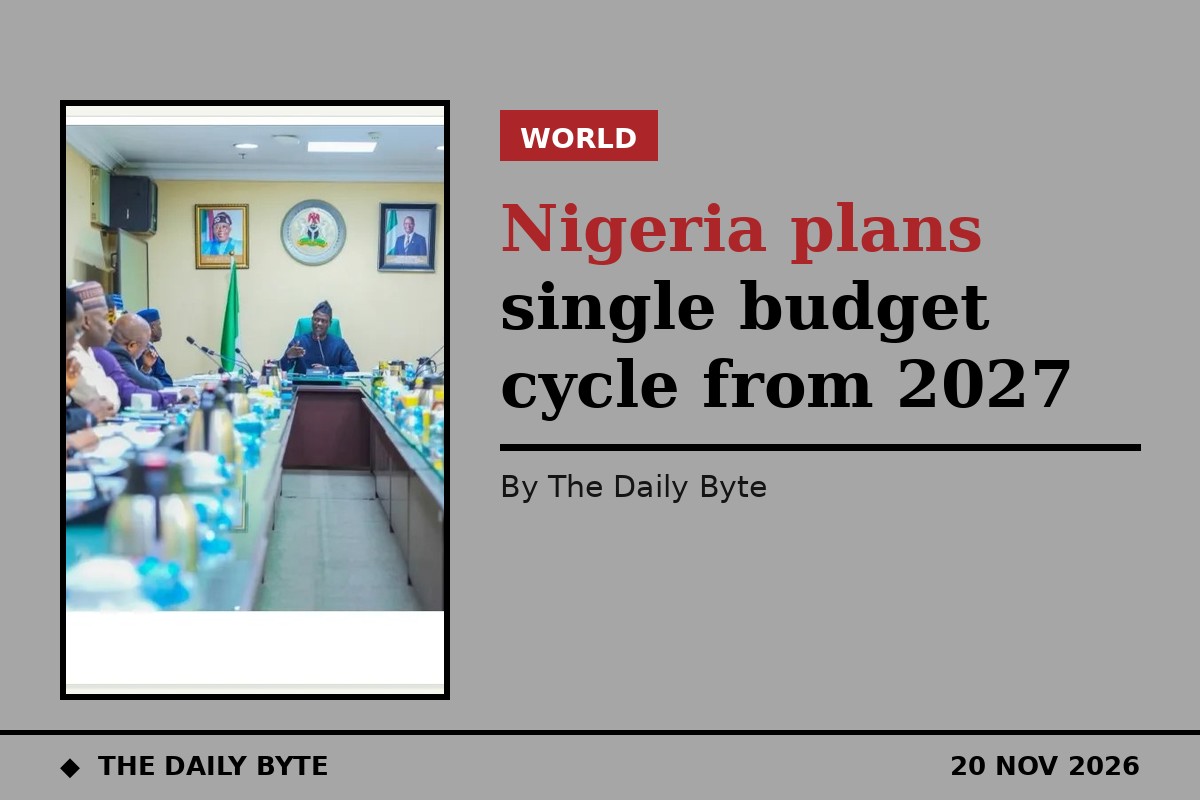
Nigeria will carry unspent capital spending from its 2026 budget into 2027 as the federal government moves towards running a single annual budget cycle, the Federal Ministry of Finance said on Friday.
The decision followed a meeting of the Economic Management Team in Abuja on Wednesday, chaired by Taiwo Oyedele, the minister of finance and coordinating minister of the economy. In a statement signed by the minister’s press secretary, Maryann Duke, the ministry said the team planned to carry out as much capital spending as possible before the end of 2026, with the remainder moved into the following year.
“The EMT advanced work to harmonise and align the budget around more realistic revenue and financing assumptions, with plans to implement as much capital spending as possible in 2026 and carry forward outstanding balances into 2027, while moving Nigeria toward a single annual budget cycle going forward,” the statement said.
The ministry did not say how much money would be carried forward.
Why the change matters
Nigeria has long run overlapping budgets, with capital releases from one year stretching into the next while a new budget is already in force. That pattern leaves ministries, state governments and contractors unsure when approved projects will actually be paid for, and it makes it harder to tell how much of any single year’s budget was really spent.
The finance ministry said the team also worked to bring the budget into line with more realistic estimates of revenue and financing, after weaker collections this year left spending plans behind their targets. A single annual cycle is intended to end the overlap and give ministries and contractors clearer and more predictable spending plans.
What else the team reviewed
The meeting also reviewed work on the 2027 Finance Bill, which is intended to update the country’s tax laws as part of the government’s ongoing tax reform programme, and considered the draft National Development Plan covering 2026 to 2036. Members were asked to send in further feedback on the plan before its launch.
The team discussed a 90-day plan on food prices, covering the delivery of farm inputs and efforts to reduce losses after harvest for staples including cassava, yams, maize and rice. It also reviewed a 90-day power plan that sets a target of distributing about 5,500 megawatts consistently through the national grid in the near term. The ministry described the figure as a target the plan aims at, rather than a level the grid has reached.
The plans come as fresh official figures show the economy expanding while price pressures ease. Gross domestic product grew 4.43 per cent year on year in the second quarter of 2026, according to the National Bureau of Statistics, while annual headline inflation slowed to 14.06 per cent in October from 14.63 per cent in September.


