Nigeria Plans Six-Nation African Digital Trade Accord
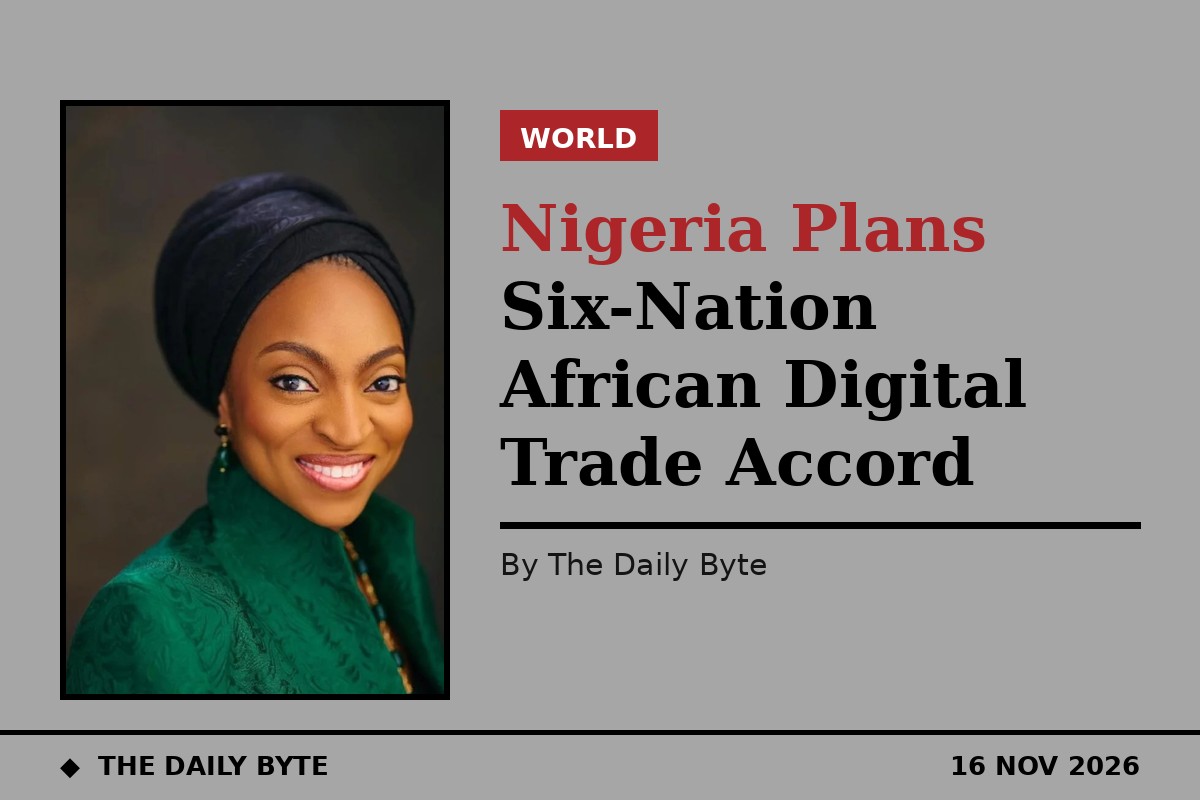
Nigeria expects to sign a digital trade agreement with five other African countries this month to make it easier for digital service companies to expand across their markets, Trade and Investment Minister Jumoke Oduwole has said. The six countries in the planned accord are Nigeria, Ghana, Rwanda, Kenya, South Africa and Egypt, and signing is expected at a meeting of the African Continental Free Trade Area (AfCFTA) Council of Ministers in Zimbabwe.
Oduwole said in an interview with Reuters that Nigeria chose the five partner markets after mapping the countries into which its digitally enabled businesses most wanted to expand. Financial technology firms are among those expected to benefit first, as the initiative forms part of Nigeria's effort to use the AfCFTA to open larger markets for its domestic companies.
Regulators have already been talking
Ahead of any signing, Nigeria convened regulators from all six countries, including their central banks and trade ministries, to discuss the cooperation needed to help Nigerian technology companies scale into the other markets. Oduwole described the exercise as a regulatory roundtable sandbox, bringing together central banks, trade ministries and other enablers from the six countries.
The groundwork for that cooperation was laid last year. Nigeria was appointed African Union co-champion of the AfCFTA Protocol on Digital Trade in February 2025, and in October 2025 its trade ministry convened the first AfCFTA Digital Trade Regulators' Roundtable with Egypt, Ghana, Kenya, Rwanda and South Africa. That roundtable drew more than 27,000 applications to take part, from which an initial pilot group of 50 digital service firms was selected.
What the accord would not yet change
Oduwole did not provide details of the planned accord, and she did not say whether it would immediately alter licensing, taxation, capital or other regulatory requirements facing companies entering the participating markets. An expected signing this month is therefore not confirmation that new market-access rules are already in force; businesses will need the final text to know exactly what changes.
Even so, the direction of travel is clear. Oduwole said the government has also been urging Nigerian development institutions to deploy more capital across Africa and has been helping domestic businesses navigate product standards, rules of origin and other requirements in export markets. “We've been pushing to support our businesses to do more on the continent,” she said. “That's the way we're going to grow our economies.”
The test now is the ministers' meeting in Zimbabwe. If the six countries sign as expected, the accord would give Nigeria's fintech and digital service firms a formal framework for expanding into five of the continent's largest markets — but its value will depend on the detail that follows the signatures.


