Nigeria Power Lines Trip, Supply Falls to 781MW
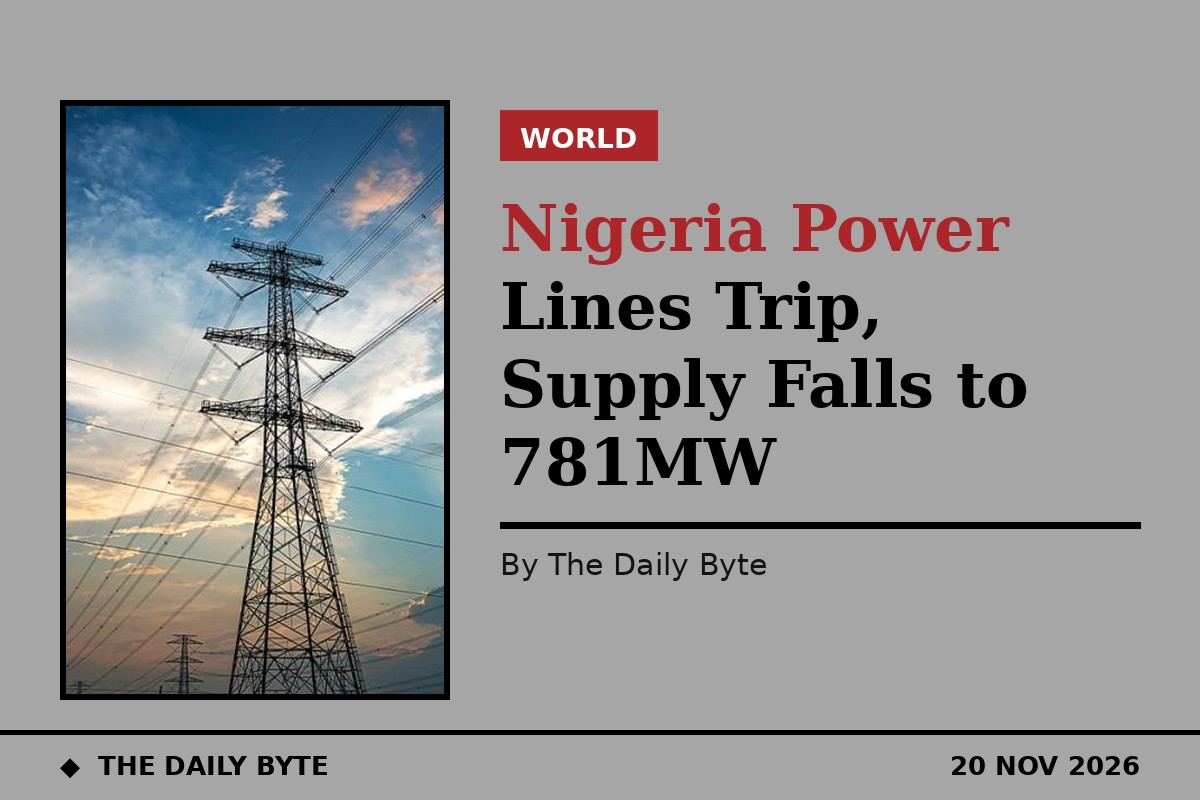
Nigeria's electricity supply plunged on Friday after four major transmission lines tripped within 16 minutes, causing significant load losses in Lagos and other parts of the country.
The Nigerian Independent System Operator (NISO) said the first incident happened at 12:34pm, when the Omotosho-Ikeja West transmission line tripped, causing a significant reduction in electricity supply within the Lagos Complex. Sixteen minutes later, at 12:50pm, three more lines tripped: Ihovbor-Oshogbo, Benin-Egbin and Ihovbor-Ajaokuta.
NISO said all four lines had been restored to normal operation by 2:49pm, about two hours and 15 minutes after the first incident. Operational teams worked with the Transmission Company of Nigeria (TCN) to stabilise the network and restore the affected lines.
Not a system collapse, operator says
NISO was quick to rule out a national grid collapse, describing the incident as a transmission line disturbance. “The grid disturbance experienced earlier today was not a system collapse, but a result of the tripping of some transmission lines, which caused load losses in parts of the country,” the operator said in a statement.
TCN issued a separate statement with the same message, titled “Benin-Omotosho Line Tripping, Not System Collapse”, saying the national grid had not collapsed, contrary to reports circulating online earlier in the day.
Even so, the disruption was severe. Data from the system operator showed that power generation, which stood at 3,990 megawatts at midnight, had fallen to 3,365 megawatts by 11am before crashing to 781 megawatts at 1pm. Only eight power plants were supplying electricity to the national grid at that point, with Delta Power contributing 223 megawatts, Odukpani National Integrated Power Project generating 182 megawatts and Ihovbor supplying 168 megawatts. Supply recovered to 2,568 megawatts by 5pm after emergency interventions by NISO and TCN.
A familiar pattern of disruption
NISO did not disclose the volume of electricity lost, the number of consumers affected or the specific causes of the line trips. It advised the public to rely on its official communications for accurate information about developments on the grid.
The incident is the latest in a series of disruptions to Nigeria's power network. On 19 October 2026, electricity generation plunged from 3,840 megawatts to 477 megawatts following multiple trippings on the 330-kilovolt transmission network. The country also went through another period of severe supply constraints in early November, which NISO attributed to gas supply limitations affecting thermal power stations and lower hydroelectric output caused by reduced water levels.
Friday's disturbance underlines how fragile the transmission network remains, even when the system operator is able to restore lines within hours. For homes and businesses in Lagos and beyond, the trips meant another day of lost power while the grid was stabilised.


