Nine Bangladesh garment factories shut indefinitely
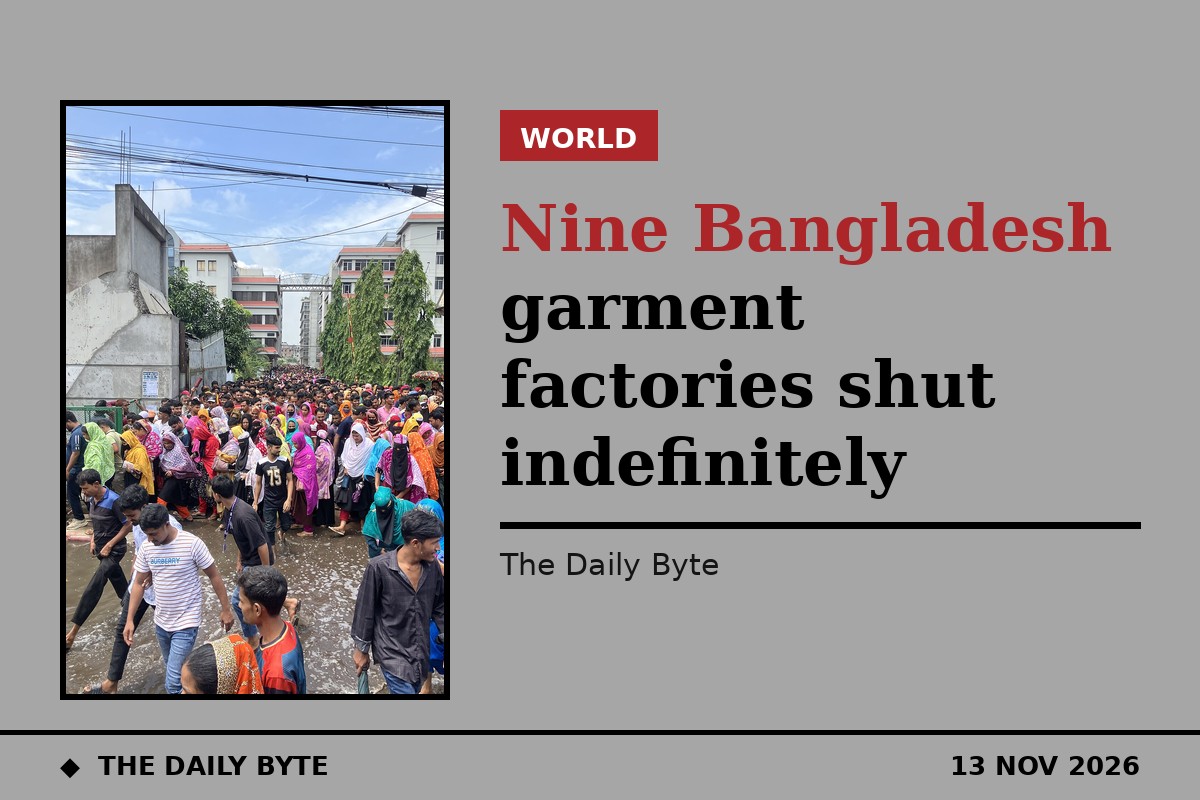
Nine garment factories in Bangladesh have been shut indefinitely as a wage dispute that began at the end of October flared up again, leaving around 20,000 workers without work and without pay.
The closures were decided on Wednesday 11 November and Thursday 12 November, according to sources at the Bangladesh Garment Manufacturers and Exporters Association (BGMEA). More than 200 other factories in Gazipur and Ashulia were forced to suspend production on Thursday after workers refused to join their shifts, and factory owners are considering shutting down all factories in the Ashulia industrial area indefinitely if the unrest continues.
Which factories have closed
The nine factories closed indefinitely are MM Knitwear, Arunima Sportswear, Newage Apparels, Newage Garments, Kailock Newage BD Limited, Titas Sweaters, Mamun Knitwear, DMC Apparels and DMC Washing Limited, according to the Department of Inspection for Factories and Establishments, under the Ministry of Labour and Employment, and the BGMEA.
The closures were made under Section 13(1) of the Bangladesh Labour Act, which allows factory owners to suspend operations indefinitely in cases of labour unrest or circumstances beyond their control. Workers are not entitled to wages for the period a factory remains closed under this provision, a principle commonly described as no work, no pay.
BGMEA President Mahmud Hasan Khan Babu said factory owners had repeatedly reopened their factories, only to find that workers were unwilling to resume production, leaving them with no option but to close under the labour law. He said production could resume once the situation returned to normal.
How the unrest spread
The large-scale unrest began on 31 October and subsided after 5 November, but intensified again on 10 November. Factory authorities declared holidays at 146 factories that day, 182 on 11 November and 204 on 12 November, including 137 in Ashulia and the wider Savar area and 67 in the Konabari and Kaliakair areas of Gazipur. The unrest had been confined to Ashulia and Savar until Wednesday, but spread to Gazipur on Thursday.
Garment workers blocked the Dhaka-Tangail Highway in the Mouchak area of Kaliakair in Gazipur on Thursday, disrupting traffic for nearly three hours before police dispersed them using sound grenades. The blockade began at around 8:30am and traffic resumed at 11:30am. In Ashulia, workers at several factories refused to return to work after lunch, while some protesters threw bricks and stones at factory premises, injuring junior quality inspector Md Sajib Hasan in the head. He was taken to City Hospital for treatment.
The wage demand behind the dispute
Workers are demanding that the monthly minimum wage be raised to 30,000 taka, more than double the current 12,500 taka set in November 2023. Their representative on the Minimum Wage Board has proposed 32,000 taka. The board, set up on 1 November, agreed on 4 November that a revised pay structure would apply from December, but the amount has yet to be finalised. Owners were preparing their own proposal for the next board meeting, scheduled for 16 November.
Some labour leaders believe a section of workers is deliberately maintaining pressure on factory owners ahead of the announcement of the new minimum wage, while owners say they are struggling to reopen and operate factories. BGMEA Vice President Md Rezwan Selim said most owners and former association presidents at an emergency meeting on 11 November supported closing factories, and owners were also considering whether their representative should attend the 16 November wage board meeting if unrest continued.
What is at stake
Bangladesh's garment industry earns around 38 billion dollars a year, accounts for about four fifths of the country's export earnings and employs more than four million people. The BGMEA has more than 4,500 member factories, and Bangladesh is the world's second largest garment exporter after China.
Repeated stoppages are already raising concerns about export schedules and buyer confidence, with industry figures warning that the damage to Bangladesh's reputation as a sourcing destination could last beyond the immediate disruption. For the workers, the immediate cost is more direct: while factories stay shut under Section 13(1), those taking part in the stoppages receive no wages, so a dispute over higher pay is leaving thousands of households without their existing earnings until the factories reopen.


