Nordic nations agree to draft joint defence pact
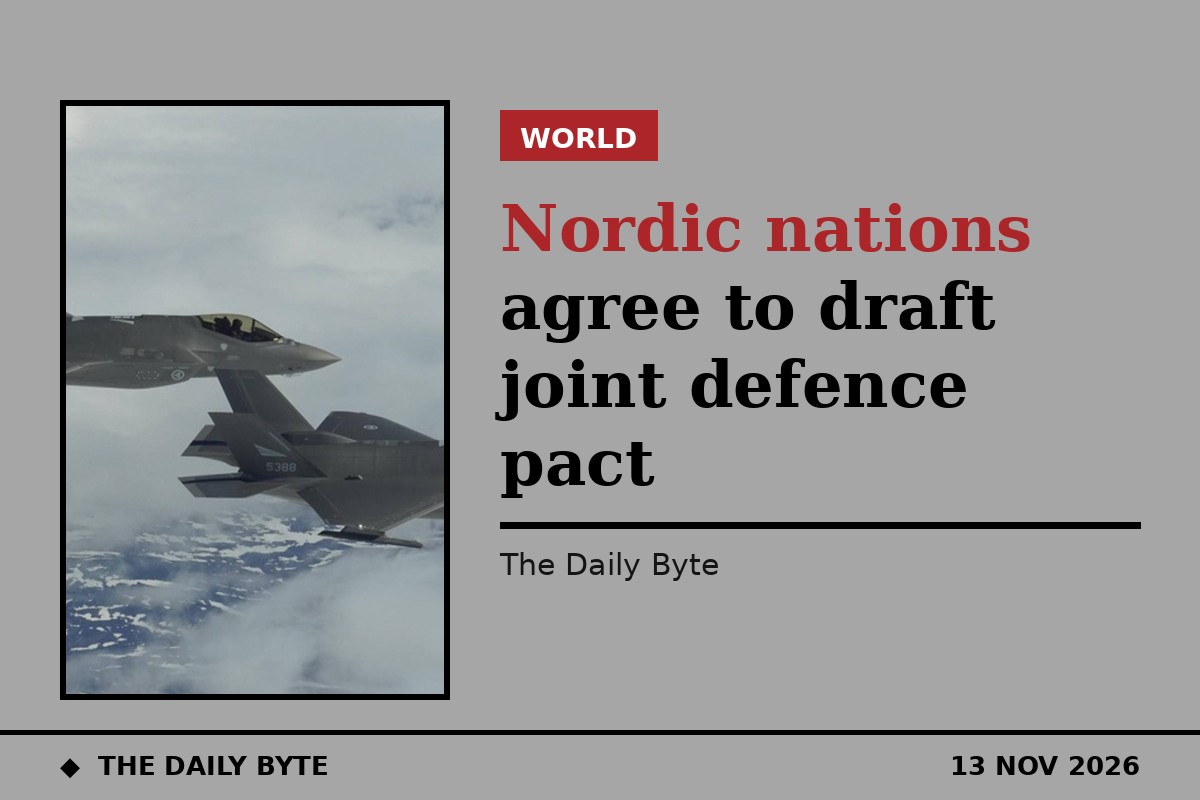
The five Nordic countries have agreed to start work on a common defence agreement aimed at integrating their armed forces more closely and strengthening NATO's ability to deter and defend in northern Europe.
Norway, Sweden, Denmark, Finland and Iceland took the decision at a meeting of their defence ministers in Oslo on Thursday, 12 November, according to a joint statement published by the Norwegian government. The agreement will provide the legal framework for Nordic forces to operate together across borders in peacetime, crisis and war.
"This agreement will enable closer cooperation between us and enhance deterrence and defence in our region and beyond," Norway's Defence Minister Tore Sandvik told reporters alongside his Nordic counterparts in Oslo.
All five Nordics now inside NATO
The move comes after Finland joined NATO in 2023 and Sweden followed in 2024, bringing all five Nordic states inside the alliance for the first time. The countries have since worked to deepen cooperation through the Nordic Defence Cooperation framework, known as NORDEFCO, including joint military exercises and civilian preparedness drills.
"We have already come a long way within the framework of NATO. We exercise and train together more than ever before," Sandvik said. "Now we want to take the cooperation one step further and integrate the Nordic armed forces even more closely."
Danish Defence Minister Jeppe Bruus said the addition of Sweden and Finland opened new possibilities. "Sweden and Finland coming in gives us opportunities to strengthen also the Nordic element of NATO, to move troops around … and do joint exercises and command systems," he told Reuters.
Removing barriers to moving troops
One of the main challenges identified by the countries' military leaders is the need to harmonise laws and regulations, for example when moving military personnel and equipment across borders. The joint statement said the new agreement would help remove practical obstacles and adapt laws so forces can operate more smoothly across national borders.
"NATO forces have to be able to easily move between countries, supplies have to get to where they are needed, and the forces have to fight as one," Sandvik said.
The ministers also discussed civil-military cooperation, meeting colleagues responsible for preparedness and civil defence, and attended the UK-led Atlantic Future Forum aboard the aircraft carrier HMS Prince of Wales. The Nordic chiefs of defence and General Nick Perry, commander of NATO's Joint Force Command Norfolk, also took part in the Oslo talks.
Driven by war in Ukraine
The step is the latest sign of how the Nordic countries are raising their defence preparedness in response to Russia's full-scale invasion of Ukraine and uncertainty over the United States as NATO's ultimate security backstop. The region has seen a series of incidents, including drone intrusions and damage to cables and pipelines, that have heightened security concerns. Russia has consistently denied that it poses a threat to its Nordic neighbours.
Norway and Finland share a land border with Russia. All five Nordic countries have sharply increased defence spending and are among the highest defence spenders per capita in NATO.
According to the Norwegian defence ministry, the Nordic region has around 250 modern combat aircraft, nearly 145 surface vessels and some 100,000 military personnel in peacetime. The countries set a target in 2023 to triple ammunition production capacity in the Nordic region by 2030, and the joint statement said they were on track to reach it.
NORDEFCO was established in 2009 by the five Nordic states to strengthen national defence, find common solutions and improve efficiency. The new agreement builds on the Vision for Nordic Defence Cooperation 2030, signed in 2024, and the ministers said the work would be fully in line with NATO's efforts. Read the full joint statement on the Norwegian government website.