North Korea Halts Missile Shipments to Russia
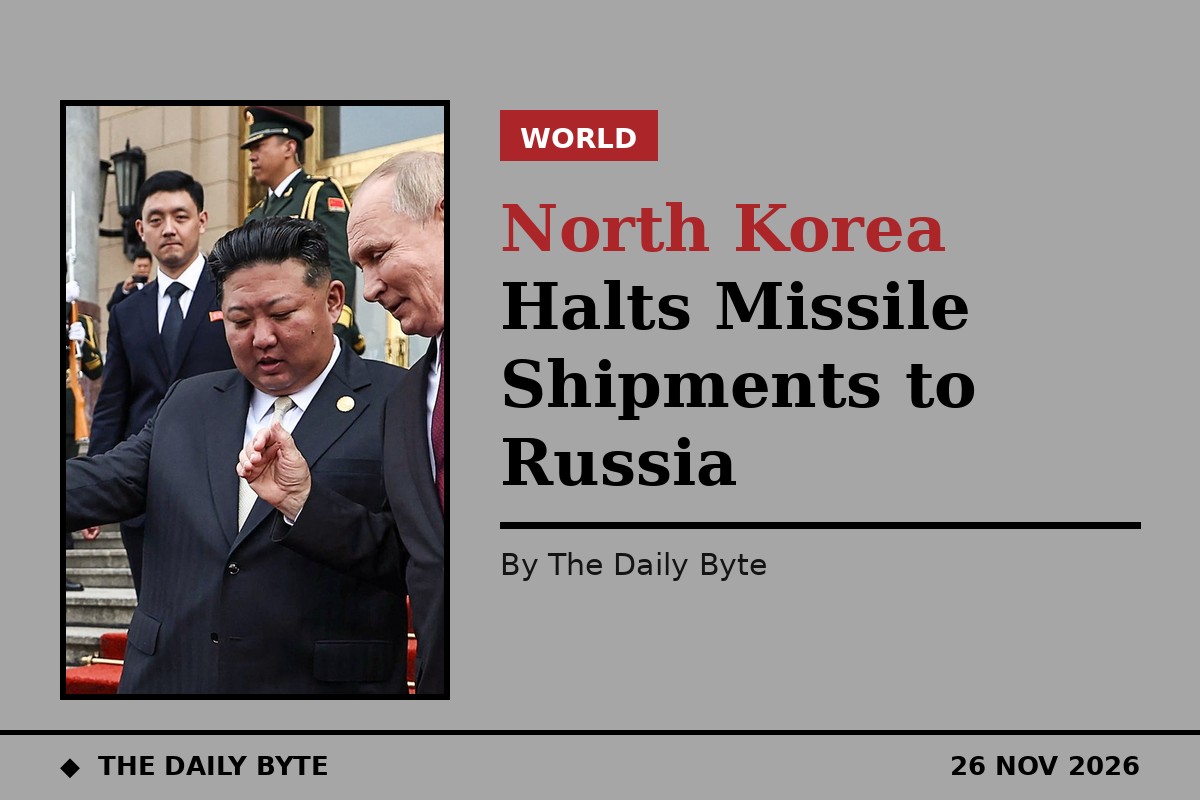
Ukraine's military intelligence agency said on Thursday that North Korea has temporarily halted some military cooperation with Russia, including deliveries of KN-23 ballistic missiles, after a diplomatic rift between the two allies.
The Main Intelligence Directorate of Ukraine, known as GUR, said North Korean Foreign Minister Choe Son Hui announced the temporary suspension last month. The move followed remarks by Russian Deputy Foreign Minister Andrey Rudenko, who said Moscow was prepared to help ease tensions between North and South Korea.
According to GUR, Choe said Moscow's position ran counter to the alliance agreements between Pyongyang and Moscow, and she demanded that Russia clarify its policy towards Seoul. The restrictions North Korea imposed include a halt to deliveries of KN-23 ballistic missiles and the next shipment of artillery ammunition, and a ban on Russian military transport aircraft using North Korean airspace.
Pyongyang is also holding off on a Russian request to expand the North Korean military contingent in Russia from about 8,500 troops to 50,000, GUR said. North Korean troops already deployed in Russia continue to carry out their duties, and a combined North Korean missile unit has been operating in the Voronezh region, from where Russia strikes Ukraine, since mid-summer. Units of the North Korean army's 11th Corps continue to serve in Russia's Kursk region.
North Korea has supplied Russia with weapons since 2023, according to a Reuters investigation, and with troops since 2024, including soldiers who fought Ukrainian forces after their incursion into Russia's Kursk region. As recently as 7 November, Ukrainian President Volodymyr Zelenskyy said Russia had fired KN-23 missiles at a Ukrainian energy facility. Ukrainian intelligence estimates North Korean forces have suffered more than 7,000 casualties, including 2,251 killed.
GUR also pointed to other strains in the partnership, including language barriers, logistical difficulties and low interoperability between the two countries' troops, and said the Russian military command treats North Korean personnel with contempt. At the same time, Moscow and Pyongyang continue to develop economic ties, with Russia seeking North Korean weapons and Pyongyang counting on Russian military equipment, raw materials, technology and financial assistance.
The claim has not been independently verified. Reuters said it was unable to verify the content of the report, and could confirm neither any public statement by Rudenko saying Russia would work to de-escalate tensions on the Korean peninsula nor any public remarks by Choe on the suspension. Russia's Defence Ministry and North Korea's embassies in Russia, London and New York did not immediately respond to requests for comment, and GUR did not immediately say where the statements attributed to Choe and Rudenko were made.
Diplomatic contacts between Moscow and Pyongyang have continued in recent weeks. Last week, Russian President Vladimir Putin received Jo Yong Won, one of North Korean leader Kim Jong Un's closest aides, at the Kremlin, with both men reportedly praising bilateral cooperation. Military support for Russia is a rare source of hard currency for North Korea, which is heavily targeted by international sanctions, so even a temporary pause could matter for the supply of missiles Russia fires at Ukraine — if the suspension holds and is confirmed.


