Norway Warns of Russian Sabotage Threat in 2027
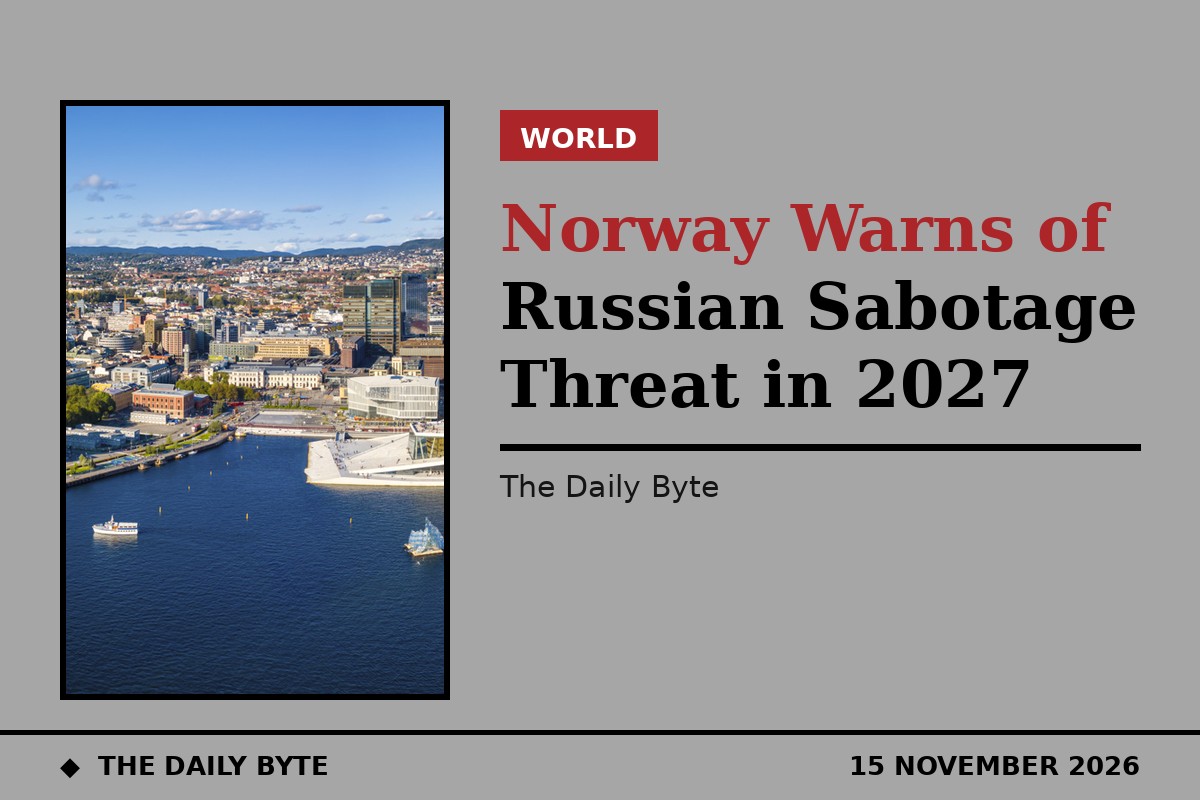
Norway’s security service has raised its assessment of the sabotage threat facing the country, warning that Russian intelligence may attempt sabotage operations in Norway in 2027.
The Norwegian Police Security Service, known as PST, announced the higher assessment on 13 November. It said the danger had grown substantially during 2026, and that there were strong grounds to expect Russian intelligence to carry out sabotage in Norway within the next year.
PST was clear about one important point: no sabotage attempts against Norwegian targets have been detected so far. The warning is about the risk ahead, not about an attack that has already happened.
Who could be targeted
According to PST, the most likely targets are defence companies, businesses that supply them — including logistics firms — and critical infrastructure such as energy facilities. Russian operatives have shown increased interest in military sites and logistical routes connected to support for Ukraine, PST said.
Norway is a major energy supplier to Europe and a key logistical route for Western military support to Ukraine. Its gas pipelines, ports and defence industry make it an important part of the continent’s security picture, and PST said that is reflected in the intelligence it is seeing.
PST cited a rise in sabotage operations across Europe after a decline in 2025. It pointed to arson, explosives and drones as methods used in sabotage operations elsewhere on the continent, and said individuals linked to Russian intelligence have been surveilling infrastructure and possible targets inside Norway.
Part of a wider European pattern
The Norwegian warning fits a broader pattern of concern across northern and eastern Europe. Several European governments have reported drone sightings, suspicious activity near military sites and infrastructure, and attempts to interfere with transport and energy networks over the past year.
In September, a drone scare at RAF Lakenheath in England prompted a response from the United States Air Force, and in October a LOT flight was forced to abort a landing in Warsaw after a drone was reported near the airport. European officials have repeatedly said that hybrid threats — sabotage, cyber attacks and disinformation alongside conventional military pressure — are now a standing feature of the security environment.
Norway is not a member of the European Union, but it is a member of NATO and works closely with the EU and its neighbours on security. Its warning is likely to be discussed when NATO defence ministers and the Ukraine Defence Contact Group, known as the Ramstein format, meet at NATO headquarters in Brussels on 17 November.
What happens next
PST has not published a detailed public list of the sites it considers most at risk, and it has not named any individuals. Security measures around vital infrastructure have been intensified, according to reports of the announcement, and Norwegian authorities are working with allies to share intelligence on the threat.
The assessment does not say that an attack is certain. It says the risk has risen enough that Norway should prepare for the possibility in 2027. For businesses in the defence, energy and logistics sectors, that means reviewing security around sites, staff and supply chains — and reporting anything suspicious to the authorities.


