Novartis CEO Rejects AI Cancer Cure in 5-10 Years
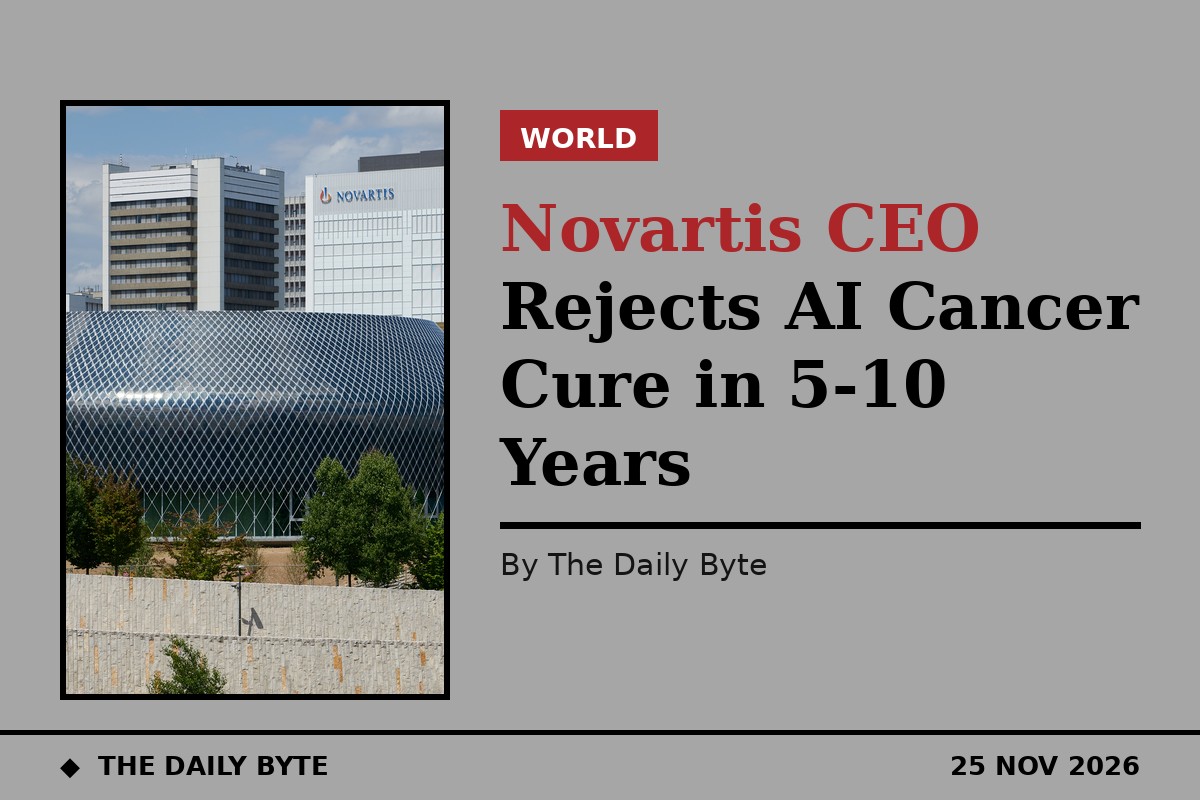
Novartis chief executive Vas Narasimhan has rejected predictions from the artificial intelligence industry that the technology will cure cancer within five to ten years, arguing that drug development will improve far more slowly than the sector's boldest forecasts suggest.
Speaking to the Financial Times, Narasimhan said it would take a decade for AI to cut four years from the average drug development timeline, bringing it down from twelve years to eight. He also predicted the share of medicines that succeed once they enter human trials could rise from 8 per cent to 12 per cent over the same period.
Only 5 per cent of the body understood
Narasimhan, who also sits on Anthropic's board, said the tech industry approached medicine with an engineering mindset, while clinicians could see how little was known about the human body. He estimated scientists understand only about 5 per cent of what goes on inside it, far less than they understand about code or language, where AI models learn and predict best.
His comments contrast with AI leaders' forecasts. Anthropic chief Dario Amodei has said AI will make cancer and Alzheimer's relics of the past within a decade, while DeepMind founder Sir Demis Hassabis has said it might solve all diseases in as little as ten years. Narasimhan said the true impact was probably somewhere in the middle.
Novartis is already using AI across its development work: about 90 per cent of pipeline content is now AI-assisted, clinical report timelines have fallen by a quarter, and statistical programming in its 2026 trials is 90 per cent faster. Early drug discovery, a phase that typically takes four years, could be shortened by up to two years. Even so, Narasimhan said long trials in animals and humans would still be required.


