NSW deficit $2.9bn as property slump threatens surplus
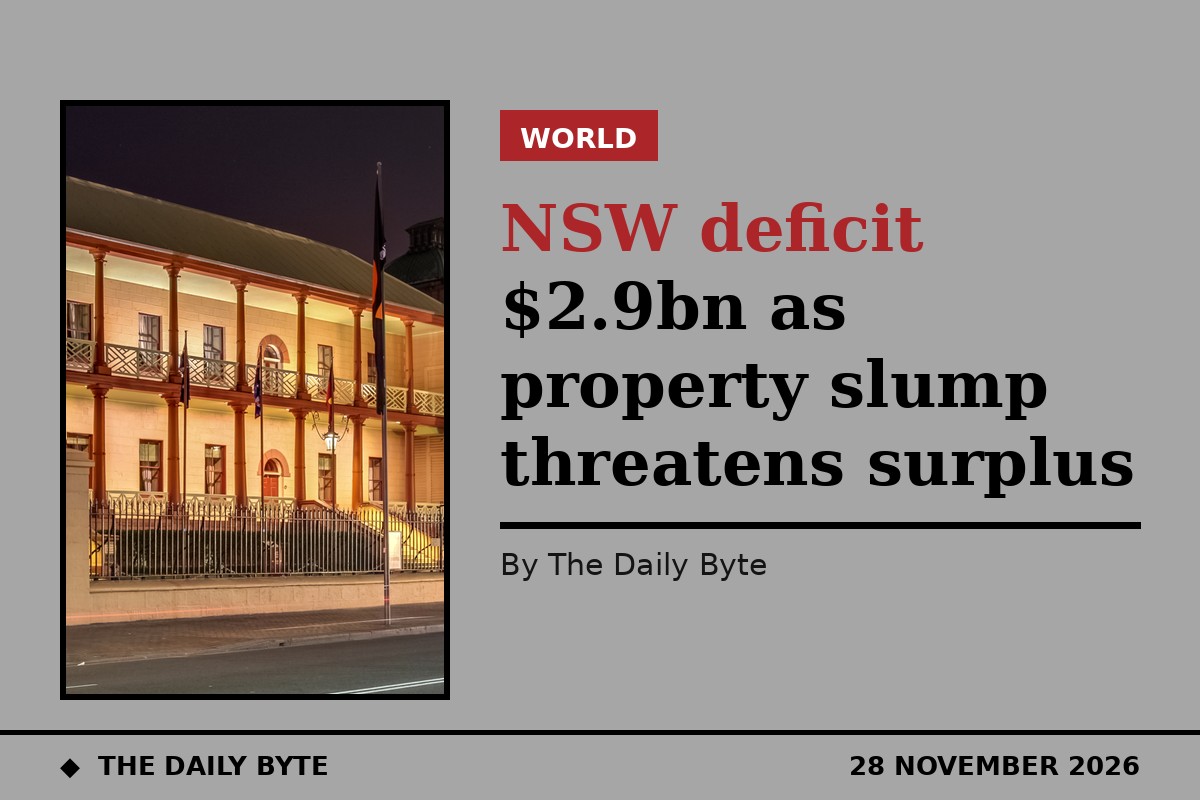
New South Wales has recorded a $2.9 billion budget deficit for 2025-26, its audited accounts tabled in Parliament on 27 November 2026 show, but Treasurer Daniel Mookhey warned on the same day that falling house prices could cost the budget $16 billion over the next four years and delay the promised return to surplus.
The audited 2025-26 Report on State Finances puts the deficit at $2.9 billion, down from the $10.6 billion deficit recorded in 2022-23 and $575 million better than forecast in the 2025-26 Budget. The government says it has cut the deficit by more than $7.7 billion since the former Liberal-National government's final update.
The audited result
The accounts show net debt $4 billion lower than the former Liberal-National government had projected in its Pre-Election Budget Update, and $5.9 billion lower than forecast in the 2025-26 Budget, with $1.1 billion less gross debt than expected. Expense growth in the Minns Labor government's first three years was kept to 3.5 per cent, the lowest of any state, and expenses in 2025-26 came in $766 million below the forecast in the 2026-27 Budget.
"These audited accounts show the Budget is turning around," Mookhey said. "Debt is down, the deficit is down but the pay of essential workers is up." Finance Minister Courtney Houssos said the accounts showed how much headway the government had made, while acknowledging there was still more work to do.
The government also pointed to outside recognition of its management: ratings agency S&P Global upgraded the state's credit outlook in September, making NSW the first Australian state in three years to have its outlook revised upwards, while Moody's and Fitch both reaffirmed the state's triple-A credit rating. Private sector activity drove more than 90 per cent of demand growth in the NSW economy over the year to June 2026.
A $16 billion warning
The same release carried a warning. Releasing the report, Mookhey said falling house prices would force a further write-down of stamp duty and land tax revenue when the mid-year budget is handed down in February, and that the forecast budget surplus in 2027-28 would be delayed. Falling prices could cost the budget $16 billion over the next four years, he said, according to the Sydney Morning Herald.
The June budget had already included a $5.4 billion write-down in projected stamp duty and a $3 billion cut to land tax forecasts. Mookhey said the February update would include a further downgrade "of a similar order of magnitude", and that the government expected a significant deterioration in the state's financial results for 2026-27 and 2027-28. He declined to nominate a new date for a return to surplus.
Mookhey pointed to federal tax changes, rising interest rates and the conflict in the Middle East as pressures on the state's bottom line. "Changing interest rate outlooks, higher oil prices, it's affected consumer confidence and business confidence, and of course, as the federal treasurer himself has said, federal tax changes have had an impact," he said.
Where the revenue came from
The report itself shows how dependent NSW remains on property. Stamp duty revenue was $1.7 billion, or 11.5 per cent, higher than in 2024-25, on the back of rising residential prices and transaction volumes in the first half of the year, partly offset by declining prices and volumes in the final months to June 2026. Land tax revenue rose $282.1 million, or 3.4 per cent.
The report notes the Reserve Bank lifted interest rates three times in the first half of 2026, by a combined 75 basis points to 4.35 per cent, and says elevated rates will hit NSW harder than other states because of its large, highly valued housing market, with price falls most evident at the higher-value end of the Sydney market. The pressures will be reflected in the 2026-27 Half-Yearly Review, due early next year.


