NSW Rejects $2bn Parklife Airport Metro Claim
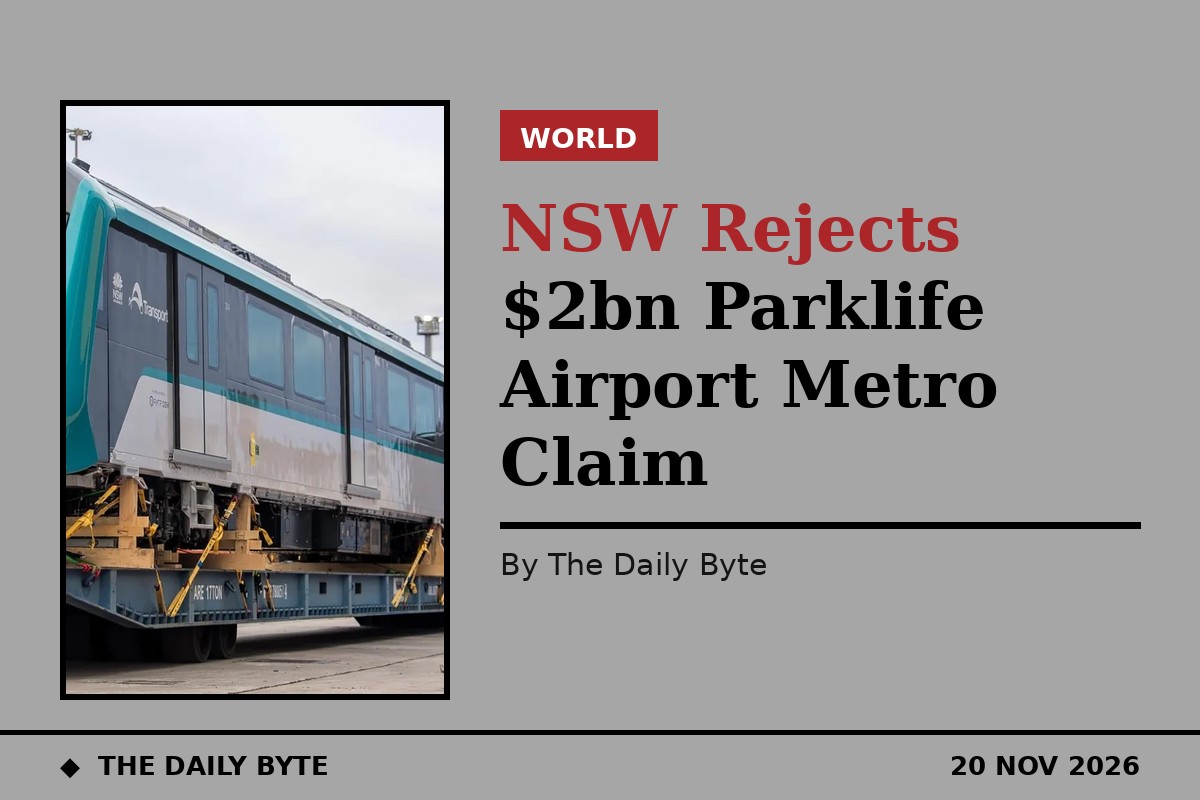
The New South Wales government has rejected a claim of more than $2 billion from the Parklife consortium for extra payments to complete the Sydney Metro line to Western Sydney Airport, ending months of negotiations without agreement. Transport Minister John Graham announced the decision on Friday, accused the consortium of significantly slowing work on the project, and said the government would hold it to the contract's September 2027 completion date.
What Parklife claimed
The claims relate to industrial relations matters, project delays and increased costs from supply chain disruptions, along with changes to the project's design and scope. The government pointed in particular to elevated walkways added for emergency evacuation from the tunnels, which it said the former Liberal government had failed to include in the original design. It also said the public-private partnership structure set up by that government had made the negotiation more complex.
The dispute has been running for about two years. In August 2025 the NSW government put the project at A$10.5 billion, with the Australian and NSW governments contributing A$5.25 billion each, and a budget review published in December 2025 warned that legal claims from Parklife could raise the total cost by more than A$1 billion. The amount now rejected is what Parklife itself claimed. Since the negotiations ended, the government has assessed each claim separately under the contract. If Parklife disputes those determinations, the matter could go to court or arbitration.
Probity findings in the supply chain
The cost dispute comes alongside compliance problems found further down the project's supply chain. An independent probity investigation carried out this year found instances of serious non-compliance among subcontractors working for the project's design and construction contractors, including cash-in-hand payments, taxation non-compliance, underpayment of workers' statutory and industrial entitlements, a labour hire subcontractor without adequate workers compensation insurance, and insufficient record keeping.
The government said corrective actions had been rolled out since the investigation, including the removal of certain subcontractors, additional audits and payment verification, and anonymous channels for workers to raise concerns. Subcontractor Future Form was removed from the project in May. The government has also introduced strengthened probity and integrity provisions, which it is rolling out across all major NSW government construction contracts, and said it had zero tolerance for unacceptable behaviour on its construction sites.
Where the project stands
Parklife Metro holds the stations, systems, trains, operations and maintenance package for the 23-kilometre line from St Marys to Bradfield via the airport, a public-private partnership that reached contract close in December 2022. The package covers six stations, 12 metro trains, the core rail systems and a depot at Orchard Hills, and Parklife is contracted to operate the line for 15 years once it opens. The consortium is led by Italian engineering company Webuild, with Plenary Group, Siemens Mobility and RATP Dev as partners.
By June 2026 crews had laid all track on the line and platforms at all six stations were complete, and Sydney Metro says about 80 percent of the project is finished, with four of the 12 trains already at the stabling yard. Western Sydney International Airport opened to passengers on 25 October, so until the metro begins service a free bus links St Marys with the airport every 30 minutes. Earlier reporting has warned the opening could slip into 2028, extending the delay to about 18 months.
What happens next
Graham said the government would not be pressured by commercial tactics or permit Parklife to deviate from its contractual obligations, and would not make taxpayers pick up the bill for what he called unsubstantiated or spurious claims. Parklife must now continue to deliver under the contract, and the government says it will pursue all avenues to enforce it. The dispute also clouds business cases the government is due to consider for northern and southern extensions of the line, since any extension deal would be priced with the same consortium.


