OECD and African Union Say Productive Borrowing Can Cut Africa's Debt Burden
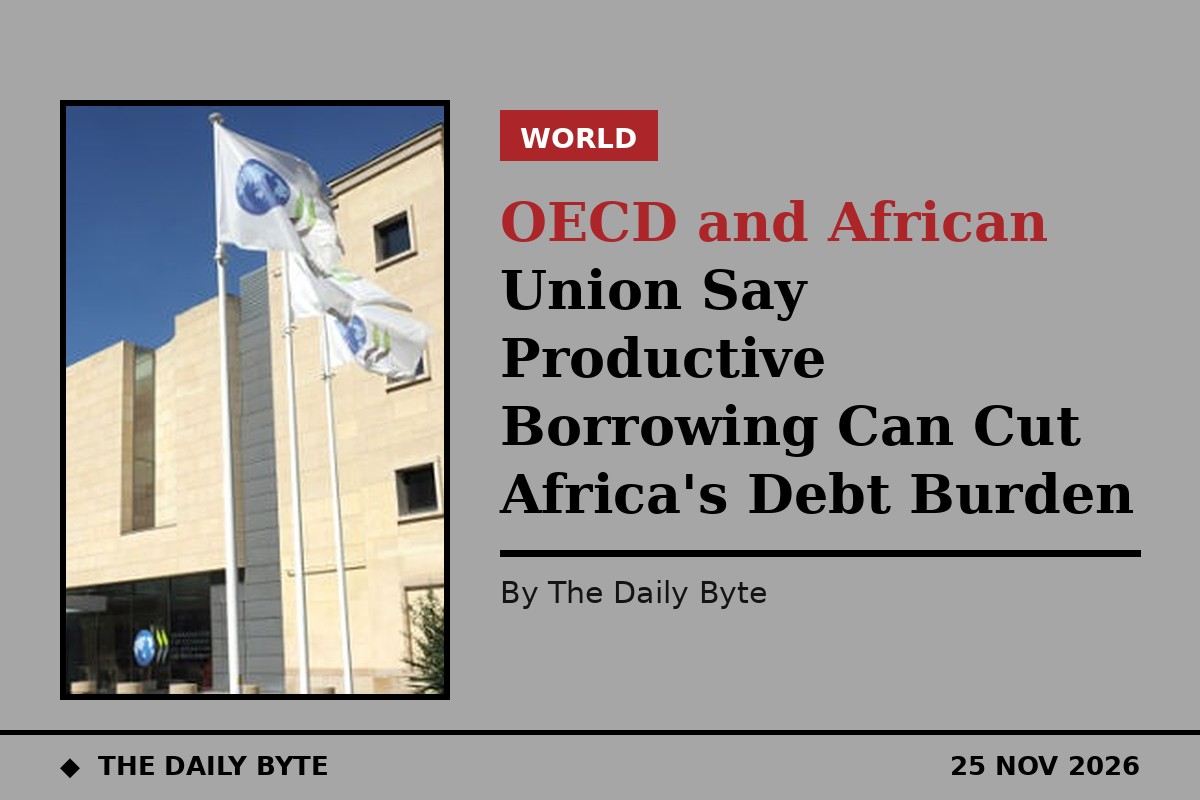
African countries can use sovereign debt to support economic transformation, provided the money they borrow is invested in ways that generate growth outweighing the cost of borrowing, according to a major new report released on Tuesday.
Africa's Development Dynamics 2026, produced by the OECD together with the African Union, was launched at the 25th International Economic Forum on Africa in Paris on 25 November. The report argues that sound debt management and productive transformation can reinforce each other, helping economies outgrow their debt rather than being overwhelmed by it.
New modelling in the report finds that increasing Africa's public capital investment by 0.5 percentage points of GDP each year could lower the continent's debt-to-GDP ratio by 14 percentage points after five years, while raising annual growth by nearly one percentage point. The same modelling suggests the approach could prevent 557 billion US dollars in debt accumulation, equivalent to a quarter of the finance needed to reduce Africa's poverty rate below one per cent.
Interest payments have climbed sharply
The findings land as African governments face some of the world's highest borrowing costs. From 2010 to 2024, average interest payments for African countries increased from about nine per cent to almost 25 per cent of government revenues, reaching 27 per cent in countries with access to international markets.
Average nominal interest rates stand at around seven per cent on international sovereign bonds and 14 per cent on domestic bonds, compared with one per cent or less for concessional loans. The report says proactive debt management can rebalance debt portfolios to lower vulnerabilities and borrowing costs, while progress on at least seven of 14 debt transparency indicators is associated with a one-step improvement in sovereign credit ratings.
Domestic debt has grown fast
The report also examines the rise of domestic borrowing. Between 2015 and 2023, African countries' average domestic debt rose from 30 per cent to 43 per cent of GDP. Domestic debt can reduce exchange-rate risks, the report notes, but higher interest rates and shorter repayment periods can raise borrowing costs and introduce financial instability.
Over the same period, African banks, the primary holders of domestic debt, saw their exposure to government debt rise from 16 per cent of their assets in 2010 to 23 per cent in 2023, compared with around 17 per cent for developing Asia and Latin America and the Caribbean.
The report adds that Africa's increasingly diverse creditor base has made debt restructuring more complex and prolonged, and calls for stronger coordination, more transparent debt data and African-led initiatives such as the African Debt Monitoring Mechanism to help speed up negotiations, restore debt sustainability and protect investment and social spending.
Launched at the Paris forum
The launch was opened by OECD Secretary-General Mathias Cormann, alongside Francisca Tatchouop Belobe, Commissioner for Economic Development, Trade, Tourism, Industry and Minerals at the African Union Commission, and General Birame Diop, President of the ECOWAS Commission.
Africa's Development Dynamics analyses economic and social trends across Central, East, North, Southern and West Africa, aiming to help African leaders reach the targets of the African Union's Agenda 2063. This edition focuses on how African countries can manage sovereign debt sustainably while financing productive transformation and development, at a time when debt pressures across the continent continue to grow.


