OECD Migration Outlook 2026: Southern Europe Rises
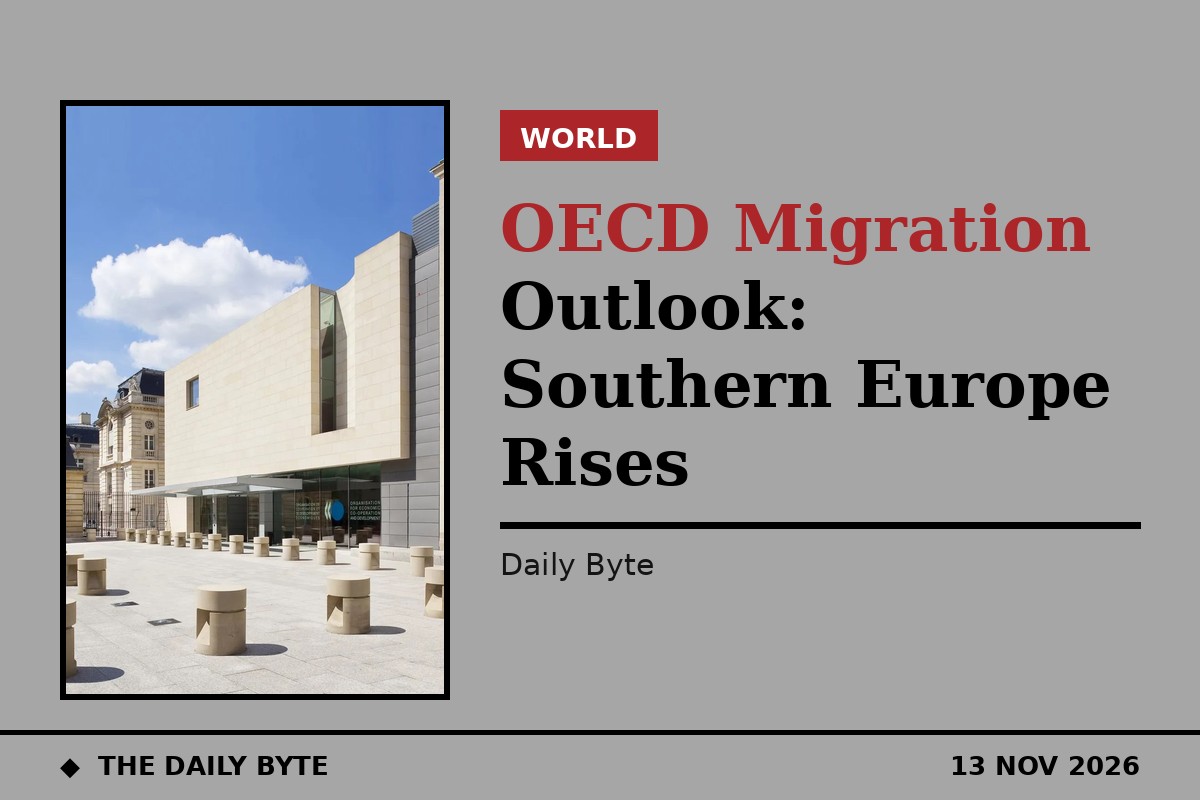
Permanent migration to OECD countries fell for a second consecutive year in 2025, but southern Europe moved sharply in the opposite direction, according to the OECD's International Migration Outlook 2026, published on 12 November.
Southern Europe bucks the trend
The 38 OECD countries recorded 6.1 million new permanent immigrants in 2025, down 1.6 per cent on the previous year, although the total remained about 12 per cent above its 2019 level. Portugal recorded a 139 per cent increase to 313,600 people, after clearing a backlog of pending residency permits, while Spain rose 25 per cent to 460,500 people after broadening its residency policies and Italy increased 45 per cent to 248,800, driven by family and labour migration, AFP reported. Several major destination countries, including the United States, the United Kingdom, Canada and Germany, recorded notable declines.
Family migration still leads
Family migration remained the main channel of permanent migration, accounting for 45 per cent of inflows. Labour migration, at 20 per cent, increased as employers continued to seek workers across many sectors, while humanitarian migration, at 10 per cent, fell sharply, down 26 per cent on 2024. Asylum applications also declined across most OECD countries in 2025, falling by more than a fifth outside the United States, although they remained above pre-pandemic levels. Applications from Syrian nationals fell sharply, while those from several African nationalities rose.
Care work and productivity in focus
The 50th edition of the Outlook includes special chapters on the contribution of labour migration to addressing shortages in long-term care and on the channels through which migration may affect productivity growth. The report's message is that migration remains historically high even as overall numbers ease, with the geography of arrivals shifting southwards within Europe.


