Ofcom: iPlayer and PSB apps to top smart TV home screens
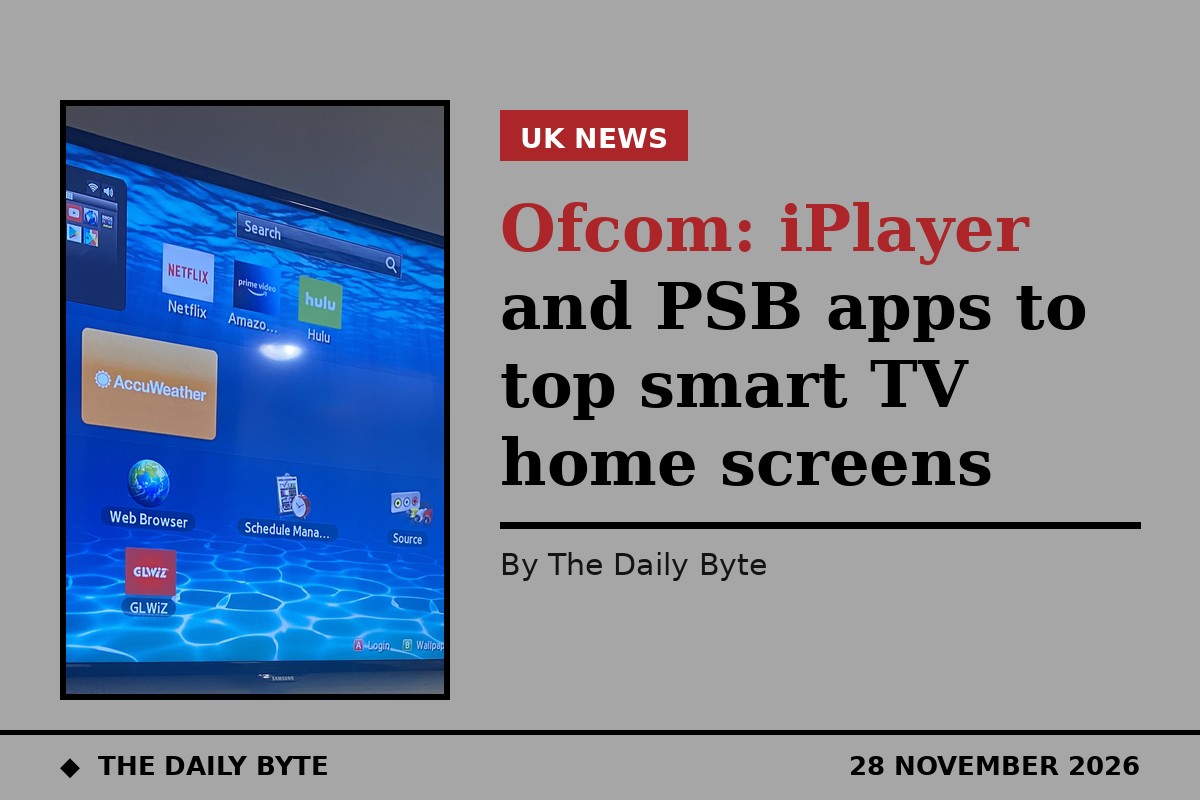
BBC iPlayer and the other public service broadcasters' apps should sit near the top of smart TV home screens in the UK, under final rules published by Ofcom on Thursday 26 November 2026.
The regulator's final Code of Practice for connected TV platforms says the six designated broadcaster apps should be immediately visible and generally appear within the first nine tiles of the main app menu. The apps should appear in a set order: BBC iPlayer first, followed by ITVX, Channel 4, Channel 5, S4C Clic and STV Player.
The code applies to 15 platforms designated by the government in May 2026, covering the services most people in the UK use to choose what to watch. They include Amazon Fire TV, Apple TV, Android TV and Google TV, LG's webOS, Samsung's Smart Hub, Roku, VIDAA, Sky Q and Sky Entertainment OS, Virgin Media's Horizon and TiVo, YouView on Sony televisions and EE boxes, and the broadband-based Freely service.
Where a platform shows different menus in different parts of the UK, the order should reflect the viewer's location. STV Player should move to second place in STV's licence areas, and S4C Clic should move to third in Wales.
The rules go beyond the app menu. In the main live-channel list, BBC One should take the first position, followed by BBC Two, ITV, Channel 4, Channel 5, S4C and STV in the top seven places. When a viewer searches and a public service programme is the best match, it should be the most prominent result, even above shows a platform has been paid to promote. Public service programmes should also receive a similar degree of prominence to other programmes in the most visible content areas, and should be clearly attributed to the broadcaster's app.
Accessibility is part of the same code. Platforms should provide a voice guidance function, or similar, as an alternative to visual information. They should let users enlarge text and images through a magnification or zoom function, and should label accessible content clearly, for example by showing where a programme has subtitles or audio description.
The code is the product of a consultation on a draft published in January 2026, which drew 38 responses. The final version largely keeps the draft's proposals, with a small number of changes. These include confirming that viewers have the right to uninstall the broadcaster apps, so long as the same ability applies to apps that are not from public service broadcasters, and giving S4C's Clic app greater visibility for users across the UK.
Ofcom has been clear that the code itself is not compulsory. It works as a "safe harbour" under the Media Act 2024: a platform that follows every recommended action will be treated as complying with the prominence and accessibility duties in the Act. The underlying duty applies whether or not a platform follows the code.
Viewers should not expect their screens to change straight away. The government still has to set a start date for the duties through secondary legislation, and Ofcom estimates platforms will need between 12 and 18 months to prepare once that date is fixed. That is longer than the 12 months Ofcom proposed in January. Broadcasters have warned that the regime might not take practical effect until late 2027 or 2028, more than three years after the Media Act was passed.
The rules are designed to reach televisions already in people's homes, not just new sets. They apply to platform software versions on the market from July 2025 onwards, and Ofcom expects the changes to arrive through remote software updates. Even if a viewer has deleted a broadcaster app, platforms will still need to display qualifying content from it in regulated areas of the interface.
Ofcom still has work to do before the regime is complete. It has not yet formally designated any broadcaster apps, although BBC iPlayer is designated automatically once that part of the Act takes effect. The regulator also still has to consult on its enforcement and dispute rules, and on the fees it will charge the companies involved.


