Oil splits on Saturday as Brent eases from six-month high
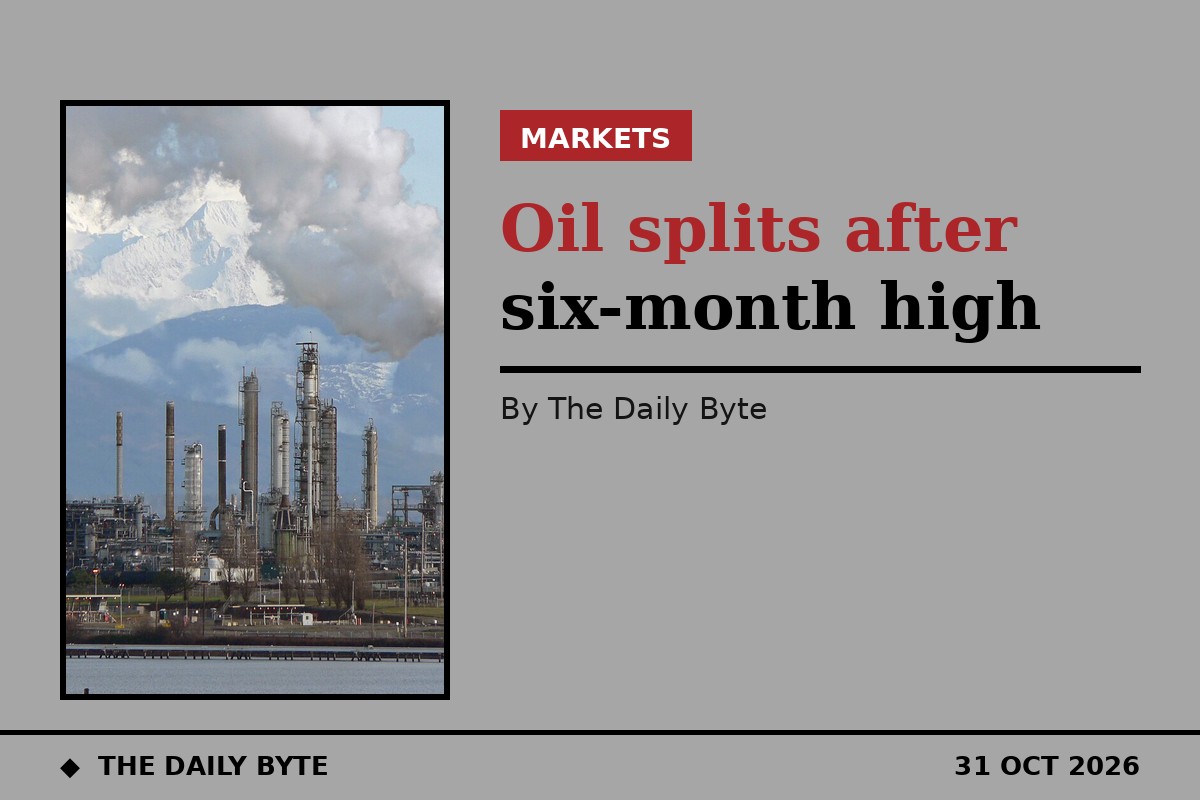
Oil prices reported on Saturday morning moved in opposite directions, with the two main benchmarks moving in opposite directions after a week dominated by fears over supplies through the Strait of Hormuz. At 6 a.m. on 31 October, West Texas Intermediate rose by $1.20 a barrel to $104.10, while Brent fell by $1.50 a barrel to $113.40 compared with the previous trading session, according to market reporting on Saturday morning.
The divergence followed a sharp climb on Friday, when December Brent futures settled at $117.64 a barrel and WTI settled at $104.12, the highest levels since late April. That rally came after the United Kingdom Maritime Trade Operations reported that a tanker in the Strait of Hormuz had been struck by an explosive device attached to its hull, reviving concern about disruption to one of the world's most important oil routes.
The softer Brent price does not erase the month's gains. For October as a whole, Brent rose 13.6 per cent while WTI gained 15.2 per cent, marking a fourth consecutive monthly increase for both benchmarks. Traders remain alert to further headlines from the Gulf, where shipping risks have kept a large premium in prices even on days when diplomacy appears to improve.
Why the two benchmarks diverged
Brent, the international benchmark, reacts first to threats to seaborne Gulf supplies, so it climbed furthest on the tanker news and had further to fall when immediate fears eased. WTI, priced mainly against United States supply and demand, followed a steadier path. Analysts quoted in Saturday's reporting warned that prices could stay volatile in the coming weeks, with the United States midterm elections on 3 November and the uncertain outlook for Gulf shipments both capable of moving the market quickly in either direction.