Oman and Iran hold talks in Muscat on keeping shipping lanes safe
By aminah
·17 Nov 2026
·4 min read
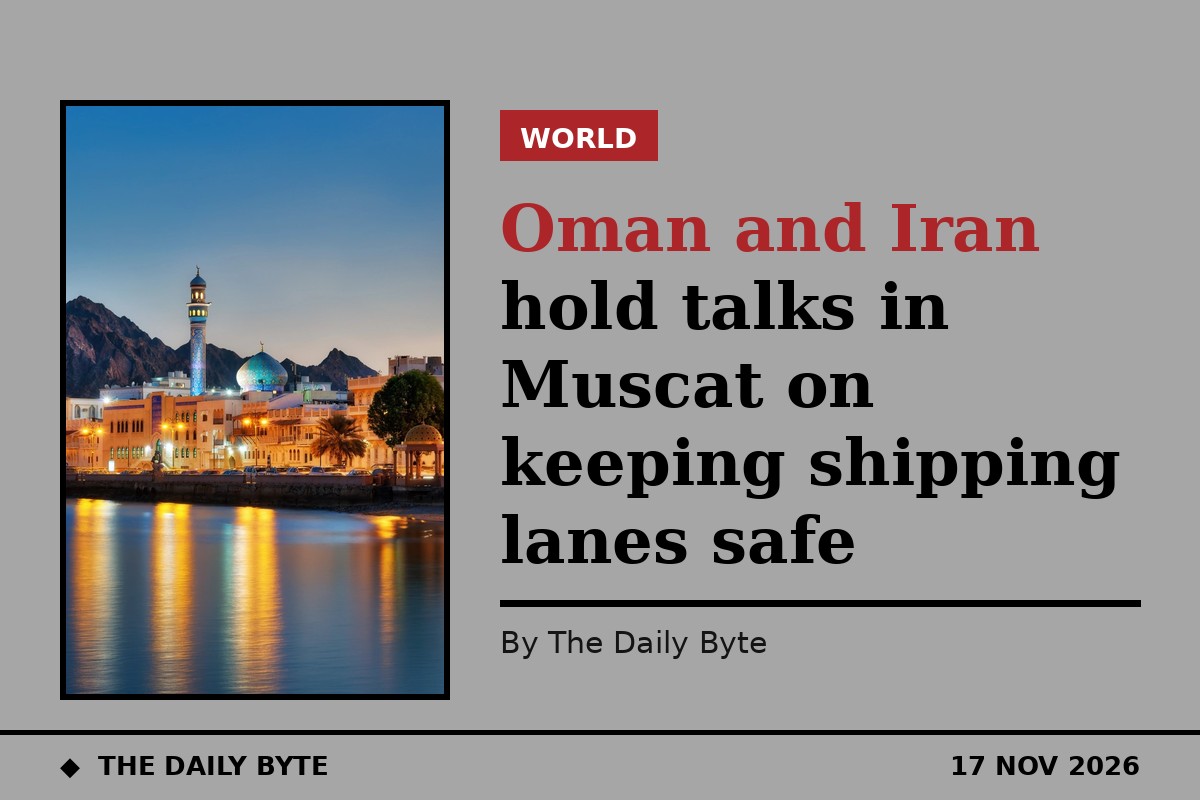
Oman and Iran discussed on Tuesday safeguarding maritime corridors and ensuring the smooth flow of global shipping and trade, the Omani foreign ministry said, as attacks on tankers in the Strait of Hormuz continued to disrupt one of the world's most important energy routes.
The talks took place during a visit to Muscat by Iran's Foreign Minister, Abbas Araqchi, who met his Omani counterpart, Badr Albusaidi, at the foreign ministry's headquarters. The two men also discussed revitalising channels for dialogue and negotiations to prevent further escalation, the Omani ministry said in a statement.
Oman holds the southern coast of the Strait of Hormuz and has played a mediating role in the crisis that broke out when the United States and Israel struck Iran on 28 February. Araqchi flew to Oman from Islamabad, where Pakistan's foreign minister said on Monday that Washington had not replied to Iran's latest proposal on the strait.
## No agreement announced
The Omani statement announced no agreement on the strait and no next meeting. It said the ministers had explored "available diplomatic options to contain tensions and reinvigorate dialogue and negotiation efforts", and that they saw a need to keep political and diplomatic channels of communication open to help build confidence.
Albusaidi described the meeting as "constructive". Iranian state media reported the visit without quoting anything Araqchi said in the room. Araqchi also met Sultan Haitham bin Tarik, who wished further progress and wellbeing to the Iranian people.
The statement notably named neither the Strait of Hormuz nor the United States, speaking instead of the security of "maritime corridors" and the smooth flow of international shipping and trade.
## Tanker attacks form the backdrop
The visit came against the backdrop of increased attacks on tankers in the strait, as Tehran continues to disrupt shipping in the vital waterway while Washington maintains a naval blockade on Iran in response.
On Monday 16 November, the United Kingdom Maritime Trade Operations agency reported that a commercial tanker was struck by an unidentified projectile while passing through the strait, causing a fire in its engine room. No casualties were reported.
Reuters reported on 11 November that at least 10 ships were hit during the first 10 days of November, following 37 attacks in October, the highest monthly total since the conflict began, according to data from the Washington Institute for Near East Policy. The same day, the United States began enforcing a new blockade targeting traffic to and from Iranian ports.
The Strait of Hormuz is a narrow chokepoint that carried one-fifth of global energy supplies before the conflict. It remains a sticking point in negotiations aimed at ending the nine-month-old war, which have not yet produced a breakthrough.
## Oman the mediator
Oman has long balanced its role as a United States security partner with friendly, working ties with Tehran, and it has mediated between the two sides before. The deep channel at the narrowest point of the strait runs through Omani waters off the Musandam Peninsula, giving Muscat a direct stake in keeping the waterway open.
In late August, the two countries agreed on a temporary transit corridor for shipping through the strait, and Oman has said the strait must stay open to all ships, without fees. Iran's parliament speaker, Mohammad Bagher Ghalibaf, said last week that navigation through the strait would not return to pre-war conditions.
For now, the Muscat meeting appears to have been about keeping the conversation going rather than settling anything. With tanker attacks continuing and the blockade in place, the next several weeks are seen as critical for any agreement, and both sides have shown little sign of making the concessions that a deal would require.
Sources: [Reuters](https://www.reuters.com/world/middle-east/oman-iran-foreign-ministers-discuss-safeguarding-maritime-corridors-2026-11-17/), with further detail from OilPrice and Baird Maritime.
## Frequently asked questions
**Who met in Muscat?**
Iran's Foreign Minister Abbas Araqchi and Oman's Foreign Minister Badr Albusaidi, at the Omani foreign ministry's headquarters on Tuesday 17 November 2026.
**What did they agree?**
No agreement was announced. The Omani statement said they discussed safeguarding maritime corridors, keeping shipping moving and reviving channels for dialogue.
**Why does the Strait of Hormuz matter?**
It is the narrow waterway between Iran and Oman through which about one-fifth of the world's energy supplies passed before the war. Disruption there affects global oil and gas prices.


