One in Six German Toddlers Miss Out on Daycare
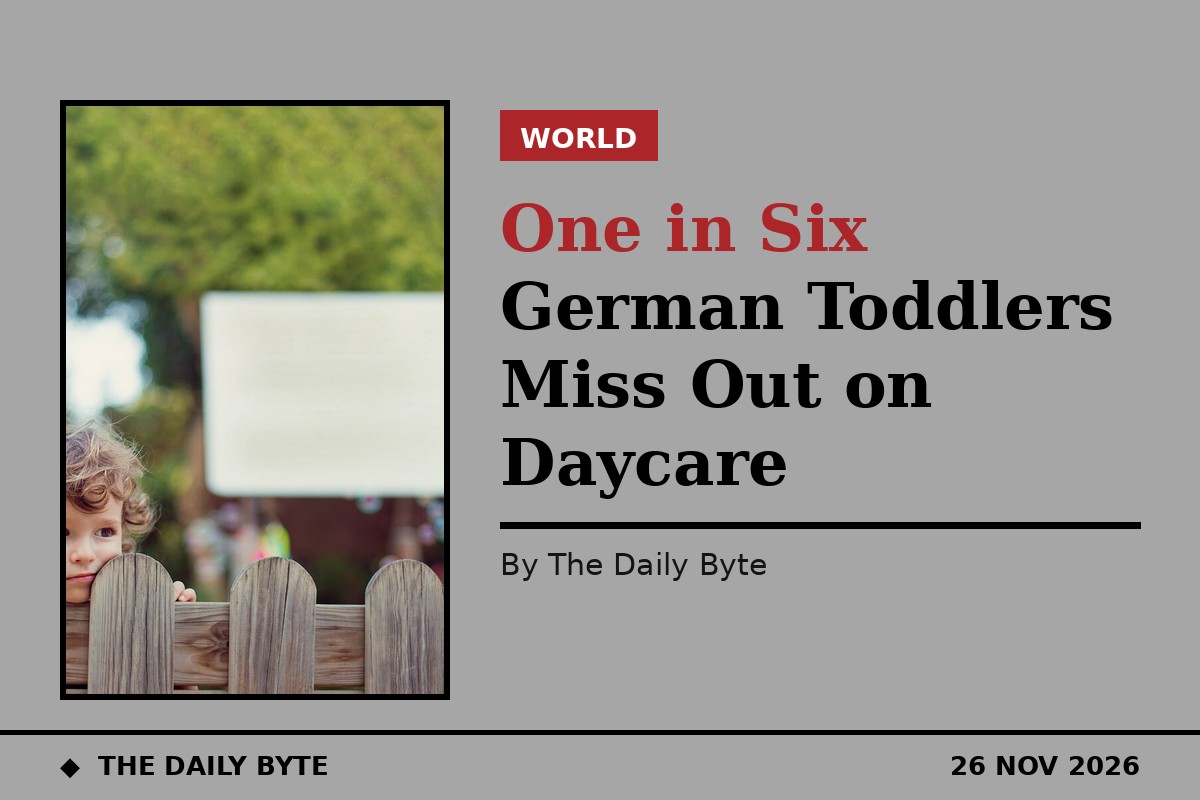
One in six toddlers in Germany missed out on a daycare place in 2025 even though their parents wanted one, according to a study published on Tuesday, 24 November, by the Federal Institute for Population Research (BiB) and the German Youth Institute (DJI).
The two institutes said 16% of children aged one and two did not attend a nursery in 2025 despite their parents expressing a need for a place. Overall, 72% of parents of children that age said they needed childcare. The figures come from a new Kita-Gap-Portal, which maps the gap between demand for early-years places and actual use, by family background and by state.
The gap persists even though the number of births in Germany fell by almost a fifth between 2021 and 2025. "The fall in births does not remove the barriers to access on its own," BiB director Katharina Spieß said, according to the institutes.
Disadvantaged families hit hardest
Children who stand to gain most from early education are the least likely to get a place. Among families where German is not the main language spoken at home, 34% of one- and two-year-olds went without a place despite a stated need. The figure was 30% for families at risk of poverty and 23% for families where neither parent holds a university degree. For families facing none of those disadvantages, the unmet need was 15%.
The divide is starkest for families where German is not spoken at home. Almost 70% of those families want a place, but only 35% of their children actually attend a nursery, the institutes said. "Families with a non-German family language want a childcare place almost as often as other families. Yet they go without more than twice as often," researcher Anna Daelen of the BiB said.
The search itself is a barrier. Among families who applied for a place, 43% described the search as difficult, rising to 56% among families where German is not the main home language. The portal lists a lack of places nearby, costs, complicated application procedures and insufficient support as reasons families go without.
A sharp east-west divide
Where a family lives matters almost as much as who they are. In the eastern states, only 6% of families with a need for a place for a one- or two-year-old went without one. In the west, the average was 18%, and Bremen, at 31%, was the worst in the country. Lower Saxony recorded 17%.
In Bremen, the gaps are widest of all: 55% of families where German is not the main home language went without a place, followed by 54% of families at risk of poverty and 41% of families without a university degree. The office of Bremen's senator for children and education, Mark Rackles, said the city currently had enough free places, and that the senate had been working since the summer of 2025 to reach more families and remove barriers, a sign the problem is as much about access as about supply.
The institutes argue that places freed up as births fall should be offered specifically to disadvantaged families. The portal will be updated each year with data from the DJI childcare study, so the gap can be tracked state by state. For now, the study's message is that fewer children has not meant fairer access, and that the families who would benefit most from a nursery place are still the ones most likely to miss out.


