OPEC+ to Set 2027 Oil Quotas on 29 November
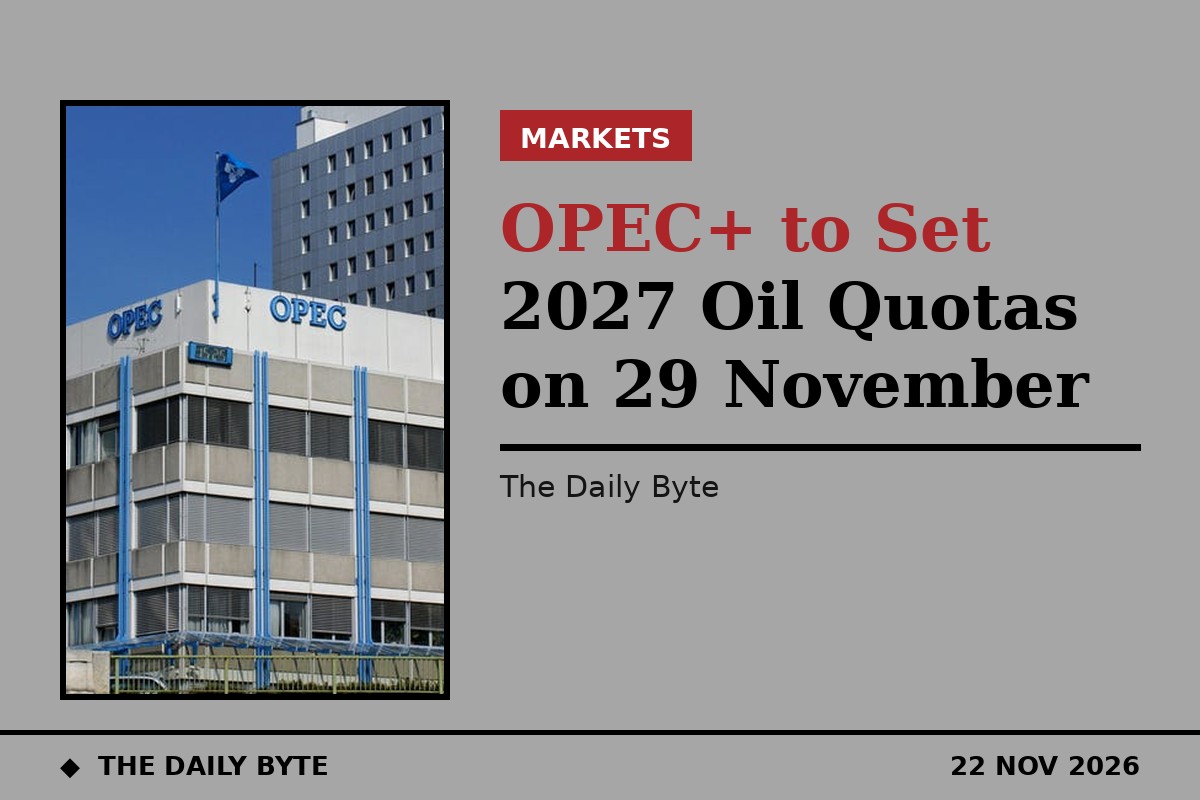
OPEC+ ministers will meet on Sunday 29 November to set the group's oil production quotas for 2027, the decision that has hung over the crude market for weeks. The full ministerial meeting is expected to settle how much each member may pump next year, after the question was deferred at the start of November.
The backdrop is a market that has been sliding. Brent crude for January delivery last settled at $92.57 a barrel on Friday 20 November, up 59 cents on the day but down 3.41% on the week, its third consecutive weekly fall. The February contract settled lower still, at $89.95, while January West Texas Intermediate settled at $83.41, according to ICE and CME settlement data reported by FinanceFeeds.
The capacity review at the centre of the talks
At the heart of the 29 November meeting is a review of each member's maximum sustainable production capacity. OPEC held an online meeting on the review on 16 November, Reuters reported, with consultants DeGolyer and MacNaughton carrying out the assessment and India-based Shri Chandra Energy & Data Processing covering Russia and Venezuela. Reuters described the review as a key part of setting quotas for 2027 and beyond, because capacity estimates weigh heavily in talks over how much each country may pump. OPEC Secretary General Haitham Al Ghais called the exercise a "historic milestone".
The decision was pushed back from the group's last meeting on 1 November, when the seven core members that set monthly output — Saudi Arabia, Russia, Iraq, Kuwait, Kazakhstan, Algeria and Oman — kept December production targets at the levels set for September, according to an OPEC press release. The group had finished unwinding a 1.65 million barrels per day cut, first agreed in 2023, in September. A separate layer of cuts of about 2 million barrels per day still covers most members until the end of 2026, Reuters reported.
A surplus hangs over 2027
The difficulty for ministers is that forecasters expect too much oil, not too little, next year. The International Energy Agency and other forecasters have warned of excess supply in 2027 if Gulf flows return to normal after disruption from the war involving Iran, while most members are still pumping well below their official targets. Jorge Leon of consultancy Rystad Energy told Reuters that OPEC+ "faces an extremely difficult call for 2027".
The US Energy Information Administration projects Brent falling from $104.69 a barrel in the fourth quarter of 2026 to $73.94 a year later, according to analysis by Crux Investor. FinanceFeeds, which tracks the contract daily, puts its week-ahead reference range at $88 to $97 — levels to watch, not a forecast.
Traders will also be watching the calendar. The January Brent contract stops trading on Monday 30 November, the day after the meeting, and most data providers have already switched their headline Brent series to February, which trades $2.62 lower. The gap between the two contracts is a sign the physical market for near-term barrels is still tight, even as forecasters warn of a surplus next year.
What it means for UK households
For UK drivers, the outcome feeds through to petrol and diesel prices at the pump, usually with a lag of a few weeks. A decision to hold output steady, rather than raise it, would do little to push crude prices down in the short term, while a move to restrain supply in 2027 could support prices. Higher oil prices also add to costs for airlines, hauliers and manufacturers, and can keep inflation higher for longer — something the Bank of England watches closely after raising Bank Rate to 4% in early November, its first increase since August 2023.
This article is for information only and is not investment advice. Oil prices are volatile and can move sharply on statements from ministers and delegates before and after the meeting.
Sources: FinanceFeeds and The Beaver, both reporting Reuters and OPEC material.