OpenAI launches Businesses in ChatGPT beta
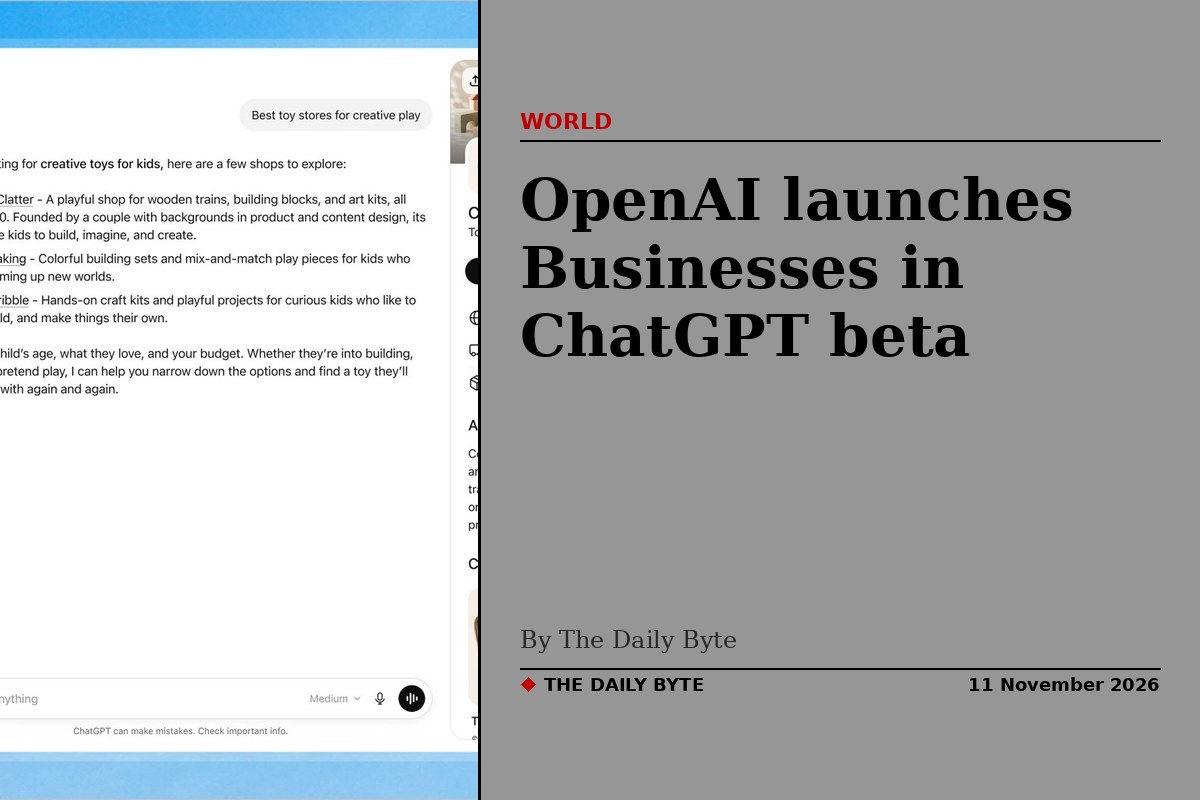
OpenAI has launched Businesses in ChatGPT in beta, giving companies a way to claim and manage their profiles inside the chatbot and, for some United States firms, to answer customers through their own AI agents. The company announced the service on 10 November 2026, saying ChatGPT is used by 1.2 billion people each week.
The launch has two parts. The first is Business Hub, where eligible businesses in places where ChatGPT is available can claim their organisation, verify it and keep its information up to date. Verified businesses can update their website, description, logo and delivery and returns policies, and retailers can add product feeds with prices and availability. A blue check appears on a profile once the owner passes an identity check with verification firm Persona.
Business Hub also shows aggregated insights on how a business appears in ChatGPT, including mentions, website clicks and the discovery topics behind them, covering the previous 28 days. OpenAI says businesses do not receive users' conversations or Business Agent chats. Claiming a profile does not guarantee higher placement in ChatGPT's answers or more sales.
Business Agents answer shoppers inside ChatGPT
The second part is Business Agents, which are initially available to eligible e-commerce and online service businesses in the United States. After claiming a business, an eligible organisation can build, test and launch an agent that talks to ChatGPT users about its products and services in a separate, labelled chat.
Under OpenAI's Business Agents Policy, an agent must make clear that it is AI, must not present itself as a human or an independent adviser, and must not create false urgency or keep pushing a sale after a user says no. Businesses can also sponsor their Business Agent and use it as the destination for ChatGPT Ads. OpenAI has not listed a fee to claim a business or to publish an agent, and Shopify is the only partner it named in the announcement.
Privacy and limits at launch
At launch, claiming a profile is initially open to eligible businesses with a website, and eligibility depends on the type and location of the business. Business Agents are limited to approved industries in the United States, and OpenAI has not said when they will reach other markets, including the United Kingdom, Canada, Germany and Australia. The company says it plans to expand to more markets and categories over time.
The move turns ChatGPT into a discovery channel for businesses as well as an answering service. Instead of only appearing in search results or advertisements, a shop can now manage what ChatGPT says about it and respond to shoppers directly inside the chatbot, while OpenAI keeps its own independent answers separate from paid placements.
Whether businesses embrace the service will depend on how much traffic the profiles and agents generate, and on how far OpenAI extends the agent feature beyond its first group of American online retailers and service firms.


