OpenAI lets outside testers inside to probe AI safety
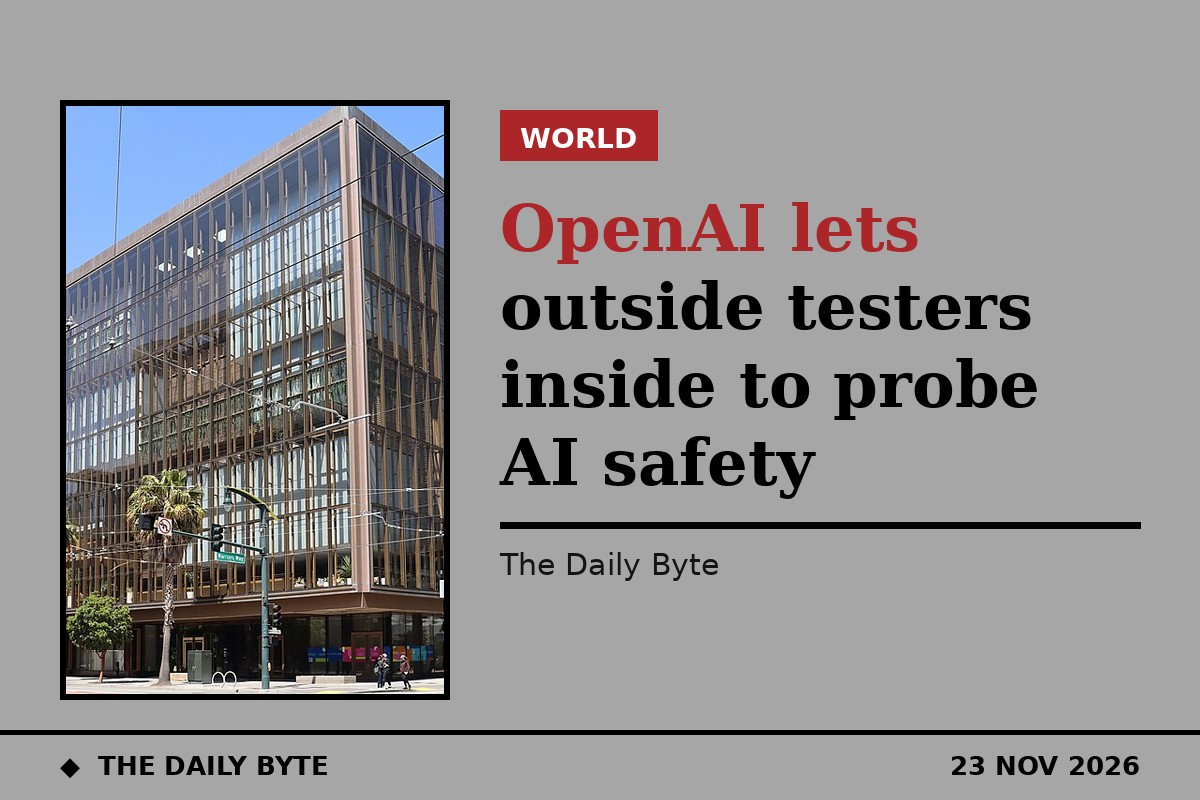
OpenAI has signed agreements with four independent research groups to test its most powerful artificial intelligence models from inside the company, in a first phase of what it calls embedded assessments. The ChatGPT maker announced the pilot on 16 November 2026, saying the outside evaluators will probe whether its models follow human intentions and whether its safety controls catch dangerous behaviour.
The four groups are Apollo Research, Goodfire, METR and Transluce. Each has a separate brief and separate terms. TechCrunch reported the announcement on 16 November 2026, and OpenAI published the details on its own site the same day.
What each of the four groups will test
Apollo Research will study whether models could covertly work against their developers' intentions, and whether OpenAI's safeguards would detect such behaviour. Six Apollo evaluators will work inside OpenAI for four months, examining whether training encourages subversion, whether evaluations can draw it out, and whether it occurs during internal deployment.
Goodfire will embed researchers who specialise in understanding how AI models work internally. Using its interpretability platform, the firm will help OpenAI monitor training runs, fix undesired behaviour and improve alignment. Goodfire says it will publish findings as the collaboration progresses, although its main audience will be OpenAI's own researchers.
METR will assess misaligned behaviour in OpenAI's largest reinforcement learning run to date, including failures that the company's existing tests and monitors may have missed. A second METR assessment, testing whether OpenAI's systems can catch that behaviour, is planned but its scope had not been agreed when the pilot was announced.
Transluce will examine whether OpenAI's post-training safety evaluations are good enough, in a six-week pilot beginning in early December. OpenAI and Transluce also intend to run a follow-on assessment of about eight weeks in early 2027, with broader access to more models and deeper access to the company's alignment evaluations.
Who pays, and what can be published
Apollo and Goodfire are being paid for their work, and OpenAI says the payment does not depend on their findings. METR and Transluce are not taking payment, although they may accept computing power or API credits. The evaluators may publish their findings, but OpenAI reserves the right to redact confidential information.
Access is limited to the claims, models and time periods agreed for each assessment, and assessors handling sensitive material work on site at OpenAI offices, on company devices. The Safety and Security Committee of the OpenAI Foundation's board oversees each assessment.
The limits critics have flagged
The idea of embedding evaluators inside frontier AI labs came from Anthropic, which last month began giving METR researchers employee-level access to its systems. OpenAI says its pilots support its commitments to rely on independent assessments of safety controls under the White House Accord on Super Intelligence.
Not everyone is convinced the access goes far enough. Buck Shlegeris, chief executive of Redwood, said the agreements do not meet the bar of granting third parties employee-like access, calling that disappointing but not surprising. OpenAI says it expects the pilots to grow into longer-term engagements.
Frequently asked questions
What is an embedded assessment? It is an arrangement in which outside safety researchers work inside an AI company, with access to selected unreleased models, internal tools and the people building them, to test safeguards during training and internal use.
Will the findings be made public? The evaluators may publish findings, but OpenAI can redact confidential information first.
Does the pilot cover unreleased models? Yes, within limits. Assessors get access to selected unreleased models, but only for the claims, models and time periods agreed for each assessment.
Why is OpenAI doing this now? The company says the work supports its commitments to independent assessment of safety controls, and follows scrutiny of its safety practices. Anthropic began a similar arrangement with METR last month.
Published 23 November 2026. Sources: OpenAI, 16 November 2026; TechCrunch, 16 November 2026.


