OpenAI folds robotics team into wider research groups
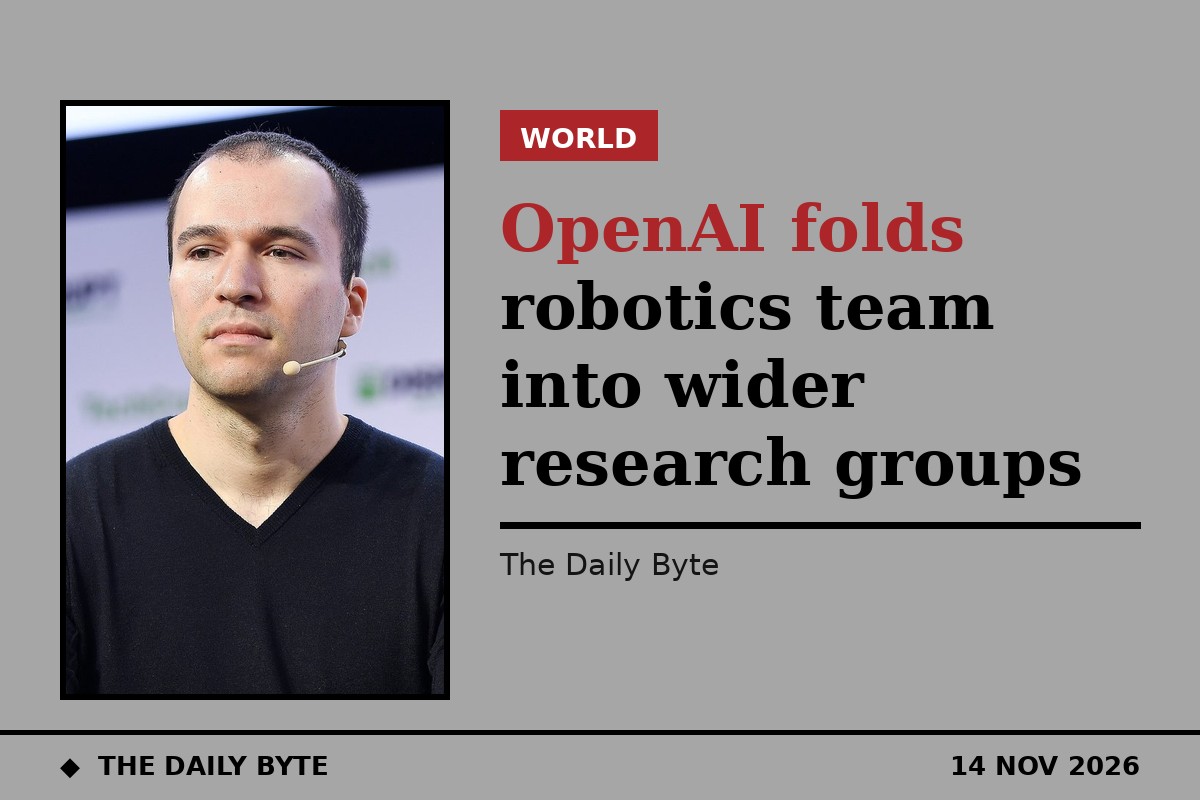
OpenAI has folded its standalone robotics team into the rest of the company, betting that its general-purpose AI models can now control robots without a separate team building robot-specific systems. The move was confirmed by the company to Fortune, which first reported it on 13 November.
Under the reorganisation, the robotics research team now sits inside OpenAI's main research group, reporting to chief research officer Mark Chen. The applied robotics and hardware teams have moved into the larger Applied organisation, led by president Greg Brockman. A company spokesperson told Fortune that robotics remains a core part of OpenAI's long-term vision.
General models take over from specialist systems
OpenAI's reasoning is that frontier models such as GPT-6 Astra can now be applied directly to robot control. Fortune cited a study by Nvidia researchers in which an Astra-powered agent scored 74.8% on a simulated manipulation benchmark, against 51% for the best specialised robotics models on the same leaderboard. The result comes from a simulation, not a physical robot.
OpenAI has pushed back on descriptions of the team as disbanded, saying it was reorganised and that its robotics programme and roadmap are unchanged. The company has not said how many people were affected.
Second robotics reset in six years
This is the second time OpenAI has closed a standalone robotics unit. It wound down its first team in 2020, then rebuilt the effort in 2024 with a partnership with humanoid maker Figure. That partnership ended in February 2025. OpenAI says it is still developing its own humanoid robot, with chief executive Sam Altman targeting a first public demonstration in 2027.
Fortune also reported operating losses of $10.9 billion in the most recent quarter as OpenAI prepares for a possible public listing in early 2027.


