OPTIMJACK: BBC, CNN and Zoom served crypto-stealing malware in Optimizely hack
By aminah
·17 Nov 2026
·4 min read
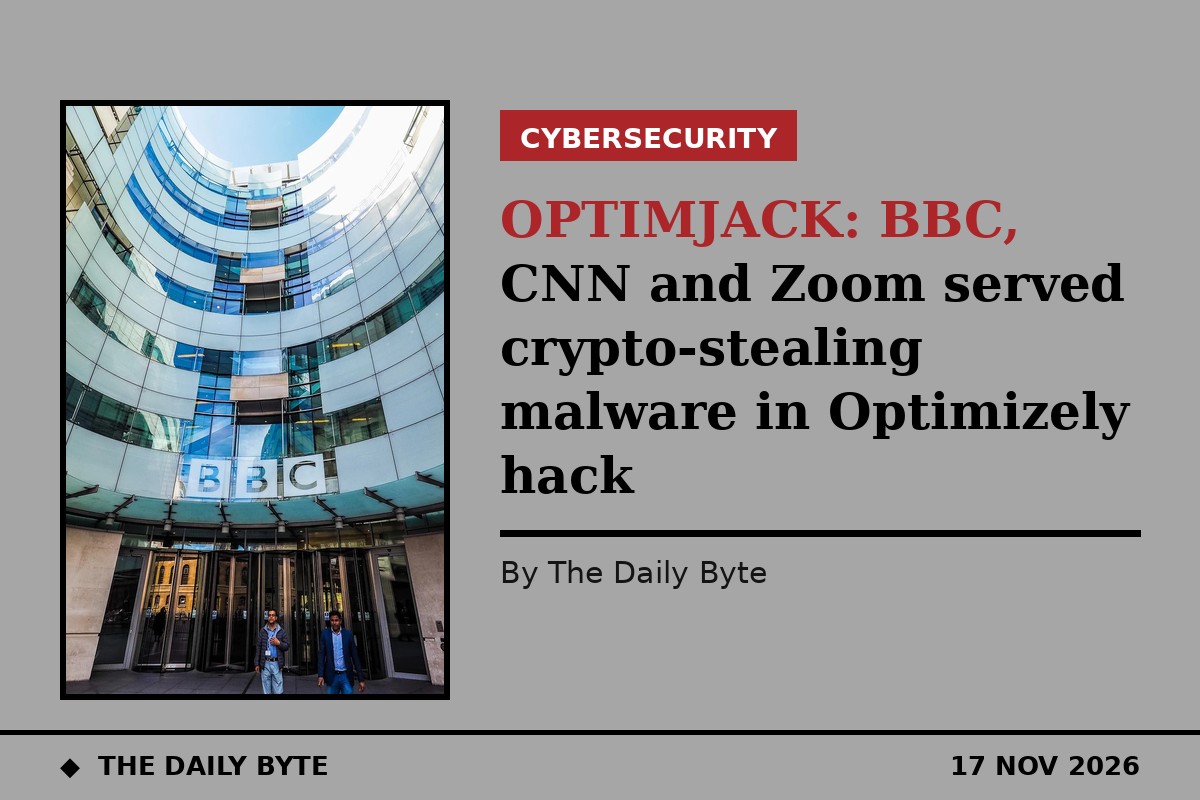
Visitors to some of the world's most visited websites, including the BBC, CNN, Zoom and Salesforce, were served malware on Monday 16 November 2026 after attackers abused Optimizely's web-testing software to inject malicious code into its customers' pages.
Security researcher Scott Helme, of the monitoring service Report URI, found malicious JavaScript in 188 of the 1,611 Optimizely scripts he and his team examined, belonging to 178 organisations. Optimizely has confirmed the incident, saying an unauthorised party exploited a vulnerability in the sign-up process for its Experimentation product to add malicious JavaScript to some customer projects.
The affected sites did not have their own servers breached. The poisoned code arrived through Optimizely's own content delivery network, cdn.optimizely.com, so browsers treated it as a trusted part of the page. Optimizely's own website and login portal were among the scripts found to contain the malicious code.
## What the OPTIMJACK malware did
The campaign, named OPTIMJACK by independent researcher Amirul Iman, used a crypto clipper that swapped a visitor's cryptocurrency wallet address for one controlled by the attackers. If a visitor copied a wallet address to the clipboard, the malware could quietly replace it, diverting any funds sent to that address. Analysis by StepSecurity found replacement addresses for eight cryptocurrencies, including Bitcoin, Ethereum, Tron, Solana, Litecoin, Toncoin, Bitcoin Cash and Dogecoin.
A card skimmer was added later in the day, grabbing card numbers, expiry dates and security codes typed into payment forms. StepSecurity's analysis found, however, that card details entered into an iframe hosted by a third-party payment processor were beyond the malware's reach.
Apple users faced a further threat: the malware tried to push iPhones and iPads running older versions of iOS towards the Coruna and DarkSword exploit kits. How many devices were compromised in that way is not known.
## How much was stolen
Helme traced roughly $7,000 in cryptocurrency to the attackers' wallets on Monday. StepSecurity put related wallet activity and holdings at about $6,600, while noting that some of that wallet activity predated the attack, so the figure is not a confirmed total of stolen funds. The true loss from stolen payment card details is not yet known.
The BBC was among the first sites seen serving the injected code, at 04:21 UTC on Monday. Other organisations on Report URI's list included IKEA, HSBC, GitLab, Equifax, Air France-KLM, Ledger, Peacock, Fox News, ASOS, Levi's, Vodafone Australia, Virgin Media, Starbucks Canada, Heineken, Change.org, UNICEF USA and PokerStars, as well as UK broadband provider TalkTalk.
## Optimizely's response and the clean-up
Optimizely said in a statement on Tuesday 17 November: "Earlier today, Optimizely identified a security incident in which an unauthorized party exploited a vulnerability in Experimentation and used it to add malicious JavaScript to some customer projects. We've fixed the vulnerability and removed the injected code from affected projects. We've also taken steps to secure affected user accounts and put additional protections in place to prevent unauthorized code from being delivered."
The company said it had patched the flaw, removed the offending code, revoked tokens and notified affected customers. By 21:52 UTC on Monday, Report URI found the malicious code in only one of the 188 scripts, belonging to TalkTalk.
Optimizely has not said how a flaw in a sign-up flow gave an outsider write access to existing customers' projects, how many customers were affected in total, when the attacker first got in, or whether any customer data held by Optimizely was accessed. Because Helme's team examined only a subset of Optimizely scripts, the number of affected businesses could be higher than 178.
## What visitors should do
Anyone who copied a cryptocurrency wallet address or entered card details on an affected site on Monday should check the destination address carefully before sending funds, review recent card statements for unfamiliar transactions, and contact their bank if anything looks wrong. The incident is a reminder that even a trusted household-name website can serve malicious code when a third-party script it relies on is compromised. [The Register reported the incident on 17 November 2026](https://www.theregister.com/cyber-crime/2026/11/17/optimizely-hack-turns-worlds-biggest-websites-into-malware-dispensers/5310448), and [Report URI's investigation](https://blog.report-uri.com) documented the infected scripts.
## Frequently asked questions
**Was the BBC hacked?** No. The BBC's own servers were not breached; malicious code reached BBC visitors through a trusted Optimizely script the site loads, as happened to the other affected organisations.
**Is the malware still live?** By late on Monday 16 November, all but one of the 188 infected scripts found by Report URI had been cleaned, and Optimizely said it had removed the injected code and fixed the vulnerability.
**Should I change my passwords?** Optimizely said it had secured affected user accounts. Visitors who entered payment details on an affected site on Monday should watch their statements and speak to their bank about any unfamiliar transaction.


