Osaka City breach leaks 1.08 million email addresses
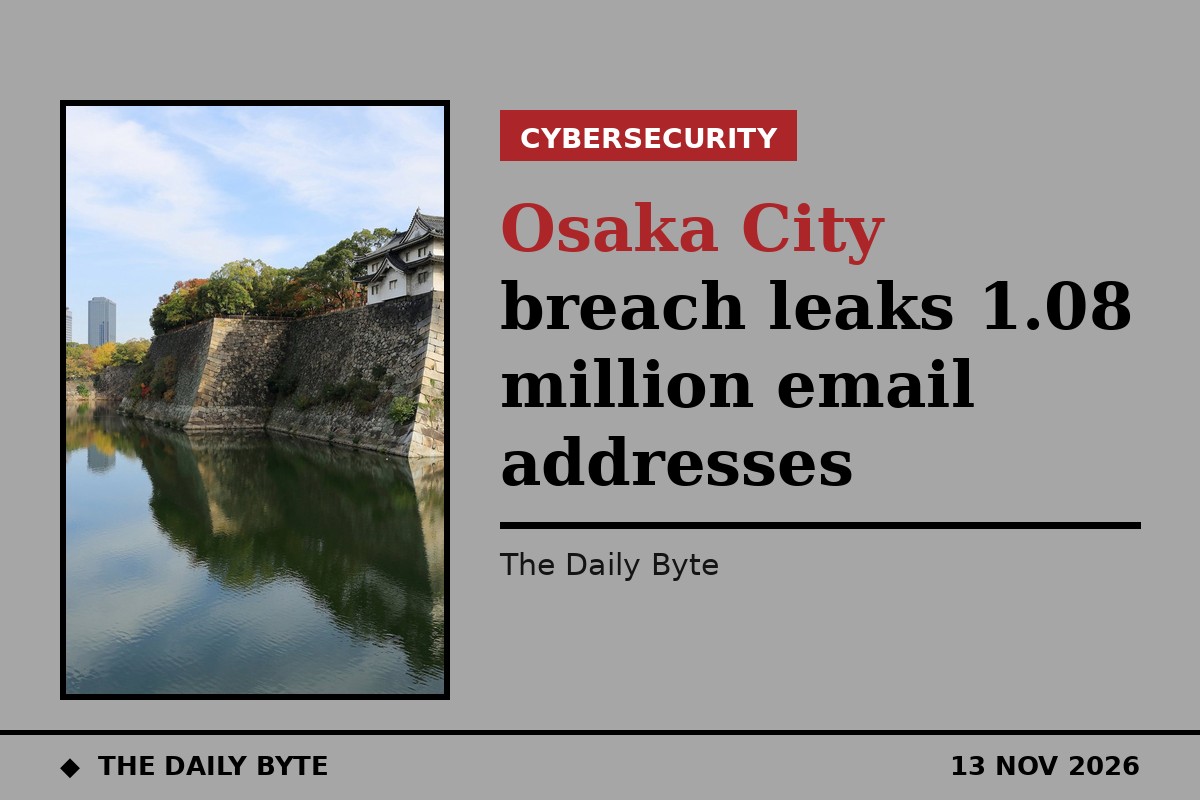
Osaka City has confirmed that more than a million email addresses leaked after hackers broke into an email delivery service used by one of its contractors, in the latest breach to hit Japan's third-largest city.
The city's final report, published on Friday 13 November, put the number at 1,078,713 email addresses belonging to users of its online administrative services platform. The addresses were those of people who received emails from the system between 1 July and 31 October 2026, including guidance on using the service and notices about registration and password changes.
Officials said the leak happened because hackers gained unauthorised access to the Arara email delivery service, which was used by TKC Corporation, the company contracted to run the platform. No unauthorised access to the city's own system or to TKC's data centre has been confirmed. Names and My Number identity numbers were not included in the leaked data, and the city said it had received no reports of harm caused by the leak so far.
Gift vouchers and a second leak
The same Arara service was also used for the city's premium gift certificate programme this financial year, and 48,537 email addresses belonging to users and participating shops leaked from that programme too.
On the same day, Osaka Prefecture announced its own breach. Hackers reached the application system for its food expense support programme for households raising children and young people, and images of identity documents belonging to 12 applicants leaked. The images included My Number cards and driving licences, along with names and addresses.
Osaka Mayor Hideyuki Yokoyama urged residents to stay alert. He said government offices would never ask for an ID, password or date of birth by email, and asked anyone who received a suspicious message not to enter such details.
One attack, dozens of victims
The Osaka leak is one strand of a much larger incident. Arara, a subsidiary of PayCloud Holdings, said a cyberattack on 2 November exposed about 77 million email addresses belonging to nearly 400 customers, including TKC, gaming company Sega and others. The attackers also used Arara's own service to send millions of scam emails pretending to come from credit card companies and financial institutions.
Japan has been hit by a wave of cyberattacks in recent months, affecting companies and public bodies from Japan Airlines to Sony Network Communications and games maker Capcom. Prime Minister Sanae Takaichi held a cabinet meeting on cybersecurity last week and announced emergency measures, including about $62 million in funding, wider use of artificial intelligence for cyber defence and more support for breach victims.
Mihoko Matsubara, chief cybersecurity strategist at telecoms giant NTT, told Recorded Future News that attacks on Japanese systems began growing in July and surged through October. She said October alone accounted for 58% of all incidents reported in Japan this year, and that about 380 million pieces of personal data have been stolen in the country so far this year. Much of the stolen information is already being traded on the dark web, she warned, and some of it has been used in fraudulent share-trading transactions.
Residents who used Osaka City's online services between July and the end of October should treat any unexpected email claiming to come from the city with suspicion, and should not click links or open attachments in such messages.