Oxford returns 39 Naga ancestral remains to India
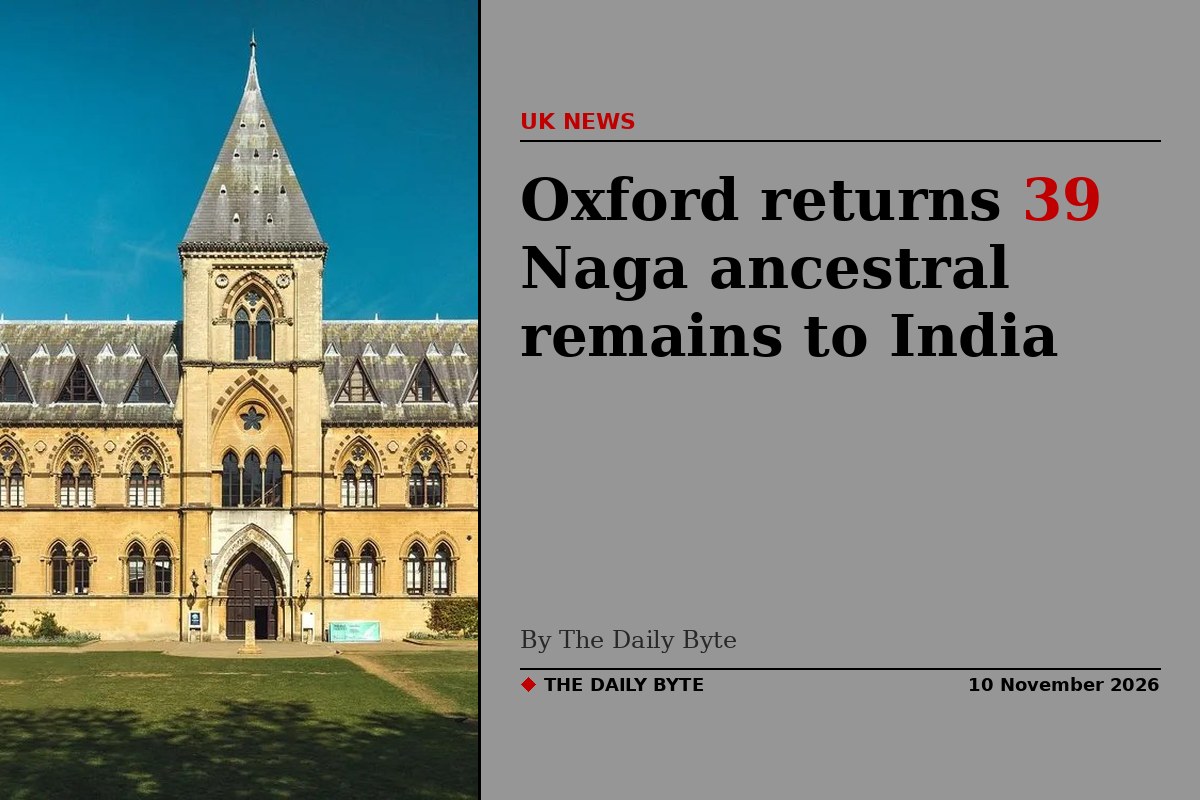
An Oxford University museum has returned the remains of 39 people taken during Britain's colonial rule in India to members of the Naga community, in what the museum's director called a historic moment.
The handover took place at the Pitt Rivers Museum on Monday 9 November, where a delegation of almost 30 people from Nagaland, a mountainous state in north-eastern India, attended a ceremony to mark the return of the ancestral remains.
The remains, most of which are skulls, will be taken back to India and given what Naga tribal leaders have described as a "respectful rest". There are plans to bury them under a joint memorial in a park in Nagaland.
A six-year process
Museum director Laura Van Broekhoven described the handover as "a historic moment that will be part of stories told to next generations". A formal agreement was signed at the ceremony, and the remains were already on their way to Heathrow Airport afterwards.
The return concludes a six-year collaborative process facilitated by the Forum for Naga Reconciliation and its Return, Restore and Decolonize initiative. A Naga delegation visited Oxford in 2025, when it formally requested the return of the remains, and the museum announced in September that they would be returned.
The University of Oxford Council agreed in July 2026 to return 39 of the 40 remains the community had claimed, withholding one because of unverified provenance. The museum says this is its largest return of human remains.
How the remains reached Oxford
The remains were added to the museum's collection between 1910 and 1940 and were mostly collected by two colonial administrators who were also anthropologists. The museum's website states that objects collected during this period were "frequently confiscated during punitive military expeditions, rather than freely given".
Naga tribal leader Thejao Vihienuo said it was unlikely such items were ever offered as gifts. The human remains were displayed at the Oxford museum for decades before being removed from public view in 2020 as part of what it described as a decolonisation process.
The Pitt Rivers Museum holds more than 6,000 objects associated with Naga culture, believed to be the largest such collection in the world. Its website lists 219 items as human remains, and the museum says around 2,700 human remains remain in storage.
What happens to the remains now
Work on the burial site began on Saturday at the Naga Solidarity Park in Kohima, where the park's management committee has allocated a designated site for the repatriated ancestors. A short prayer service marked the formal launch of preparatory work at the park.
The handover went ahead despite a formal challenge from the Naga National Council and the Federal Government of Nagaland, which asked the university on 4 November to suspend the transfer and sought an independent review. The group said it did not reject repatriation but questioned the authority behind the university's decision.
The Pitt Rivers Museum, founded in the 19th century, has previously returned human remains to indigenous communities in Australia, New Zealand and the United States. The handover comes as part of a broader trend among Western museums reassessing how they acquired exhibits from other cultures, particularly human remains, and in some cases returning them.