PAHO Plan Aims to Halve Malaria Cases by 2030
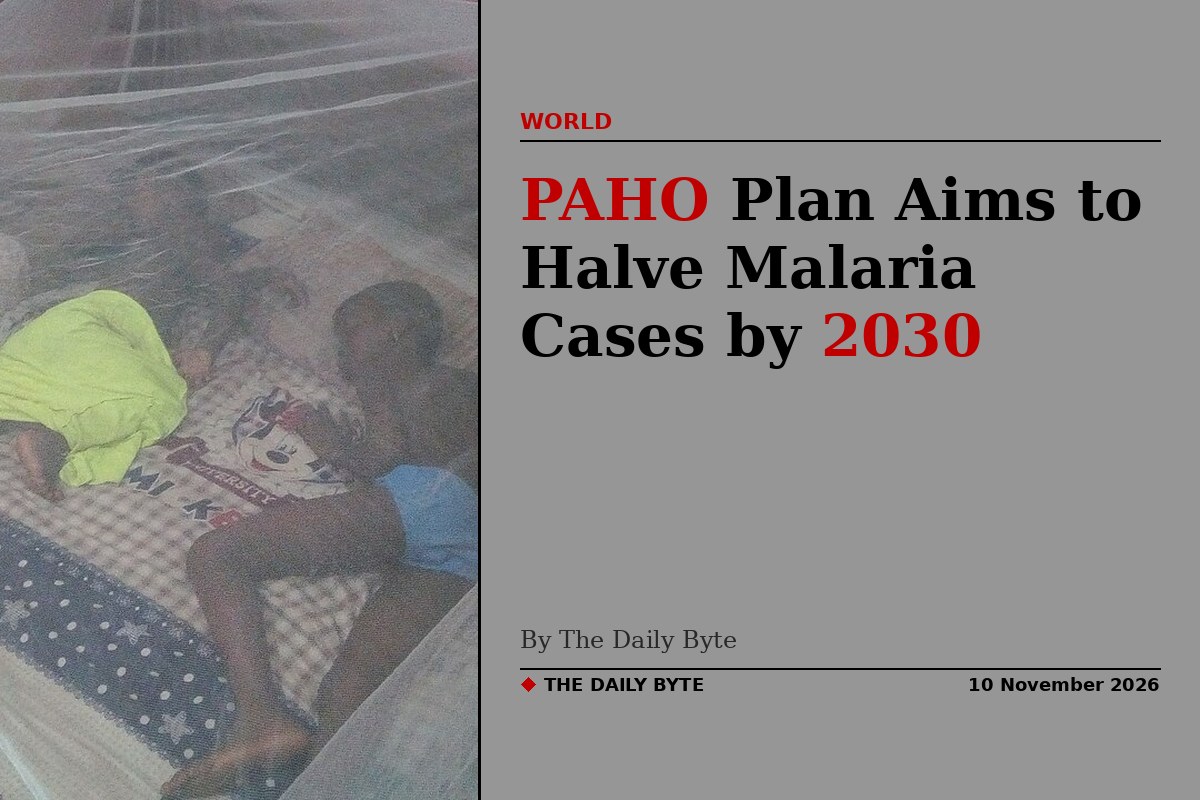
The Pan American Health Organization (PAHO) has launched a four-year plan to cut malaria incidence across the Americas by half by 2030. The Action Plan for Malaria Elimination in the Americas 2026–2030 was presented in Brasília, Brazil, on Friday, 6 November, at the close of a regional meeting of health authorities and national malaria programme managers.
The plan sets two headline targets: reducing overall malaria incidence by 50 per cent by 2030 compared with 2024, when about 537,000 cases were reported, and cutting cases caused by Plasmodium falciparum, one of the parasites behind the disease, by 70 per cent. Its core idea is to take diagnosis and treatment to the people who need them, rather than expecting patients to travel long distances to a clinic, according to CANA News.
Why a new plan is needed
Malaria cases in the Americas have stalled at around half a million a year, and the plan responds to persistent barriers to timely diagnosis and treatment, particularly in Indigenous communities, mining areas and hard-to-reach places. The region reported about 458,000 cases in 2025, roughly 18 per cent fewer than in 2020, but transmission continues and threatens the gains already made.
Transmission is highly concentrated. Twenty-two municipalities in six countries reported more than 4,000 cases each in 2025, accounting for 43 per cent of all cases in the Americas, and just eight municipalities accounted for a quarter of them. That concentration, PAHO says, is an opportunity to target interventions where they can do the most to interrupt transmission.
Deaths from malaria have fallen by nearly a fifth over the past decade, from 169 in 2015 to 115 in 2025. Five countries have been certified malaria-free since 2018 — Argentina, Paraguay, El Salvador, Belize and Suriname — with Suriname becoming the first country in the Amazon Basin to eliminate the disease in 2025.
What the plan will do
The plan proposes expanding the use of rapid diagnostic tests, strengthening community-based networks for diagnosis and treatment under the supervision of health teams, and using digital tools to speed up care and response. Dr Sylvain Aldighieri, director of PAHO's Department of Communicable Disease Prevention, Control and Elimination, said the strategy aims to strengthen and transform the regional response over the next four years.
The launch coincided with the Regional Meeting on Malaria Elimination in the Americas, held in Brasília from 4 to 6 November, and with Malaria Day in the Americas on 6 November, marked under the theme "Zero Malaria in the Americas," according to PAHO. Costa Rica's northern Huetar region was named a Malaria Champion of the Americas in 2024 after cutting local cases from 378 in 2022 to 128 in 2023, showing the community-based approach the new plan is built on.
The plan also aims to advance elimination in individual countries and subnational territories, building on the five certifications since 2018. PAHO's wider disease elimination initiative targets more than 30 communicable diseases and related conditions in the Americas by 2030.
Frequently asked questions
What is the PAHO malaria plan's main target? To reduce malaria incidence in the Americas by 50 per cent by 2030 compared with 2024, when about 537,000 cases were reported, and to cut Plasmodium falciparum malaria by 70 per cent.
How many malaria cases does the Americas report? About 458,000 cases in 2025, roughly 18 per cent fewer than in 2020, with deaths down from 169 in 2015 to 115 in 2025.
Which countries have eliminated malaria? Five countries have been certified malaria-free since 2018: Argentina, Paraguay, El Salvador, Belize and Suriname.


