Pakistan Lines Up 16 LNG Cargoes for Winter Gas Supply
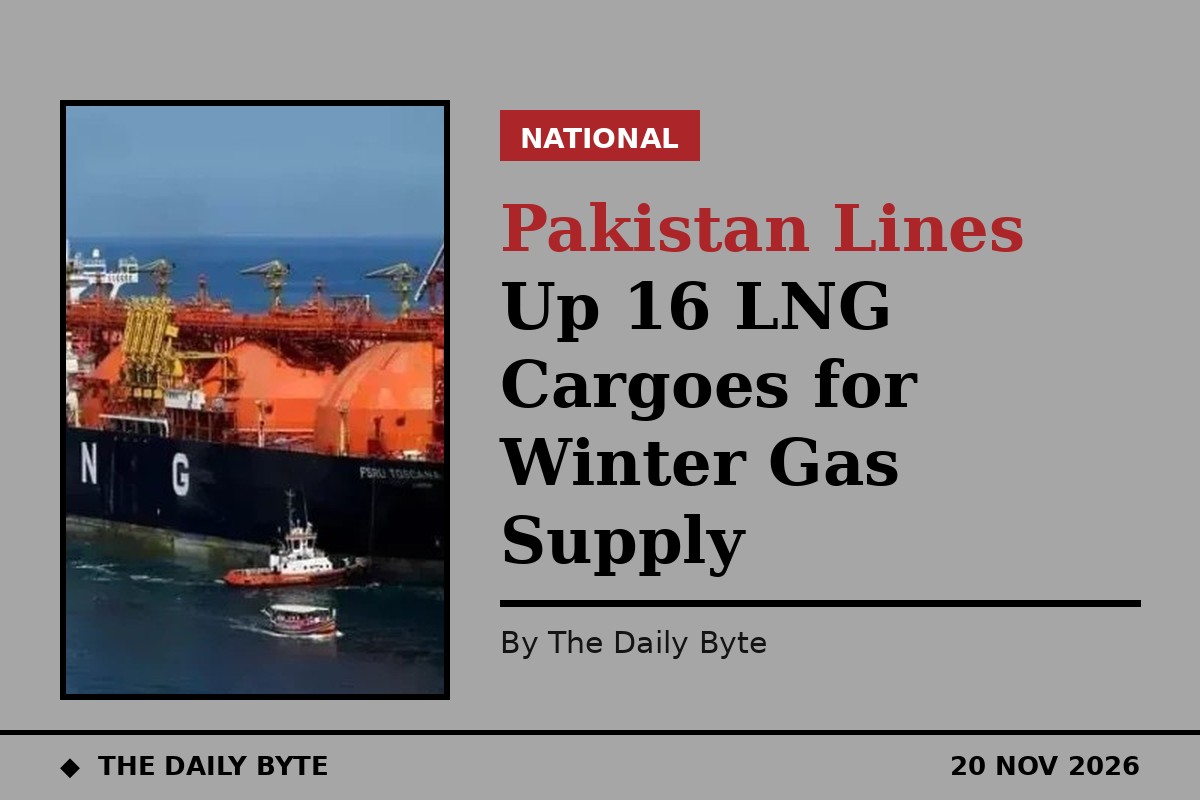
Pakistan has finalised plans to secure 16 liquefied natural gas (LNG) cargoes from November through February 2027 to avert winter gas shortages, Petroleum Minister Ali Pervaiz Malik told reporters on Wednesday.
Pakistan had fully covered its LNG requirements for November and secured three of the four cargoes needed for December, the minister said. Of the six cargoes required for January, one has been secured, while efforts are under way to arrange the remaining supplies, Petroleum Ministry spokesman Zafar Abbas said. Figures for February were not given.
The government is also pursuing short-term supply arrangements with Oman, the United States and Azerbaijan's SOCAR, in addition to its existing long-term contracts with Qatar. The minister also announced upcoming high-level visits to Oman to sign agreements formalising cooperation in the liquefied petroleum gas (LPG) and LNG sectors.
Gaps remain for December and January
The plan is designed to maintain uninterrupted gas supplies through February as winter demand puts pressure on the country's energy system. November's gas demand is fully covered, but the figures released so far show a substantial gap between the cargoes needed in December and January and those already arranged.
The government has not announced when the remaining shipments will be secured, or which suppliers will provide them. Qatar is expected to supply much of the gas through existing long-term contracts, while Oman, the United States and SOCAR are being considered for additional volumes. Officials also said Pakistan plans to arrange 60 LNG cargoes from Qatar during 2027 to meet its energy requirements.
Gas supplies of 130 million cubic feet per day have been added to the southern system of Sui Southern Gas Company, while another 40 million cubic feet per day has been injected into the Sui Northern Gas Pipelines network, according to the Petroleum Division.
Sweeping overhaul of the LPG market
Alongside efforts to secure imported gas, the government is preparing fundamental reforms to the LPG market that would end regulated consumer pricing and put 90 per cent of domestic production up for competitive auctions.
Under the proposed framework, state-owned companies, including Pakistan State Oil and SSGC LPG Ltd, will lead the transition by publishing monthly import-parity benchmarks linked to Saudi Aramco's contract price, adjusted for freight, insurance, import premiums, taxes and other landed costs. The Oil and Gas Regulatory Authority would stop issuing consumer-price notifications for locally produced and imported LPG, retaining responsibility for announcing monthly producer prices linked to Saudi Aramco's free-on-board benchmark. Marketing and importing companies would be allowed to determine their own margins and transportation charges, subject to competition and consumer-protection oversight.
Auctions for domestic output
The most significant change would involve the sale of domestic LPG production. Under the proposed arrangement, 90 per cent of indigenous production by exploration companies, refineries and other producers would be sold through transparent quarterly auctions in parcels of five to 10 metric tons, with a minimum floor price of 75 per cent of Pakistan State Oil's import-parity benchmark.
The remaining 10 per cent would be supplied to state-owned marketers at producer prices to maintain deliveries to remote and underserved regions, particularly Gilgit-Baltistan and other mountainous areas. The government also plans to establish a dedicated public-account fund to capture the difference between auction proceeds and the Saudi-linked producer price.
The money would finance targeted subsidies for low-income households eligible under the Benazir Income Support Programme or help stabilise LPG prices. The fund would be audited by the Auditor General of Pakistan. The proposed reforms also envisage stricter licensing, third-party audits, mandatory quality testing, digital tracking of LPG transport vehicles and tougher cylinder safety enforcement.