Pakistan air pollution cuts life expectancy by 3.9 years
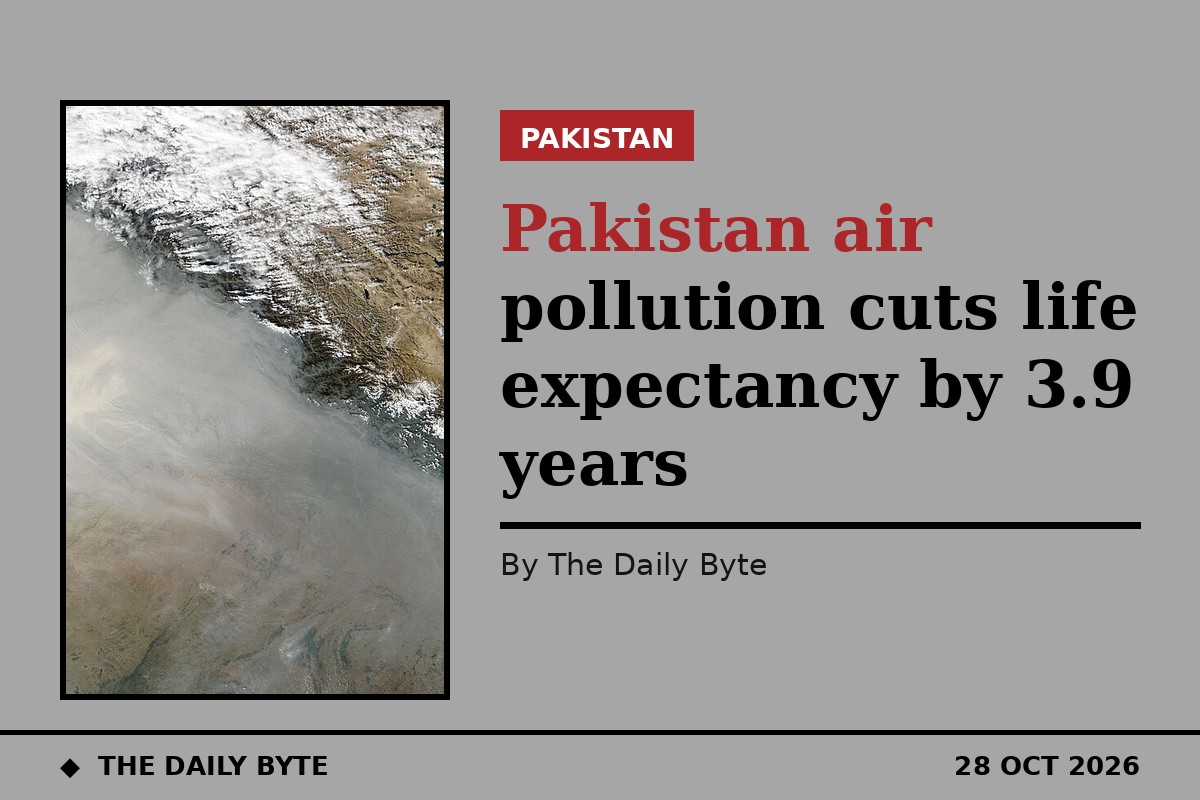
Air pollution is estimated to cut average life expectancy in Pakistan by 3.9 years and to contribute to around 128,000 premature deaths each year, according to a new Pakistan Air Quality Initiative (PAQI) report. The report, titled Unveiling Pakistan's Air Pollution, also puts the economic burden at an equivalent of 6.5 per cent of gross domestic product. These are estimates from ground and satellite data and local fuel, vehicle and industry records, not a direct count of deaths.
Lahore faces the heaviest burden
Lahore is one of the worst-affected cities in the assessment. Its annual average PM2.5 concentration is estimated at more than 110 micrograms per cubic metre, over 22 times the World Health Organisation's guideline of five. Sustained exposure at that level could reduce life expectancy in Lahore by as much as seven years, the report warns. The assessment covers Lahore, Karachi, Islamabad-Rawalpindi and Peshawar, and also examines carbon monoxide, nitrogen oxides and sulphur dioxide.
What the findings mean for households
Transport, industry and brick kilns together account for a reported 80 per cent of Lahore's primary PM2.5 emissions, while industry accounts for 49 per cent of Karachi's emissions. The report presents what PAQI describes as Pakistan's first harmonised, multi-sector emissions inventory, and outlines measures that could cut emissions by up to 50 per cent. That promise depends on enforcement and investment, not measurement alone, since controls on vehicles, factories and kilns must actually be applied.
For families, pollution is a health and household finance problem as well as an environmental one, through illness, treatment costs and time away from work. People with fewer resources are likely to bear a heavier burden, the reporting notes, because they have less ability to protect themselves. The figures should be read as estimates of long-term risk, not predictions for any individual, with concrete funding and enforcement the next test.
Sources: The Express Tribune, via ANI/Latestly and Energy Update.