Pakistan gas squeeze deepens as Qatar halt runs on
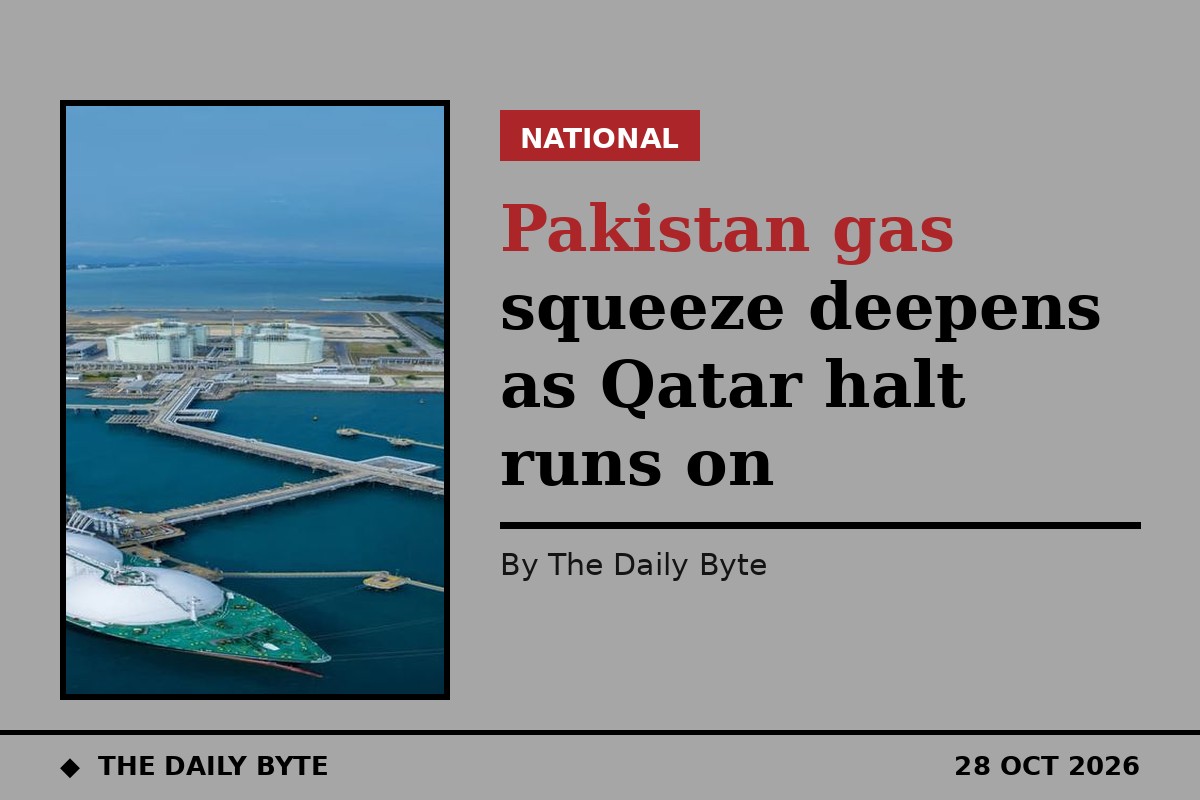
Pakistan is heading into winter with about 900 million cubic feet per day of Qatari natural gas suspended, Petroleum Minister Ali Pervaiz Malik told the National Assembly on Monday 26 October. QatarEnergy's war-related force majeure keeps most term liquefied natural gas cargoes from reaching Pakistan, pushing the government into the far more expensive spot market, while households on the piped network are receiving gas for about eight hours a day around meal times, the minister said.
900 million cubic feet a day suspended
The suspension dates back to April, after Iranian strikes damaged QatarEnergy's Ras Laffan liquefaction complex in March, weeks after the US-Israeli war on Iran began in late February. It has been extended repeatedly since, and Reuters reported on Tuesday 27 October that clients in Pakistan had been informed the force majeure notices had been extended until the end of this year, alongside an extension for Italy's Edison. QatarEnergy did not immediately respond to Reuters' request for comment, and has not publicly confirmed a December extension for Pakistani buyers specifically, so the end-year date for Pakistan rests on that sourced report rather than a company announcement.
A costly spot-market winter
The cost of filling the gap is steep. Trade reporting puts the winter bill above $1 billion, with Pakistan planning to import 10 cargoes from the spot market at roughly double the price of its long-term Qatari contracts, while Asian spot prices sit at four-year highs. The minister has also pointed to a parallel squeeze in cooking gas, with most LPG imports arriving by land and border closures disrupting supply, and said the government is examining alternative sea routes and imports from Oman and Saudi Arabia, alongside a relief policy for vulnerable households.
Sources: Zark News and Reuters via EuropeSays and OilPrice.