Pakistan journalists protest layoffs as Quetta camp opens
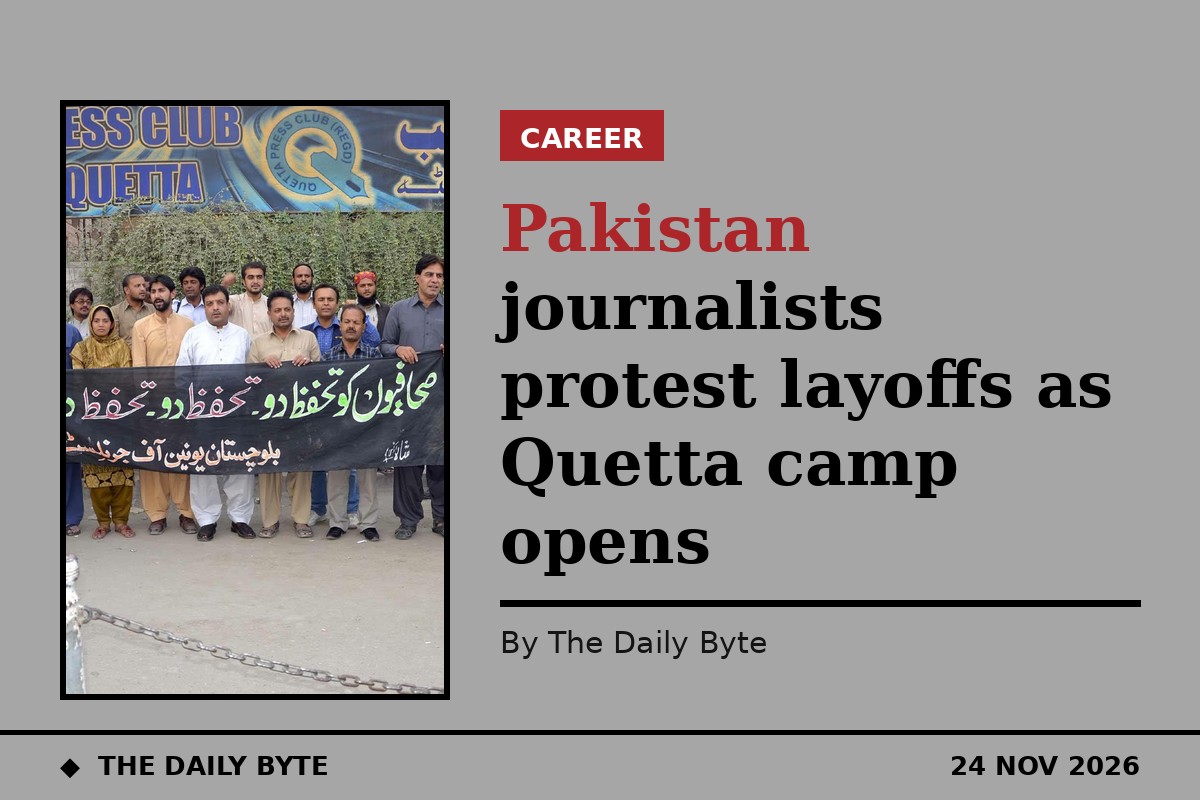
Journalists in Quetta have opened a 24-hour protest camp outside the Quetta Press Club, the latest step in a nationwide campaign by Pakistan's media unions against layoffs, unpaid salaries and the closure of television bureau offices. The camp, which runs from 23 to 24 November, is part of the Pakistan Federal Union of Journalists' (PFUJ) countrywide movement for press freedom and job security, and it comes as a parliamentary committee presses the government to act on the crisis within 15 days.
The Balochistan Union of Journalists (BUJ) organised the camp, finalising the arrangements at a meeting chaired by its president, Manzoor Ahmed Rind, and attended by Quetta Press Club president Irfan Saeed and other journalists' representatives. PFUJ president Afzal Butt and other central leaders were expected to join the protest, which the union said would highlight the Prevention of Electronic Crimes Act (PECA), cases and alleged harassment of journalists, forced dismissals, unpaid salaries and the closure of television bureau offices in Balochistan.
Behind the protest are stark figures. The BUJ says 122 journalists and media workers have lost their jobs in Balochistan, while 11 television channels have closed their Quetta bureau offices in recent years. The Balochistan Assembly had earlier adopted a resolution referring to the closed bureaus and the workers affected, and parliamentary leaders from across the province have now pledged to move a fresh resolution supporting the journalists' demands. National Party president Dr Abdul Malik Baloch, Balochistan National Party (Awami) president Mir Asadullah Baloch and Jamaat-e-Islami Balochistan chief Maulana Hidayat-ur-Rehman Baloch all endorsed the campaign at a roundtable in Quetta on 17 November, promising to raise the issue in the Assembly and to join the protest activities.
A fortnight of pressure
The Quetta camp caps a fortnight in which the employment crisis in Pakistan's media has moved to the centre of the national debate. Journalism Pakistan's media monitor for 10 to 23 November records that the PFUJ launched its nationwide campaign on 10 November, bringing together demands for press freedom, unpaid salaries, job security and stronger legal protections. A two-day protest camp organised by the Karachi Union of Journalists outside the Karachi Press Club called for action against restrictive media laws, forced dismissals and declining employment standards.
The same period brought fresh job losses into the open. The reported dismissal of more than 20 employees of the news channel GNN drew condemnation from the National Press Club, while journalists in Quetta began their two-day protest on 23 November against bureau closures, layoffs and delayed wages. The developments follow a Black Day observed by journalists across Balochistan on 3 November, when black flags went up at press clubs around the province over dismissals and unpaid salaries.
Parliament gives the ministry 15 days
At the parliamentary level, the National Assembly Standing Committee on Information and Broadcasting has instructed the Information Ministry to produce an action plan on salary delays and layoffs within 15 days. The directive followed repeated complaints that media organisations were failing to meet their obligations to employees, and it gives the campaign a concrete deadline to organise around. In Quetta, the BUJ has used the same language, framing press freedom as a public concern and calling for collective efforts by political parties, lawyers, human rights organisations and civil society to protect journalists' rights.
What the unions are demanding
The PFUJ campaign's demands go beyond any single employer. The unions want restrictive provisions of PECA repealed, outstanding salaries paid, dismissed workers reinstated, closed bureau offices reopened and stronger legal protections for journalists and media workers. They also want an end to cases and alleged harassment under the cybercrime law, which they say is used to pressure media organisations and individual reporters alike.
Whether the campaign wins those demands will depend in part on whether the parliamentary pressure holds. The Information Ministry's 15-day deadline is the first formal timetable the unions have secured, and the promised Balochistan Assembly resolution would add provincial political weight. For now, the protest camp outside the Quetta Press Club is the visible sign of a dispute that has shifted from newsroom complaints to coordinated, nationwide action, with jobs and wages at its heart.